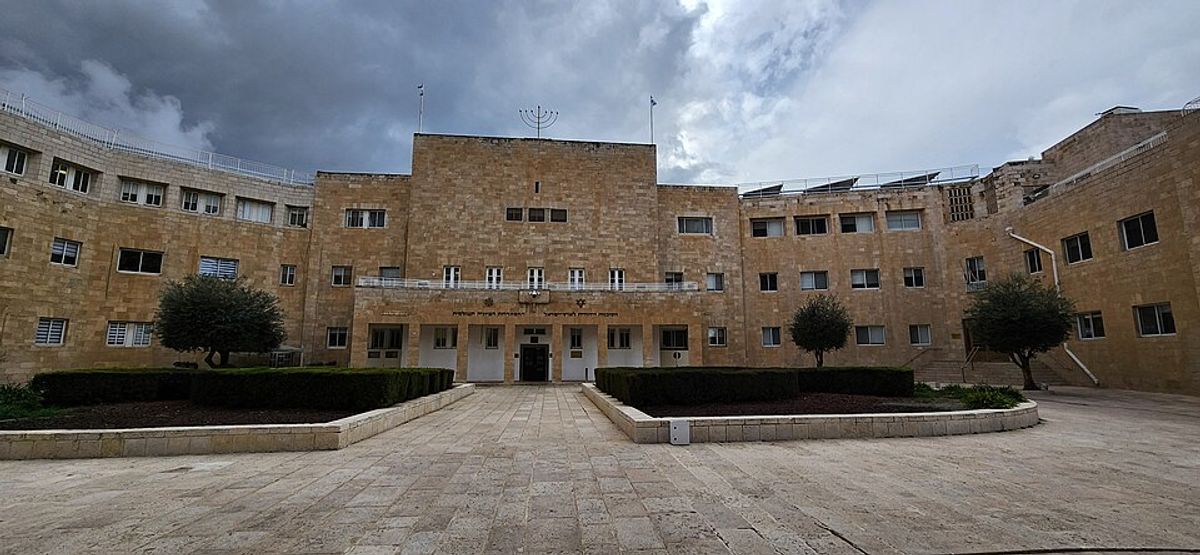
Rehavia is the intellectual heart of Jerusalem, a garden neighborhood of stone apartment buildings and tree-lined streets that has been home to the country’s political, academic, and cultural elite since the 1920s. The neighborhood was designed by the architect Richard Kauffmann as a garden suburb, influenced by the European Garden City movement, with strict building codes that limited height and required generous setbacks from the street. Kauffmann envisioned a neighborhood of light and air, where every building would be surrounded by greenery, and the wide streets, public gardens, and Bauhaus-influenced architecture give Rehavia a distinctly European atmosphere that set it apart from Jerusalem’s older, denser quarters.
The National Institutions
Rehavia sits at the center of Israel’s national institutional corridor. The neighborhood and its immediate surroundings house the Jewish Agency, the Jewish National Fund (Keren Kayemet), and the Great Synagogue of Jerusalem, all virtually next door to each other. The Jewish Agency compound on King George Street served as the de facto government of the Jewish community during the British Mandate. When the state was founded in 1948, the Agency building became the temporary seat of government, and the first Knesset sessions were held in a converted bank building on nearby Ben Yehuda Street. As the state grew, its institutions spread along the ridge west of Rehavia: the Knesset, the Israel Museum, the Supreme Court, and the Hebrew University’s Givat Ram campus were all built on the hilltops just beyond the neighborhood’s western edge. Rehavia itself remained residential, but its streets connect to the corridors of power, a five-minute walk in any direction leads to a building where the country is run.
The Residents
Rehavia has been home to many of the most prominent figures in Israeli history. David Ben-Gurion, Israel’s first prime minister, lived on Ben Maimon Boulevard, his modest apartment, preserved much as he left it, stands in quiet contrast to the grand decisions made within its walls. Golda Meir lived in the same building, 46 Ben Maimon served as the official residence of three consecutive prime ministers. The scholar Gershom Scholem, the philosopher Hugo Bergmann, and generations of professors, judges, and politicians have called Rehavia home. Martin Buber and S.Y. Agnon (who won the Nobel Prize in Literature in 1966) lived in neighboring Talbiyeh and Talpiot respectively, but Rehavia’s cafes and salons were their intellectual world. The character of Rehavia was shaped above all by the Yekkes .
German-speaking Jewish immigrants who arrived in the 1930s, fleeing the rise of Nazism. These were doctors, lawyers, professors, musicians, and businesspeople who brought with them the culture of Weimar Germany: a reverence for order, punctuality, education, and high culture. They planted European gardens, built stone apartment buildings with clean Bauhaus lines, spoke German at home and Hebrew on the street, and established a standard of civic life that gave Rehavia its distinctive identity. The neighborhood’s cafes and bookshops have long been gathering places for the intellectual class, and to this day Rehavia retains an air of quiet sophistication that distinguishes it from Jerusalem’s more boisterous quarters.
The Jason’s Tomb
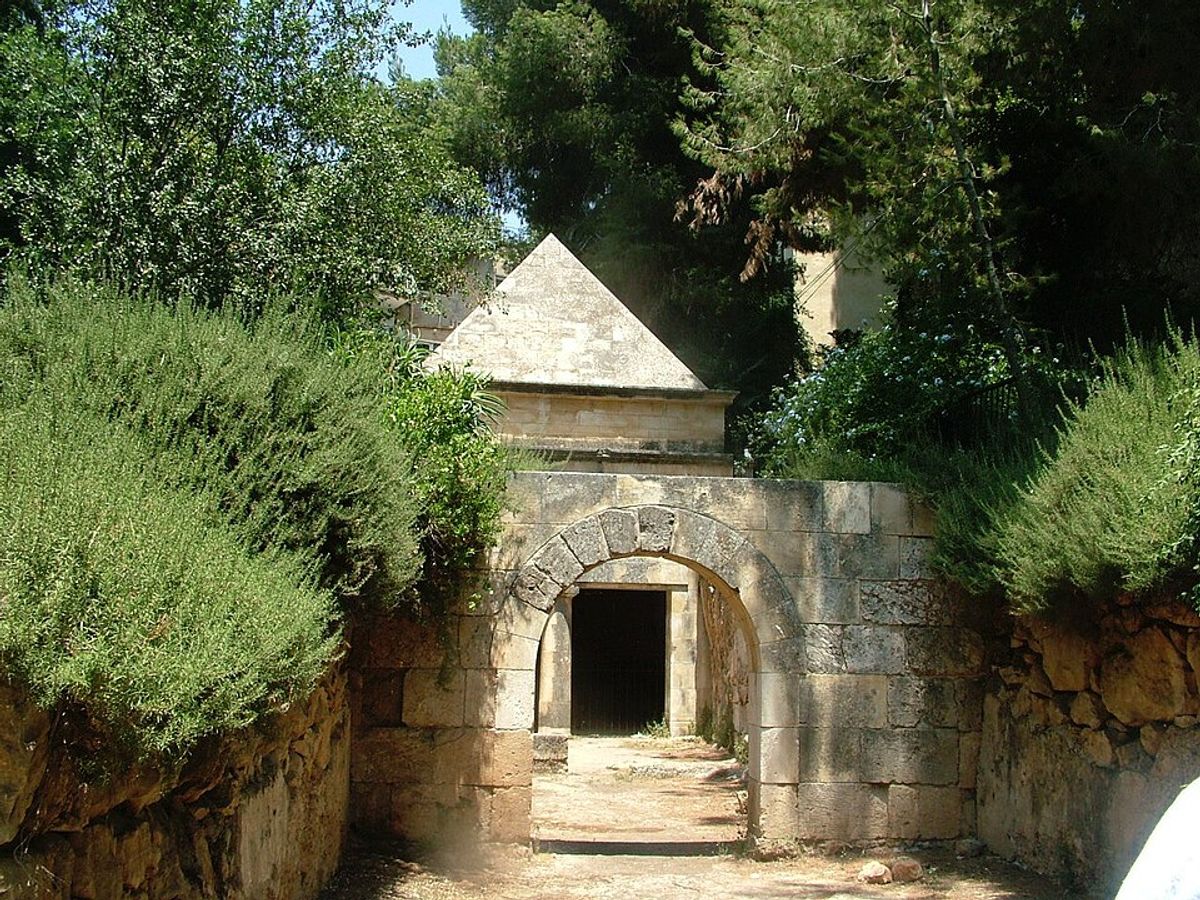
In the middle of a residential street in Rehavia, a Hellenistic-period tomb from the 2nd century BCE was discovered during construction work in 1956. Known as Jason’s Tomb, named after a Greek inscription found inside, it is a rock-cut pyramid tomb believed to be from the Hasmonean period. Charcoal drawings of ships on its walls suggest the occupant may have had maritime connections, perhaps a naval commander or merchant. The tomb features a restored pyramidal monument above the burial chambers and can be visited by appointment. It is a striking reminder that even in Jerusalem’s most modern neighborhoods, the ancient city lies just beneath the surface.
Visit with Hoshen Tours
Rehavia is where Bauhaus architecture meets Jerusalem stone, a garden neighborhood that became the intellectual heart of the young state. Hoshen Tours walks past the homes of prime ministers and professors, through the parks and boulevards that defined the German-Jewish vision of a cultured capital. The neighborhood borders Talbieh to the south, Nachlaot to the north, and leads toward the Knesset and Monastery of the Cross to the west.
Ready to experience Israel in true colors?
Plan Your TourPrivate tours designed around your interests, schedule, and pace.