



Nahal Taninim (the Crocodile River) is a nature reserve on the Mediterranean coast between Haifa and Caesarea, where the remains of a Roman-era dam and aqueduct system cross a river that was, until the early 20th century, home to Nile crocodiles. The reserve combines Roman engineering, coastal wetlands, and one of the strangest wildlife stories in Israeli history.
Nile Crocodiles in Israel
Nile crocodiles lived in the marshes of Nahal Taninim for thousands of years, the northernmost population of crocodiles in the world. The animals were mentioned by medieval travelers and Ottoman-era documents, and the last confirmed sightings date to around 1905–1912, though some accounts place the very last crocodile as late as the 1920s. The draining of swamps during the British Mandate period and hunting eliminated the remaining population. The river’s name preserves their memory, and the nature reserve protects the wetland habitat they once inhabited.
The Roman Dam and Aqueduct
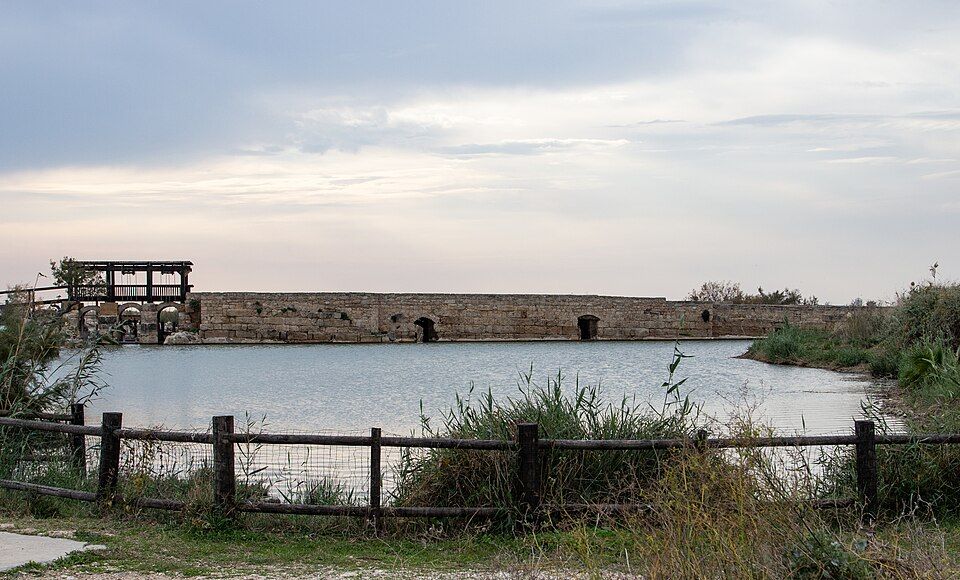 The centerpiece of the site is a massive stone dam built across the Taninim River during the Roman period, creating a large reservoir that supplied water to Caesarea through a low-level aqueduct. The dam is one of the best-preserved Roman hydraulic structures in Israel, still standing to nearly its full original height. The dam is built from large cut stones, an impressive sight spanning the width of the river. Sluice gates controlled the water flow, and visitors can still see the channels that directed water into the aqueduct running south along the coast toward Caesarea. This low-level system carried water primarily for agriculture and non-potable uses, complementing the high-level drinking water aqueducts that brought water from the Carmel foothills via the Mei Kedem tunnel at Park Alona and from the springs at Shuni. Together these systems formed one of the most extensive ancient water networks in the region.
Nahal Taninim Israel National Park
The national park stretches along the river and around the dam, with walking trails that follow the water channels and cross the dam itself. The marshes and pools created by the dam support a rich variety of wildlife, including herons, kingfishers, turtles, and freshwater crabs. In winter and spring, migratory birds pass through the wetlands. The vegetation along the river banks is lush and green, a striking contrast to the dry hillsides above. Interpretive signs along the trails explain both the Roman engineering and the ecology of the reserve. The park is family-friendly with easy, flat trails and shaded picnic areas near the water.
Visit with Hoshen Tours
A visit to Nahal Taninim pairs beautifully with nearby destinations along your route. Consider combining it with a stop at Caesarea or Tel Dor, both just a short drive away. Many travelers also enjoy exploring Ramat HaNadiv and Caesarea Aqueduct on the same day, while Habonim Beach offers another worthwhile addition to your itinerary. Your Hoshen Tours guide will craft a seamless route that brings each destination to life with expert commentary and insider knowledge.
Explore Our Tour Collection
Ready to experience Israel in true colors?
Plan Your TourPrivate tours designed around your interests, schedule, and pace.