



The Cave of Machpelah (Me’arat HaMachpelah) in Hebron is venerated as the burial place of the patriarchs and matriarchs of the Jewish people: Abraham and Sarah, Isaac and Rebecca, Jacob and Leah. It is the oldest Jewish holy site in the world, purchased by Abraham nearly 4,000 years ago, and the massive Herodian structure that stands over the cave today is the most complete Herodian building in existence, even more intact than the Temple Mount retaining walls in Jerusalem.
Abraham’s Purchase
The purchase of the Cave of Machpelah is described in Genesis 23 with extraordinary legal precision. When Sarah died, Abraham negotiated with Ephron the Hittite to buy the cave and the field around it as a burial place: “Abraham agreed to Ephron’s terms and weighed out for him the price he had named in the hearing of the Hittites: four hundred shekels of silver, according to the weight current among the merchants” (Genesis 23:16). The detail of the transaction, the price, the witnesses, the public negotiation, reflects the importance the Bible places on this purchase: the Cave of Machpelah is the first piece of the Promised Land that was legally bought and paid for, not conquered or promised, but purchased in a binding transaction.
Patriarchs and Matriarchs
Abraham buried Sarah here (Genesis 23:19). According to Genesis 25:9, Abraham was buried here by his sons Isaac and Ishmael. Isaac and Rebecca were buried here (Genesis 35:29, 49:31). And Jacob, who died in Egypt, commanded his sons to bring his body back to Machpelah: “Bury me with my fathers in the cave in the field of Machpelah, near Mamre in Canaan, which Abraham bought along with the field as a burial place from Ephron the Hittite. There Abraham and his wife Sarah were buried, there Isaac and his wife Rebekah were buried, and there I buried Leah” (Genesis 49:29-31). The only matriarch not buried here is Rachel, who was buried on the road to Bethlehem.
Herodian Building
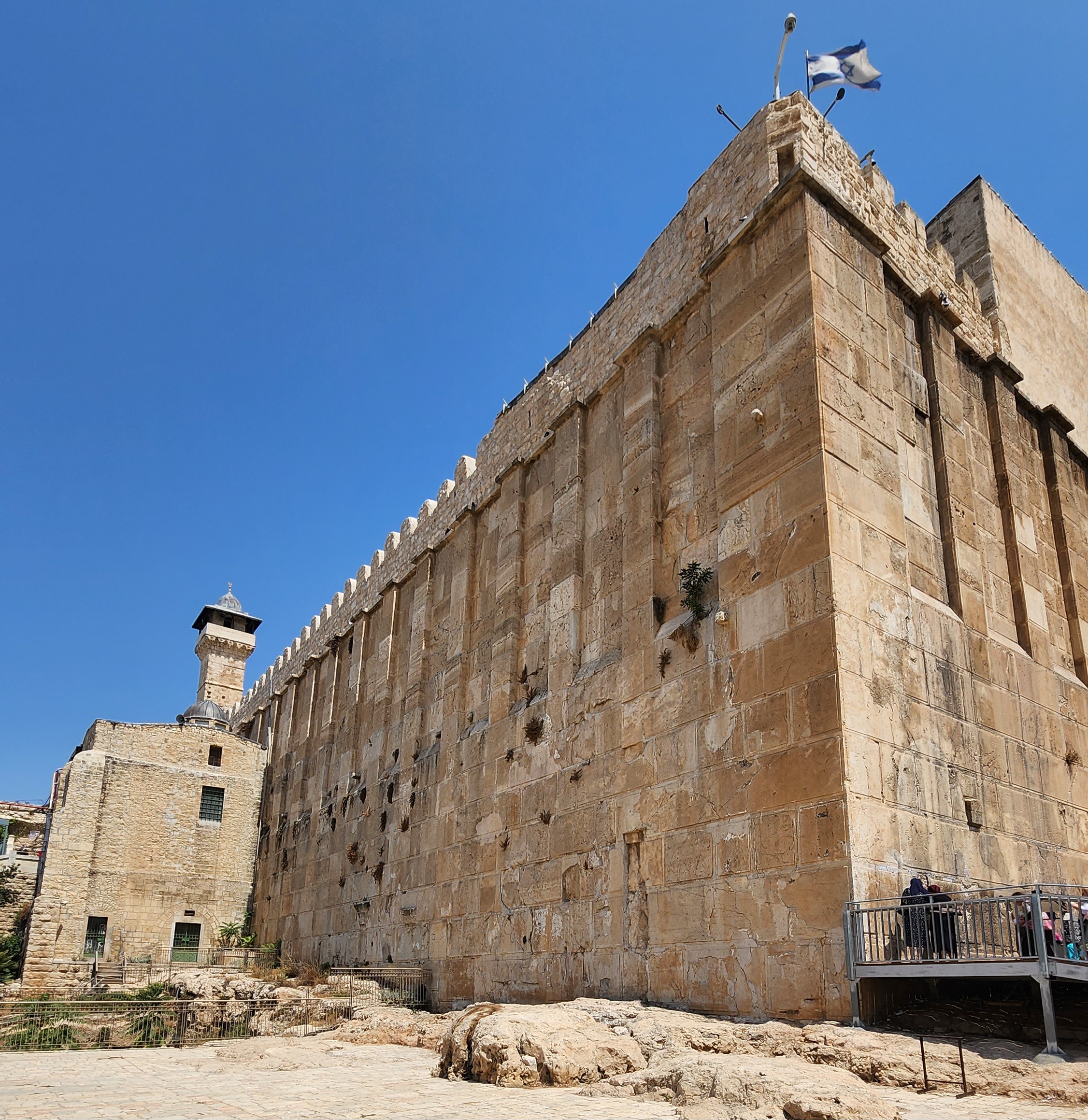
The massive stone enclosure that stands over the cave was built by Herod the Great in the 1st century BCE. The walls, made of enormous dressed stones with the characteristic Herodian margins, rise 12 meters high and enclose an area of approximately 59 by 34 meters. The building has no roof (the interior structures were added later by the Crusaders and the Mamluks), and the Herodian walls are the best-preserved example of Herodian architecture in the world. The stonework is virtually identical to the Temple Mount retaining walls in Jerusalem, confirming that the same builders and the same patron, Herod, created both structures.
The Hall of Isaac and the Gate of the Garden of Eden
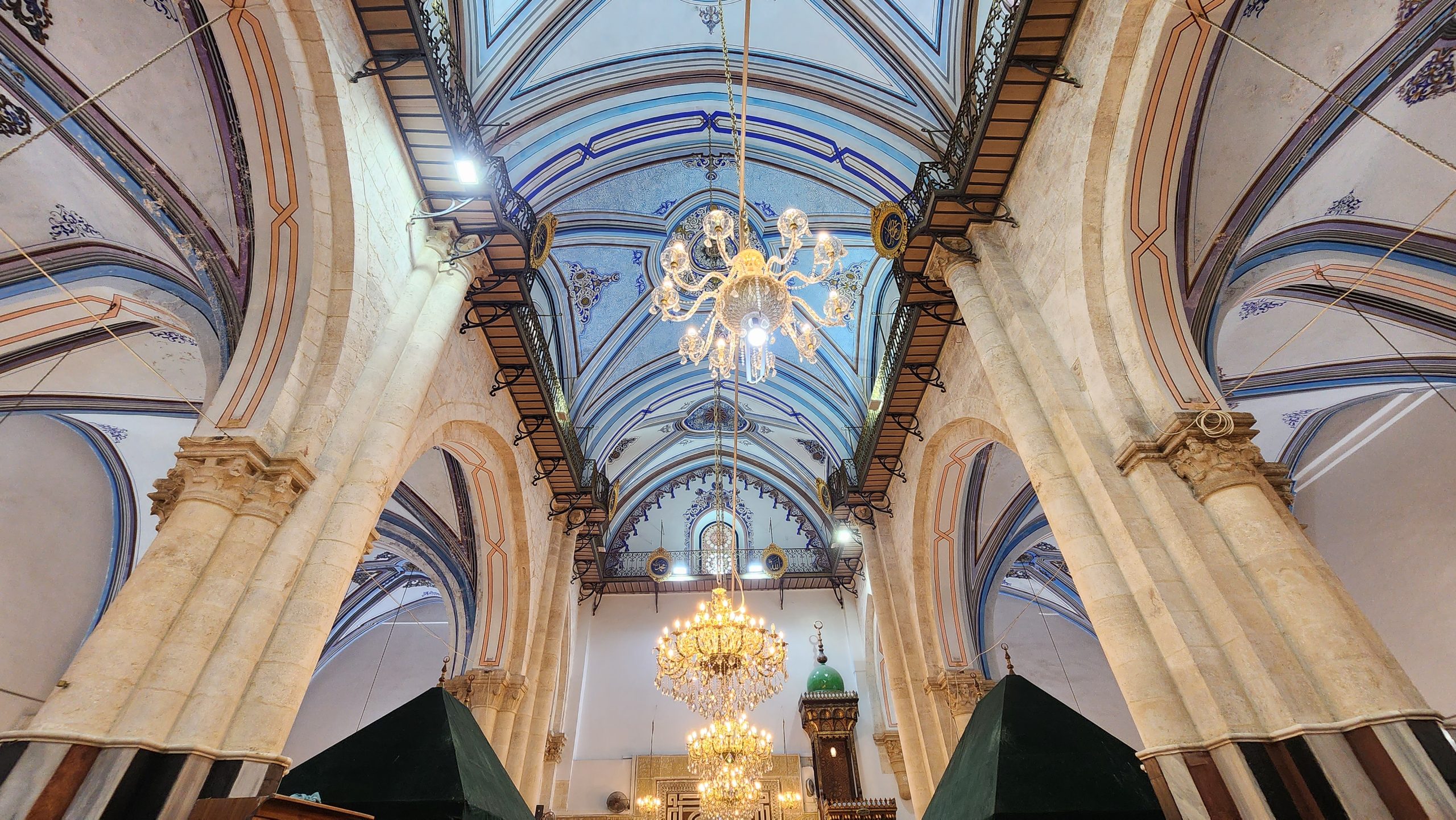
The interior of the Cave of Machpelah is divided into several halls, each containing cenotaphs — symbolic burial markers — above the actual cave beneath. The largest and most central space is the Hall of Isaac (Ohel Yitzhak), a grand, high-ceilinged chamber that serves as the main prayer hall for Jewish worshippers during the days when Jewish access is permitted. The cenotaphs of Isaac and Rebecca stand here, draped in ornate coverings, flanked by chandeliers and surrounded by ancient Herodian stonework that has witnessed nearly two thousand years of continuous prayer.
Tradition holds that somewhere beneath this hall lies the entrance to the actual burial cave — and, according to a deeply rooted Jewish mystical tradition, the entrance to the Garden of Eden itself. The Zohar, the foundational text of Kabbalah, teaches that Adam and Eve are buried in the Cave of Machpelah, and that the cave contains a hidden passage leading to Gan Eden. According to this tradition, Abraham discovered the cave when he smelled the fragrance of the Garden of Eden emanating from within, and this is why he insisted on purchasing the site from Ephron the Hittite. Whether understood literally or mystically, the belief that this place connects the living world to paradise has made the Cave of Machpelah one of the most spiritually charged locations in all of Jewish tradition.
Sacred to Three Faiths
The Cave of Machpelah is sacred to Jews, Christians, and Muslims. For Jews, it is the second holiest site after the Temple Mount. For Muslims, the site (known as the Ibrahimi Mosque) is a mosque built inside the Herodian enclosure, honoring Ibrahim (Abraham), the father of the Islamic faith. For Christians, the patriarchs are the ancestors of Jesus through the genealogy of Matthew 1. The building is divided between a mosque and a synagogue, with access arrangements that reflect the political sensitivity of Hebron.
Hebron: City of the Patriarchs
Hebron (Hevron) is one of the oldest continuously inhabited cities in the world and one of the four holy cities of Judaism (alongside Jerusalem, Tiberias, and Safed). David was anointed king in Hebron and ruled from here for seven years before moving his capital to Jerusalem: “David was thirty years old when he became king, and he reigned forty years. In Hebron he reigned over Judah seven years and six months” (2 Samuel 5:4-5). The city today is deeply divided between its Palestinian and Jewish populations, and visiting the Cave of Machpelah requires navigating security checkpoints and political tension.
The Torah devotes an entire chapter (Genesis 23) to the negotiation and purchase of the Cave of Machpelah, an unusual amount of detail for a real estate transaction. The rabbis explain that this emphasis is deliberate: the purchase of Machpelah, along with Jacob’s purchase of a field near Shechem (Genesis 33:19) and David’s purchase of the Temple Mount threshing floor (2 Samuel 24:24), establishes the three places in the Land of Israel whose Jewish ownership cannot be disputed. They were not conquered or inherited; they were bought and paid for, in public, with witnesses, at full price. Abraham insisted on paying the full 400 shekels even when Ephron offered the cave as a gift, because he wanted the transaction to be legally unassailable. Three thousand eight hundred years later, the legal precision of that purchase is still cited in arguments about Jewish rights to Hebron.
Access and Security
The building is divided between a mosque and a synagogue, each with its own entrance. These access arrangements reflect the deep political sensitivity of Hebron. The site is located in the H2 area of the city, which is under Israeli military control, and visiting requires passing through security checkpoints. The Jewish side of the building is open to visitors most days of the year. On ten special days, corresponding to Jewish holidays, the entire building is opened for Jewish prayer and access. The Muslim side is managed by the Islamic Waqf. Because of the security situation and the complexity of arrangements, coordination with a knowledgeable tour operator is strongly recommended for a smooth and meaningful visit.
Visit with Hoshen Tours
The Cave of Machpelah in Hebron is believed to be the burial place of Abraham, Isaac, Jacob, and their wives, making it sacred to Jews, Christians, and Muslims alike. The massive Herodian enclosure above the cave is one of the best-preserved ancient structures in the entire region. Hoshen Tours navigates the logistics of a Hebron visit and provides the historical and scriptural context that brings the site to life. Combine it with Herodium, the Shepherds’ Fields, and the olive wood workshops in Bethlehem.
Explore Our Tour Collection
Ready to experience Israel in true colors?
Plan Your TourPrivate tours designed around your interests, schedule, and pace.