



The road from Jerusalem to Jericho drops over 1,000 meters in less than 30 kilometers, winding through some of the most desolate terrain in the Judean Desert. It was on this road that Jesus set one of his most famous parables, and it is beside this road that a remarkable museum stands today, built on the ruins of a medieval inn that has been associated with the story for centuries.
The Parable of the Good Samaritan
A lawyer asked Jesus, “Who is my neighbor?” Jesus answered with a story: “A man was going down from Jerusalem to Jericho, when he was attacked by robbers. They stripped him of his clothes, beat him, and went away, leaving him half dead” (Luke 10:30). A priest came by and passed on the other side. A Levite did the same. Then a Samaritan, a member of a community despised by Jews, stopped, bandaged the man’s wounds, put him on his own donkey, brought him to an inn, and paid for his care.
“Which of these three do you think was a neighbor to the man who fell into the hands of robbers?” the lawyer was asked. He answered, “The one who had mercy on him.” Jesus said, “Go and do likewise” (Luke 10:36-37).
Why a Samaritan?
The shock of the parable lies in the identity of the hero. Samaritans and Jews in the 1st century had a deep mutual hostility going back centuries. Jews considered Samaritans heretics and impure; Samaritans rejected Jerusalem as the true place of worship. By making a Samaritan the hero and the priest and Levite the villains, Jesus was not telling a simple moral story about kindness. He was deliberately provoking his audience, forcing them to see compassion in the person they least expected it from. The parable is an attack on religious self-righteousness and tribal loyalty.
The Road from Jerusalem to Jericho
Jesus chose this road for good reason. The descent from Jerusalem to Jericho was notorious in antiquity for bandits. The road passes through narrow canyons and blind turns where robbers could easily ambush travelers. The Roman historian Strabo described it as dangerous, and Josephus mentions bandits operating in this area. Jesus’ audience would have immediately recognized the setting: everyone knew someone who had been robbed on this road. The parable was not set in an abstract landscape but on a road they all knew and feared.
Good Samaritan Museum
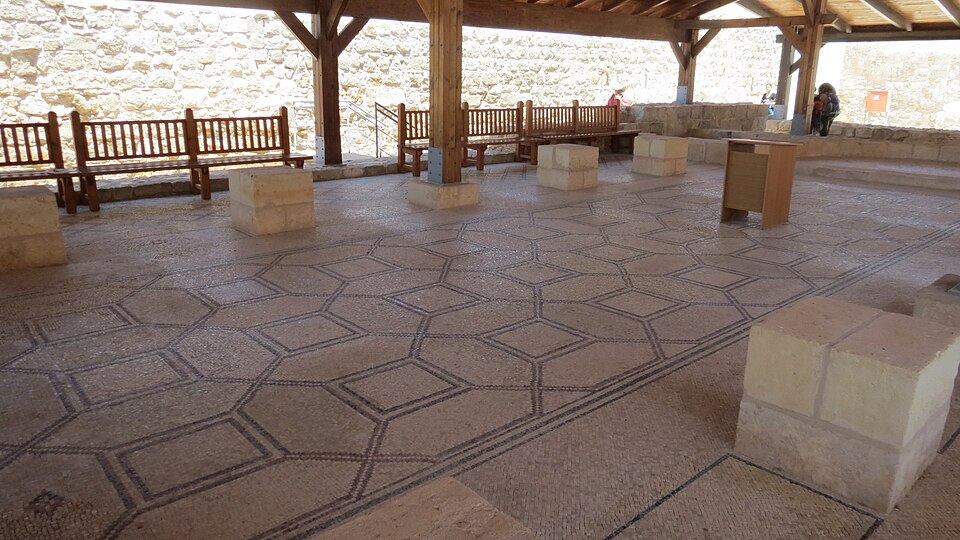
The museum, officially called the Mosaic Museum, is built around the ruins of a Byzantine church and a Crusader-era inn, both associated with the tradition of the Good Samaritan. The site displays one of the finest collections of ancient mosaics in Israel, gathered from synagogues, churches, and Samaritan buildings across the country. The mosaics, covering floors and walls, include Jewish symbols (menorot, lulavim), Christian motifs (crosses, animals), and Samaritan inscriptions, all displayed together in a building that sits on the road where the parable was set.
The juxtaposition is intentional: the parable is about seeing beyond religious boundaries, and the museum displays the art of three religions side by side.
Visit with Hoshen Tours
The Good Samaritan Museum sits on the ancient road from Jerusalem to Jericho, and Hoshen Tours includes it on itineraries through Wadi Qelt and the Judean Desert. Pair it with the scrolls at Qumran or a full day at the Dead Sea.
Explore Our Tour Collection
Ready to experience Israel in true colors?
Plan Your TourPrivate tours designed around your interests, schedule, and pace.