



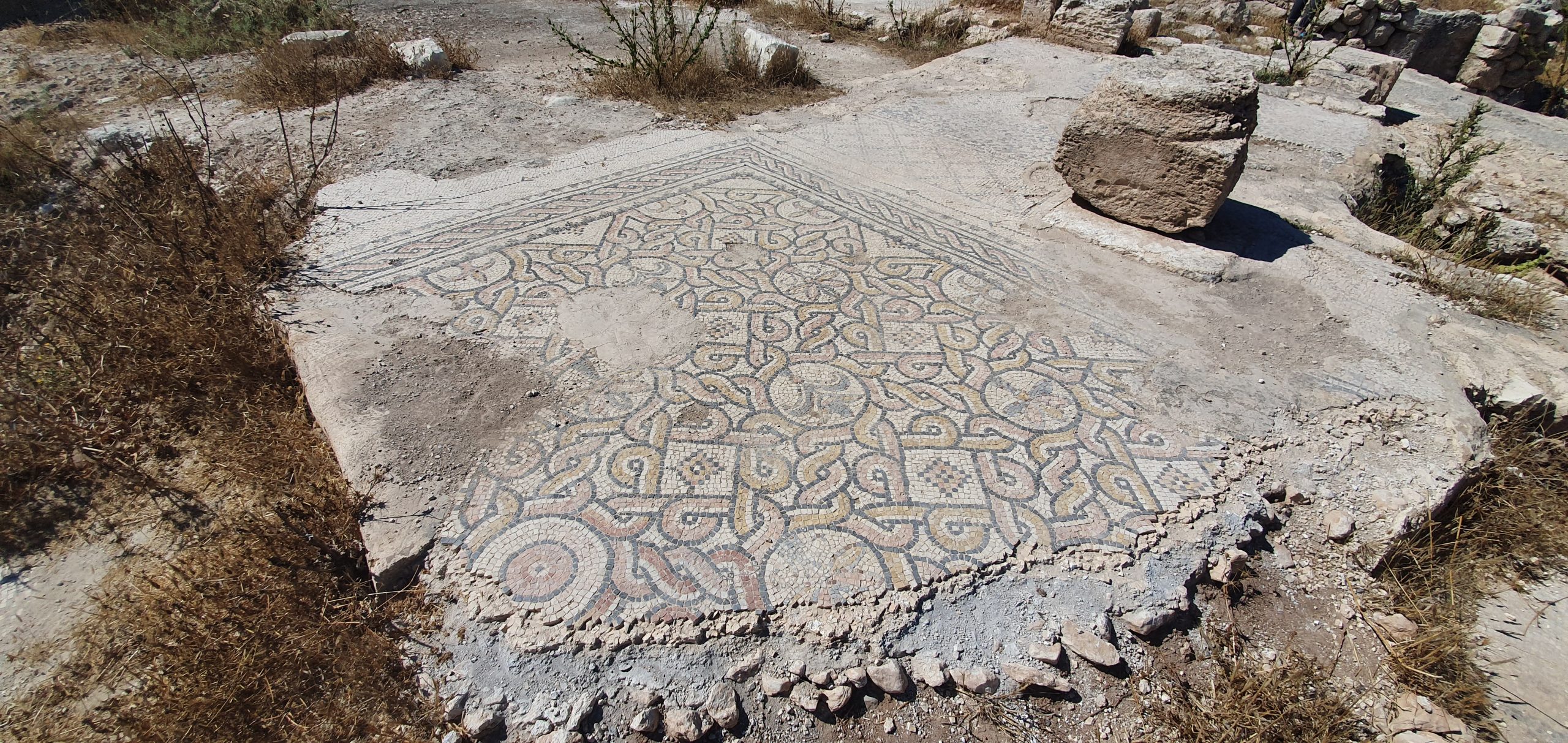
Horvat Burgin (Khirbet Umm Burj) is an archaeological site on a hilltop in the central Judean Shephelah, about 7.5 kilometers northeast of Beit Guvrin and 1.5 kilometers south of Horvat ‘Ethri, within the Adulam Grove Nature Reserve. What makes Horvat Burgin remarkable is not any single period but the sheer depth of its layers: Iron Age, Second Temple, Roman, Byzantine, Georgian monastic, and Ottoman, all stacked on the same hilltop, with the underground caves connecting them across two thousand years.
Jewish Village
In the 1st and 2nd centuries CE, Horvat Burgin was a sizeable Jewish village. The site may be identified with Kafar Bis, a village mentioned by Josephus in connection with the Roman campaigns in the Shephelah. Like its neighbor Horvat ‘Ethri, the village was home to a Jewish farming community that cultivated the fertile foothills and maintained ritual observance. Archaeological evidence includes wine presses, cisterns, and domestic structures typical of Jewish settlements in the region.
Hiding Complexes
Beneath the houses of Horvat Burgin, the villagers carved an extensive network of underground hiding tunnels, interconnected chambers, crawl passages, and concealed entrances designed as refuges during the revolts against Rome. The hiding complexes include rooms with multiple exits, narrow defensive corridors, and storage niches. A short ink inscription in cursive Hebrew script, incised on a doorjamb of one of the underground rooms, provides direct evidence of the Jewish inhabitants who built and used these tunnels. The complexes attest to the village’s participation in both the Great Revolt (66–70 CE) and the Bar Kokhba revolt (132–135 CE).
Burial Caves
The eastern necropolis of Horvat Burgin is one of the most unusual cemeteries in the Shephelah. Burial caves from the Second Temple period sit alongside Roman-era pagan tombs and later Christian burials. A layered cemetery that reflects the successive populations that lived on this hill. A Latin ink inscription on a storage jar handle suggests the presence of Roman settlers, possibly military veterans, who moved into the village after the suppression of the Bar Kokhba revolt and the expulsion of the Jewish population.
Byzantine Monastery
In the 4th century CE, Horvat Burgin took on a Christian character. A monastery was built near the summit of the hill, and the remains of two superimposed Byzantine churches have been uncovered by excavations directed by Peter Gendelman, Alon Klein, and Amir Ganor of the Israel Antiquities Authority. The churches feature mosaic floors, and Christian burial caves were added to the cemetery. The monastery served the growing Christian community in the Shephelah during the centuries when the region was part of the Byzantine Empire.
Georgian Hermitage
One of the most unexpected discoveries at Horvat Burgin is the evidence of Georgian monks. Inscriptions in Georgian script, dating to the Fatimid and Crusader periods (10th, 12th centuries CE), were found on the walls of an abandoned water cistern. The inscriptions suggest that Georgian monks used the cistern as a hermitage, a solitary retreat for prayer and meditation, far from any known Georgian monastery. Georgian monastic presence in the Holy Land is well documented at major sites like the Monastery of the Cross in Jerusalem, but finding Georgian hermits in a remote Shephelah cave adds a surprising chapter to the story of Christian monasticism in the region.
Agricultural installations at Horvat Burgin include a rock-cut winepress and remains of a columbarium (dovecote), reflecting the same mixed economy seen across the Shephelah: wine, olive oil, and pigeon breeding. These installations were in use across multiple periods, from the Second Temple era through the Byzantine period.
Visit with Hoshen Tours
Horvat Burgin traces a path from a Jewish village to a Georgian hermitage. Hoshen Tours pairs it with Beit Guvrin, the caves of Adulam Park, the ancient city of Maresha, and the mosaics at Beit Loya.
Explore Our Tour Collection
Ready to experience Israel in true colors?
Plan Your TourPrivate tours designed around your interests, schedule, and pace.