



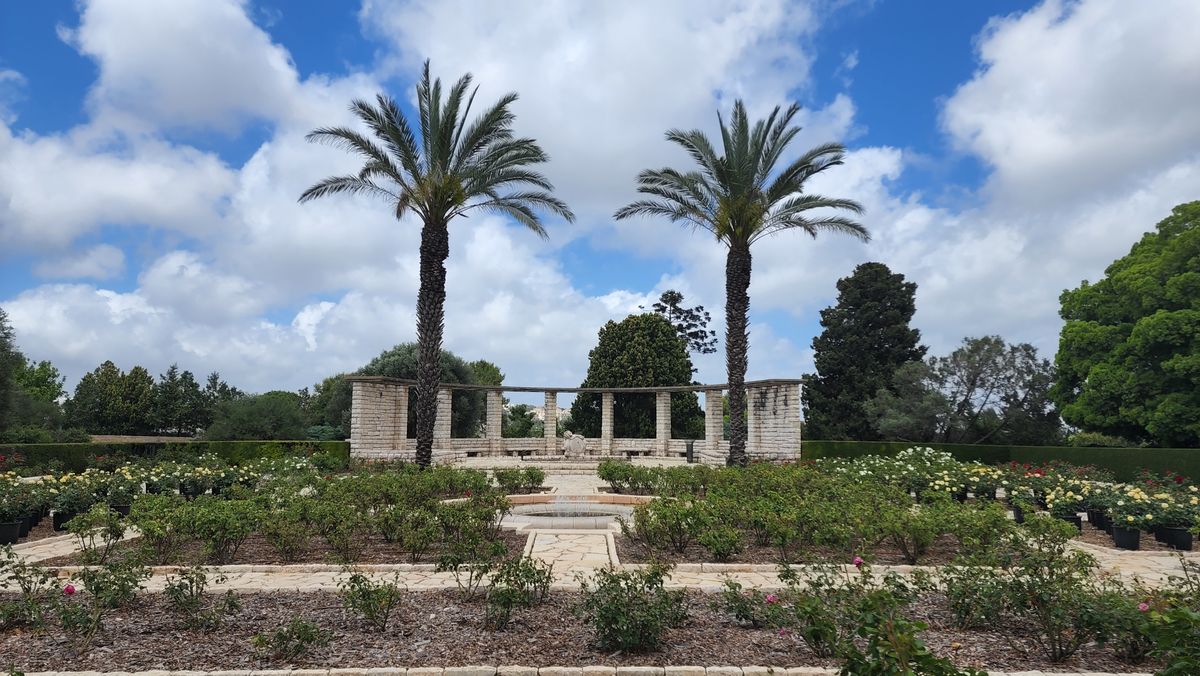
Ramat HaNadiv (“Heights of the Benefactor”) is a memorial garden and nature park on the southern tip of Mount Carmel, overlooking the coastal plain from Zikhron Ya’akov to Caesarea and the sea. It is the burial place of Baron Edmond de Rothschild, the man who financed the survival of Jewish settlement in the Land of Israel, and it is one of the most beautiful gardens in the country.
Baron Edmond de Rothschild: Father of the Yishuv
Baron Edmond James de Rothschild (1845–1934) of the Paris branch of the Rothschild banking family was the single most important financial supporter of early Jewish settlement in Palestine. Historians have called him “Avi HaYishuv”, the father of the Yishuv, and the title is not an exaggeration. Beginning in 1882, he poured millions of francs into struggling colonies that would otherwise have collapsed: funding vineyards, wineries, housing, schools, wells, and agricultural infrastructure in settlements from Zikhron Ya’akov and Rosh Pina to Rishon LeZion and Mazkeret Batya. He was known as “HaNadiv HaYadu’a” (the Well-Known Benefactor), a title that acknowledged both his generosity and his insistence on anonymity in the early years.
Discovery and Debate
The colonies he supported, the vanguard of the First Aliyah, were in desperate shape when he found them. Malaria from the coastal marshes killed settlers in their first seasons. The soil was unfamiliar, the heat relentless, and the poverty so acute that some communities sold their Torah scrolls to pay debts. Without the Baron’s intervention, the First Aliyah would have died in infancy, and the entire chain of settlement that followed (the cities, the institutions, the eventual state) might never have existed. He did not merely send money. He sent agronomists, doctors, and engineers. He bought land from Ottoman landowners and held it for the settlers. He introduced almond and citrus cultivation alongside the vineyards. He built wineries in Zikhron Ya’akov and Rishon LeZion (the latter becoming the Carmel Winery, still operating today), glass factories, and schools that educated the children of the colonies. He funded the infrastructure of towns: water systems, roads, and the red Marseilles roof tiles that became the visual signature of a Rothschild-funded village.
Between 1882 and 1899, the Baron invested an estimated 50 million francs in the settlements of Palestine. His approach was paternalistic and sometimes autocratic. His administrators, the pekidim, exercised tight control, dictating what to plant and how to farm. But without his money and stubbornness, none of it would have survived. In 1899, he transferred management of his colonies to the Jewish Colonization Association (ICA), and in 1924 he established the Palestine Jewish Colonization Association (PICA) to continue development work. He visited Palestine multiple times, walking the fields he had planted and the streets he had paved. He died in Paris in 1934 at the age of 89, fourteen years before the state he had made possible declared its independence.
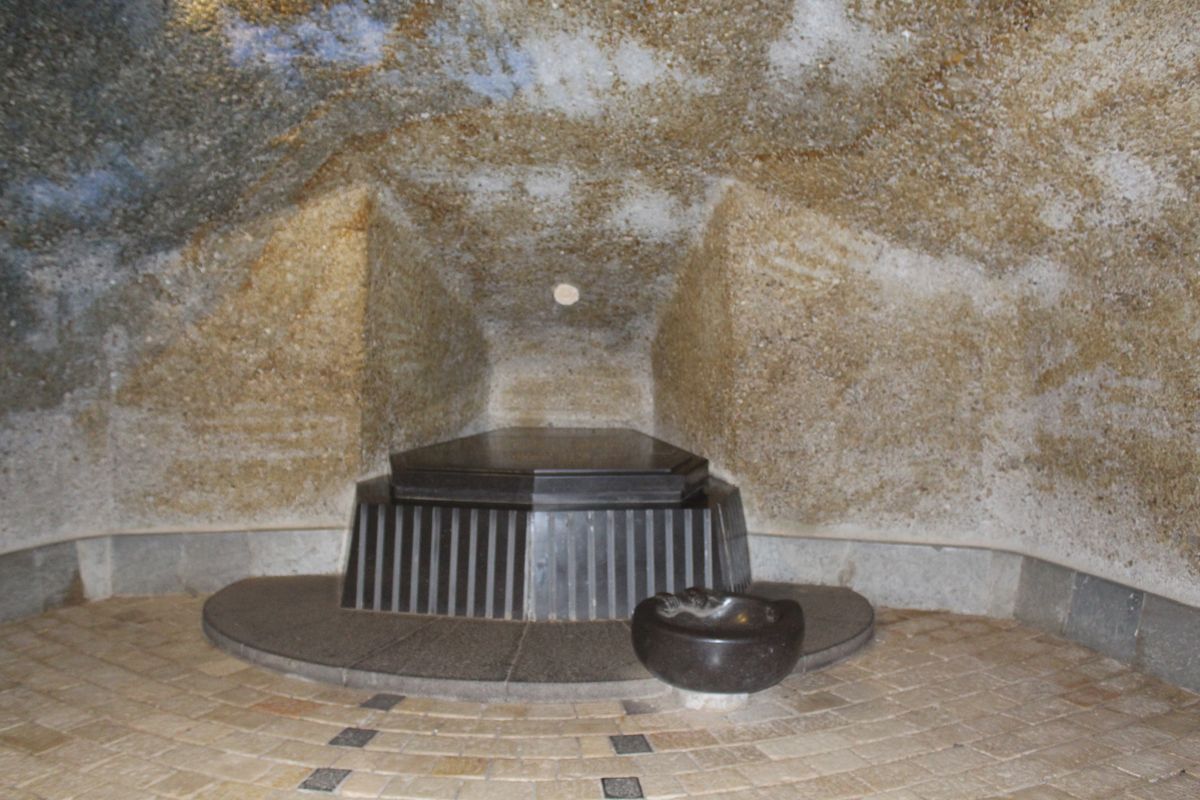
The Tomb of Baron and Baroness de Rothschild
Baron Edmond wished to be buried in the Land of Israel. In 1954, twenty years after his death, his remains and those of his wife, Baroness Adelheid (née von Rothschild, 1853–1935), were transferred from Père Lachaise Cemetery in Paris to the hilltop above Zikhron Ya’akov. The reinterment on April 6, 1954, was a state ceremony attended by President Yitzhak Ben-Zvi and Prime Minister Moshe Sharett, with former Prime Minister David Ben-Gurion also in attendance. A naval vessel brought the remains from France to Haifa, and a procession carried them to the site that would bear his name. The memorial crypt, carved into the hillside at the highest point of the gardens, is simple and dignified: two stone sarcophagi for Edmond and Adelheid, a deliberate contrast to the family’s legendary wealth. Standing there, with the sea visible through the trees to the west and the coastal plain spreading below, the setting conveys exactly the dignity that the man deserved.
The Gardens
The formal gardens surrounding the crypt were inaugurated in 1954 and have been expanded and refined over the decades into one of Israel’s finest designed landscapes. They are organized into distinct zones, each with its own character. The formal Mediterranean garden, the heart of the complex, features geometric hedges, symmetrical stone paths, and cascading terraces descending the hillside in a style that reflects the Rothschilds’ French heritage. A Fragrance Garden is planted with aromatic Mediterranean herbs and shrubs: rosemary, lavender, sage, and myrtle, chosen so that visitors can touch and smell the plants of the biblical landscape. A Palm Garden creates a shaded promenade of tall date palms, while a Cascade Garden channels water down tiered stone channels through lush plantings, a rare and theatrical feature in this dry climate. An Iris Garden and a Succulent Garden complete the zones. The entire complex is meticulously maintained by the Yad HaNadiv foundation, and the planting is calibrated so that something is in bloom in every season. The panoramic views from the upper terraces stretch westward to the Mediterranean and southward across the Sharon plain.
The Nature Park
Beyond the formal gardens, the broader Ramat HaNadiv park encompasses approximately 4,500 dunams (450 hectares) of Mediterranean maquis and garrigue: Israeli oak (Quercus calliprinos), carob, lentisk, Palestine terebinth, and seasonal wildflowers that carpet the hillside in spring. Several marked hiking trails ranging from one to five kilometers wind through the landscape, passing ancient agricultural installations that speak to the long human history of this ridge. Wine presses carved into the bedrock, olive presses, cisterns, and the remains of farmsteads from the Roman and Byzantine periods are scattered along the trails, evidence that these slopes were densely settled and productive for centuries before their abandonment. The park is also a habitat for wildlife: wild boar, gazelles, jackals, and a rich variety of raptors and songbirds. Entry to the park and gardens is free, funded by the Rothschild family’s Yad HaNadiv foundation.
Baron Edmond’s son, James Armand de Rothschild (1878–1957), continued his father’s philanthropy. His most famous bequest was the funding of the Knesset building in Jerusalem, completed in 1966. The Yad HaNadiv foundation, established in his name, continues to support cultural and educational projects in Israel to this day.
Visit with Hoshen Tours
A visit to Ramat HaNadiv pairs beautifully with nearby destinations along your route. Consider combining it with a stop at Caesarea or Nahal Taninim, both just a short drive away. Many travelers also enjoy exploring Caesarea Aqueduct and Tel Dor on the same day, while Habonim Beach offers another worthwhile addition to your itinerary. Your Hoshen Tours guide will craft a seamless route that brings each destination to life with expert commentary and insider knowledge.
Explore Our Tour Collection
Ready to experience Israel in true colors?
Plan Your TourPrivate tours designed around your interests, schedule, and pace.