



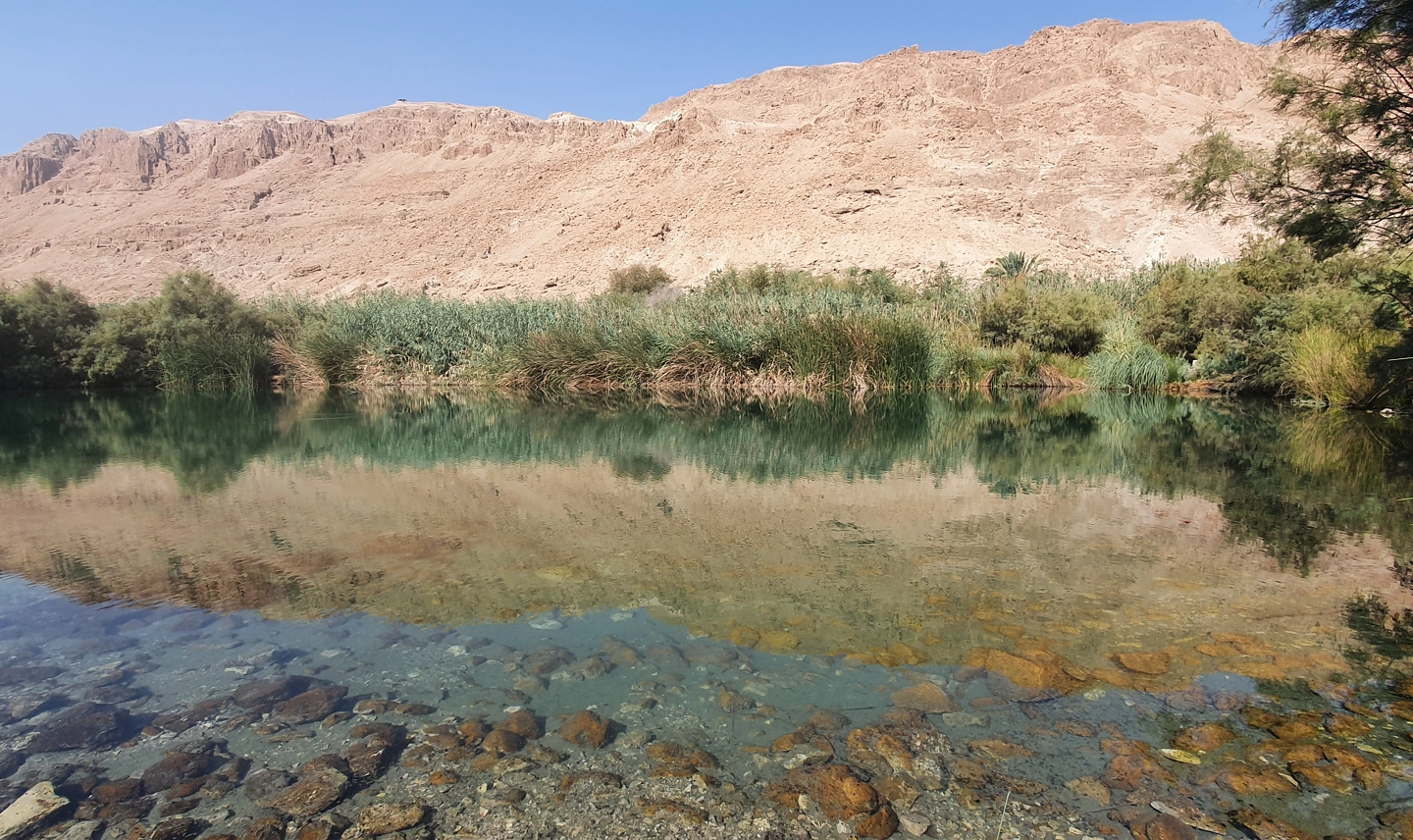
Ein Prat (also known as Ein Fara or the upper section of Wadi Qelt) is a series of natural spring pools in the Judean Desert, just 20 minutes from Jerusalem. The springs flow year-round through a narrow canyon, creating pools of clear, cool water surrounded by reeds, fig trees, and the vertical desert cliffs. It is the closest desert oasis to Jerusalem and one of the most refreshing hikes in the region.
The Pools
Three main springs feed the pools: Ein Prat, Ein Mabo’a, and Ein Qelt. The upper pools are the most accessible, reached by a short walk from the parking area. The water is cool and clear, the pools deep enough for swimming, and the canyon walls provide shade for most of the day. On hot days, the pools are busy with hikers and families, and the experience of swimming in fresh spring water in the middle of the desert is quintessentially Israeli.
The Monastery of St. Chariton
The canyon contains the ruins of a monastery (the Monastery of St. Chariton) founded in the 4th century by one of the earliest desert monks. The monastery was built around a cave where Chariton lived as a hermit, and its ruins are visible on the cliff face above the pools. The combination of swimming and monastic ruins makes Ein Prat a place where recreation and history share the same canyon.
Some scholars identify Ein Prat with the Parah or Prath mentioned in the Book of Jeremiah, where God instructed the prophet to hide a linen belt: “Go now to Perath and hide it there in a crevice in the rocks” (Jeremiah 13:4). The identification is debated, but the name Ein Prat preserves the ancient toponym.
Hiking the Ein Prat Canyon
The main trail follows the canyon downstream from the upper springs toward Wadi Qelt. The path passes through increasingly dramatic scenery as the canyon narrows and deepens. Sections of a Roman-era aqueduct are visible along the cliff walls, channeling water from the springs toward ancient Jericho. The hike can be done as a short loop to the upper pools and back (about an hour), or as a longer walk through the canyon toward the Monastery of St. George (a full day, requiring two cars or a pickup at the other end).
Pharan Laura
The monastery ruins at Ein Prat are the remains of the Pharan Laura, the oldest laura (hermit community) in the Judean Desert, founded by Chariton the Confessor around 330 CE. According to tradition, Chariton was a pilgrim from Iconium (modern Turkey) who was captured by bandits on the road from Jerusalem to Jericho. After his captors were miraculously killed by a snake that poisoned their wine, Chariton settled in their cave and began a life of prayer and solitude. Other monks joined him, and the Pharan Laura grew into a community of hermits living in caves along the cliff face, gathering for communal prayer on weekends. Chariton later left to found two more lauras, at Douka and at Souka near Mar Saba, but Pharan remained active for centuries.
Ibex, Starlings, and Canyon Wildlife
The permanent water in the canyon supports a surprising variety of wildlife. Ibex come to drink at the pools, especially in the early morning. Tristram’s starlings, the black and orange birds that are a signature of the Judean Desert canyons, nest in the cliff walls. Frogs, crabs, and fish live in the pools, and on quiet days the canyon echoes with birdsong. The contrast between the barren desert above the rim and the green, water-filled canyon below is one of the most dramatic in the Judean Desert.
Visit with Hoshen Tours
Ein Prat is a hidden gem that Hoshen Tours recommends for visitors who want to combine Jerusalem with the desert. The spring sits along the route of Wadi Qelt and makes a wonderful pairing with St. George Monastery. For those drawn to the spiritual history of the region, add the Judean Desert and the story of the desert monasteries.
Explore Our Tour Collection
Ready to experience Israel in true colors?
Plan Your TourPrivate tours designed around your interests, schedule, and pace.