



Nazareth’s neighbor to the northwest, Zippori (Sepphoris), was once the capital of the Galilee and one of the most sophisticated cities in Roman-era Land of Israel. For over 600 years, from the Hellenistic period through the Byzantine era, Zippori was a major urban center, a seat of Jewish scholarship, a hub of Roman culture, and a city so cosmopolitan that a visitor walking its streets would hear Greek, Aramaic, and Hebrew within a single block. Today it is a national park with some of the most spectacular mosaic floors in the world.
Capital of the Galilee
Zippori’s importance goes back to at least the Hasmonean period, when it served as the administrative capital of the Galilee. After the death of Herod the Great, his son Herod Antipas rebuilt the city as his capital and named it Autocratoris. The city was wealthy, well-planned, and deeply connected to the Roman world, with a theater, a colonnaded main street, residential villas, and an elaborate water system fed by aqueducts.
When the Jewish revolt against Rome broke out in 66 CE, Zippori made the pragmatic decision not to join the rebellion. The city surrendered peacefully to the Romans, saving itself from the destruction that befell Yodfat, Beit She’an’s neighbors, and eventually Jerusalem. This decision preserved the city and allowed it to thrive in the centuries that followed.
Rabbi Yehuda HaNasi and the Mishnah
Zippori’s greatest claim to Jewish history is its connection to Rabbi Yehuda HaNasi (Judah the Prince), the compiler of the Mishnah. Rabbi Yehuda HaNasi moved to Zippori toward the end of his life, around 200 CE, and it was here that he completed the monumental work of organizing and codifying the Oral Law into the six orders of the Mishnah. The Mishnah became the foundation of the Talmud and remains central to Jewish law and study to this day.
The Sanhedrin, the supreme Jewish legal body, was based in Zippori during this period, making the city the most important center of Jewish learning in the world. The rabbis who gathered here, building on the teachings of earlier sages like Rabbi Akiva and Rabbi Meir, created the framework of rabbinic Judaism that has sustained Jewish life for nearly two thousand years.
House of Dionysus and the Mona Lisa of the Galilee
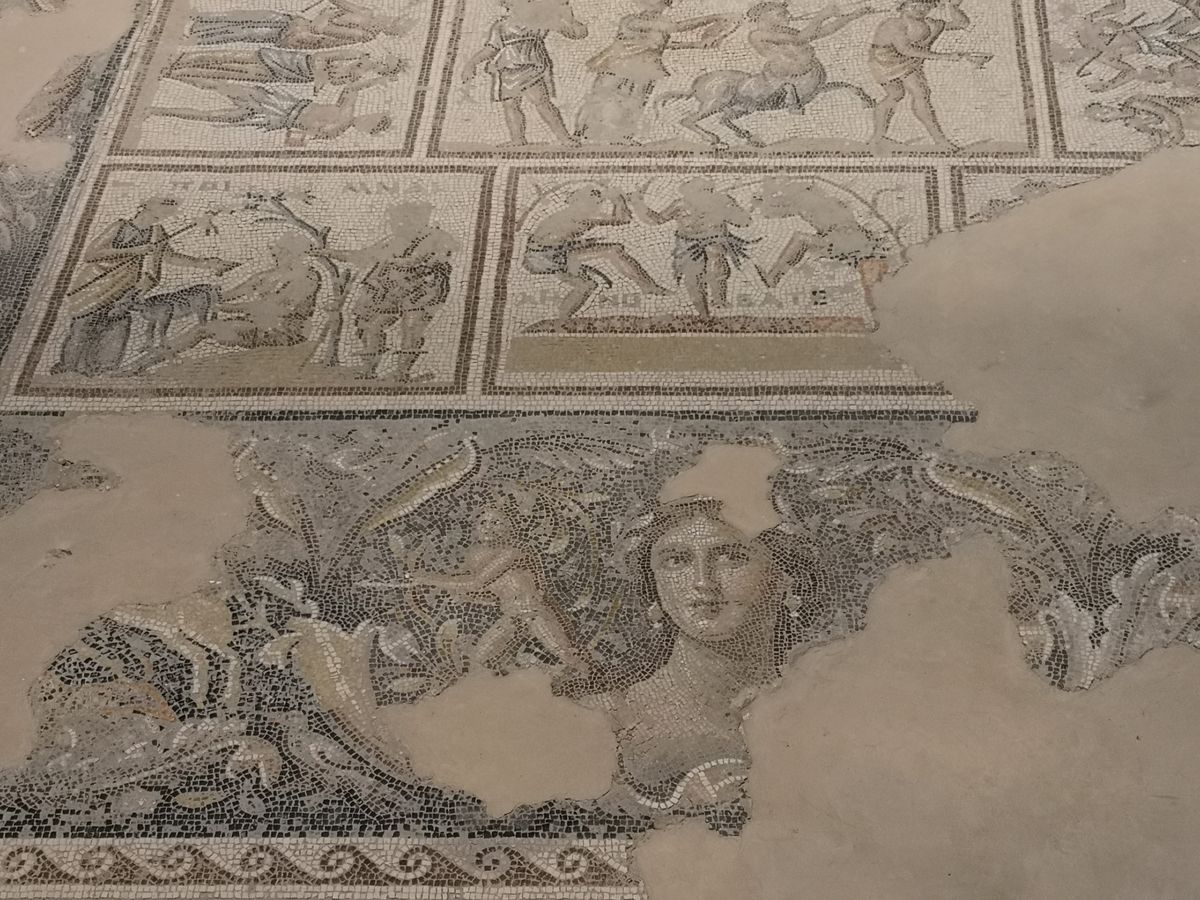
The most spectacular building uncovered at Zippori is a lavish 3rd-century Roman villa known as the House of Dionysus. The villa belonged to a wealthy resident, possibly a Roman official or a local aristocrat, and its floors are covered with some of the finest mosaic art ever discovered in Israel.
The star of the villa is the face of a woman, rendered in tiny mosaic stones with a skill that rivals anything from Pompeii. She gazes out from the floor with an expression so subtle and so lifelike that she has been nicknamed the Mona Lisa of the Galilee. Her eyes seem to follow the viewer, and the shading of her skin, hair, and jewelry demonstrates a level of artistic mastery that is extraordinary for a provincial Roman city.
But the Mona Lisa is only one panel in an elaborate mosaic program that covers the entire villa. The main dining room features a series of large panels depicting scenes from the cult of Dionysus, the Greek god of wine, festivity, and ecstasy. Dionysus was one of the most popular deities in the Roman East, and his cult celebrated the pleasures of wine, music, and theatrical performance. The mosaics show Dionysus in various scenes: his triumphal procession, drinking competitions, the making and pouring of wine, satyrs and maenads dancing in revelry, and mythological episodes from his life. One scene depicts Heracles (Hercules) in a drinking contest with Dionysus, a popular theme in Roman art that always ends with Heracles drunk and defeated, because no one can outdrink the god of wine.
The quality of the mosaics and their subject matter tell us that the residents of this villa lived in a thoroughly Romanized cultural world, where Greek mythology, fine dining, and the culture of wine were central to elite social life. The fact that this villa existed in the same city where Rabbi Yehuda HaNasi was compiling the Mishnah adds a remarkable layer to the story of Zippori: a city where Jewish scholarship and Roman luxury existed side by side.
Nile House
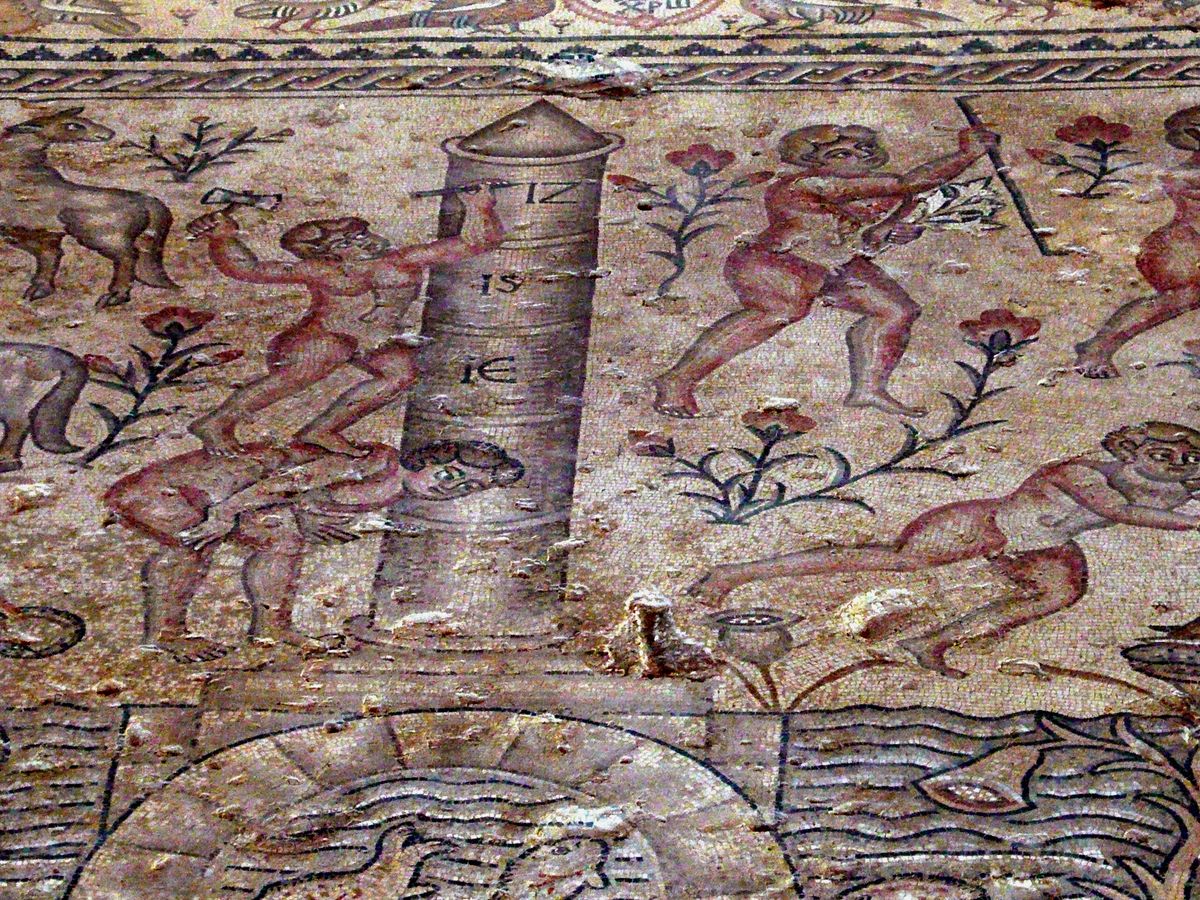
The Nile Festival Building, another magnificent structure at Zippori, contains one of the most impressive Nilotic mosaics in the ancient world. The floor mosaic depicts the Nile River in full flood, a scene that was a popular artistic motif across the Roman Empire, celebrating the annual inundation that made Egypt the breadbasket of the Mediterranean.
The mosaic is rich in detail: a Nilometer (the device used to measure the height of the flood) stands at the center, surrounded by scenes of Egyptian life along the riverbanks. Hunters pursue hippopotami and crocodiles in the marshes. Fishermen cast nets from small boats. Exotic animals, including ibises, water buffalo, and lions, populate the landscape. Architectural vignettes show temples and towers along the riverbank, and human figures engage in feasting and celebration, marking the festival of the Nile flood that guaranteed another year of agricultural abundance.
The presence of such an elaborate Nilotic mosaic in the Galilee speaks to the deep cultural and commercial connections between Roman Palestine and Egypt. Zippori was a cosmopolitan city whose elite were plugged into the wider Mediterranean world, importing not just goods but artistic fashions and cultural references from across the empire.
Ancient Synagogue
Among Zippori’s most remarkable discoveries is a 5th-century synagogue with a stunning mosaic floor that ranks among the finest ancient synagogue mosaics in Israel. The synagogue was built during the Byzantine period, when Zippori still had a significant Jewish community, and its mosaic floor is a masterpiece of Jewish art.
The central panel of the mosaic depicts a zodiac wheel with the twelve signs arranged in a circle, the four seasons personified in the corners, and the sun god Helios riding his chariot at the center, a motif found in several ancient synagogues in Israel, including Beit Alpha and Hamat Tiberias. Surrounding the zodiac are additional panels depicting biblical scenes, including the Binding of Isaac (the Akeda), the daily tamid offering in the Temple, and angels. The mosaic also features a depiction of the Holy Ark flanked by menorahs, incense shovels, and other ritual objects.
What makes the Zippori synagogue mosaic exceptional is the quality of its execution. The figures are rendered with a sophistication and naturalism that surpasses most other synagogue mosaics from the period. The zodiac, the biblical scenes, and the ritual objects together create a visual program that combines Jewish religious identity with the artistic conventions of the Greco-Roman world, much like the city itself.
At the top of the hill stands a Crusader-era fortress, later rebuilt by Daher el-Omar in the 18th century. The fortress offers panoramic views of the surrounding countryside. Nearby, a church marks the traditional birthplace of the Virgin Mary’s parents, Joachim and Anna, according to a local Christian tradition that places Mary’s family in Zippori.
Jesus and Zippori
Zippori was just 6 kilometers from Nazareth, and during Jesus’ childhood the city was being rebuilt by Herod Antipas as his capital. Many scholars believe that Joseph, described as a tekton (builder/craftsman), may have worked on the construction projects at Zippori. If so, the young Jesus would have been familiar with this cosmopolitan, Hellenistic city, with its theater, its mosaics, and its mix of Jewish and pagan culture, a striking contrast to the small village of Nazareth.
Visit with Hoshen Tours
Zippori deserves a full visit, not a quick stop. The mosaics alone could fill an hour, and the combination of Roman art, Jewish scholarship, Crusader fortifications, and Christian tradition makes it one of the richest archaeological sites in the Galilee. Hoshen Tours pairs it with Nazareth and Mount Tabor for a day that covers two thousand years of Galilean history.
Visitors exploring the Galilee often combine Zippori with nearby destinations such as Nazareth, Mount Tabor, and Yodfat, each offering its own distinctive perspective on the region’s layered history and landscape. A broader itinerary might also include Kfar Kedem and Nazareth Village, both within easy reach and rich in their own right.
Every Hoshen Tours itinerary is private and fully customizable. Contact us to begin planning your journey through the Galilee.
Explore Our Tour Collection
Ready to experience Israel in true colors?
Plan Your TourPrivate tours designed around your interests, schedule, and pace.