



In September 1866, a ship carrying 157 American Christians arrived at the port of Jaffa, led by a charismatic preacher named George Jones Adams. They had come from Jonesport, Maine, to establish a colony in the Holy Land that would prepare the way for the Second Coming of Christ and the restoration of the Jewish people to their homeland. The colony lasted barely two years before collapsing in disease, poverty, and disillusionment, but it left behind a legacy that connects to some of the most famous names in American culture.
The Colony That Failed
George Jones Adams was a former actor, a sometime Mormon elder, and a self-proclaimed prophet who convinced over 150 people from rural Maine to sell their possessions and follow him to the Holy Land. Adams preached that Christians had a duty to restore the Jews to their land and that the Second Coming was imminent. He raised funds, chartered a ship, and in 1866 led his followers across the Atlantic and the Mediterranean to Jaffa. The colonists brought prefabricated wooden houses from Maine, farming equipment, and the conviction that God had called them to build a new community on the ancient soil of Israel.
The Americans settled on land near Jaffa, in the area still known today as the American Colony neighborhood (the American-German Colony). They assembled their wooden houses, planted crops, and attempted to establish the agricultural community that Adams had promised. But the reality was devastating. The colonists had no experience with the climate, the soil, or the diseases of the Levant. Malaria ravaged the community. The wooden houses, designed for Maine winters, were unsuitable for the Mediterranean heat. The crops failed. And Adams, who had promised to abstain from alcohol, was discovered to be drinking heavily and mismanaging the colony’s funds.
Within a year, the colony was in crisis. Members were dying of disease. The money was running out. Adams was losing the trust of his followers. By 1868, the colony had effectively collapsed. Some colonists returned to America. Others were too poor or too sick to leave. The American consul in Jerusalem intervened to help the stranded settlers, and Mark Twain, who visited the Holy Land in 1867 and passed through the area, described the American colonists with a mixture of pity and bewilderment in his book “The Innocents Abroad.”
What Remained Behind
Among the colonists who stayed was Rolla Floyd, a young man from Maine who decided to remain in the Land of Israel after the colony failed. Floyd learned Arabic, integrated into the local community, and became one of the most colorful characters in late Ottoman Jaffa. He served as an interpreter, a guide, and an intermediary between the local population and the growing European and American presence. Floyd lived in Jaffa for decades and became a local legend, a bridge between the failed American dream and the reality of life in the Ottoman Levant.
The American Colony in Jaffa failed as a settlement, but its legacy echoes in unexpected ways. The wooden houses the colonists brought from Maine were purchased by the German Templers who arrived shortly after and incorporated them into their own colony at Sarona. The idea that Christians had a role in restoring the Jews to their land, which Adams preached, became a theme that would resurface in Christian Zionism decades later. And the neighborhood where the colonists settled, between Jaffa and what would become Tel Aviv, is still called the American Colony (sometimes the American-German Colony) to this day.
The Legacy
The American Colony in Jaffa should not be confused with the more famous American Colony in Jerusalem, founded in 1881 by Horatio and Anna Spafford (the family who inspired the hymn “It Is Well With My Soul” after losing their four daughters in a shipwreck). The Jerusalem American Colony became a renowned humanitarian institution and its building is today the American Colony Hotel, one of the most prestigious hotels in Jerusalem. The two colonies share the name and the impulse, American Christians drawn to the Holy Land by faith, but they are separate stories.
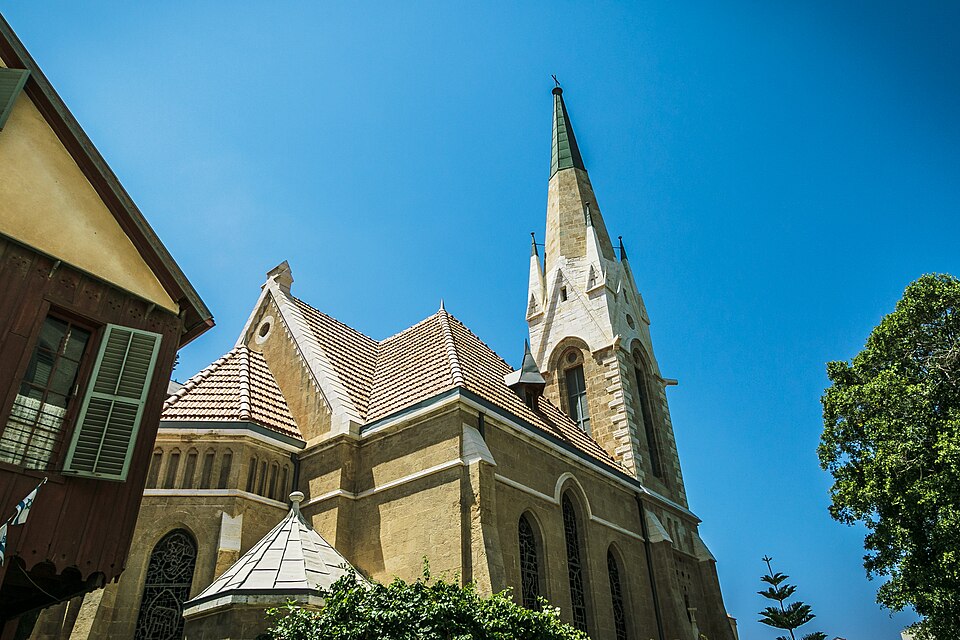
After the American colonists departed, the area was settled by German Templers, who built the Immanuel Church, an Evangelical Lutheran church that still stands and holds services today. The church is part of the historic landscape of the American-German Colony area, a quiet reminder of the successive waves of European Christians who came to the Holy Land with faith and ambition, and left behind buildings that outlasted their dreams.
Visit with Hoshen Tours
A visit to American Colony in Jaffa pairs beautifully with nearby destinations along your route. Consider combining it with a stop at Jaffa or Jaffa Flea Market, both just a short drive away. Many travelers also enjoy exploring Simon the Tanner and Tel Aviv on the same day, while Neve Tzedek offers another worthwhile addition to your itinerary. Your Hoshen Tours guide will craft a seamless route that brings each destination to life with expert commentary and insider knowledge.
Explore Our Tour Collection
Ready to experience Israel in true colors?
Plan Your TourPrivate tours designed around your interests, schedule, and pace.