



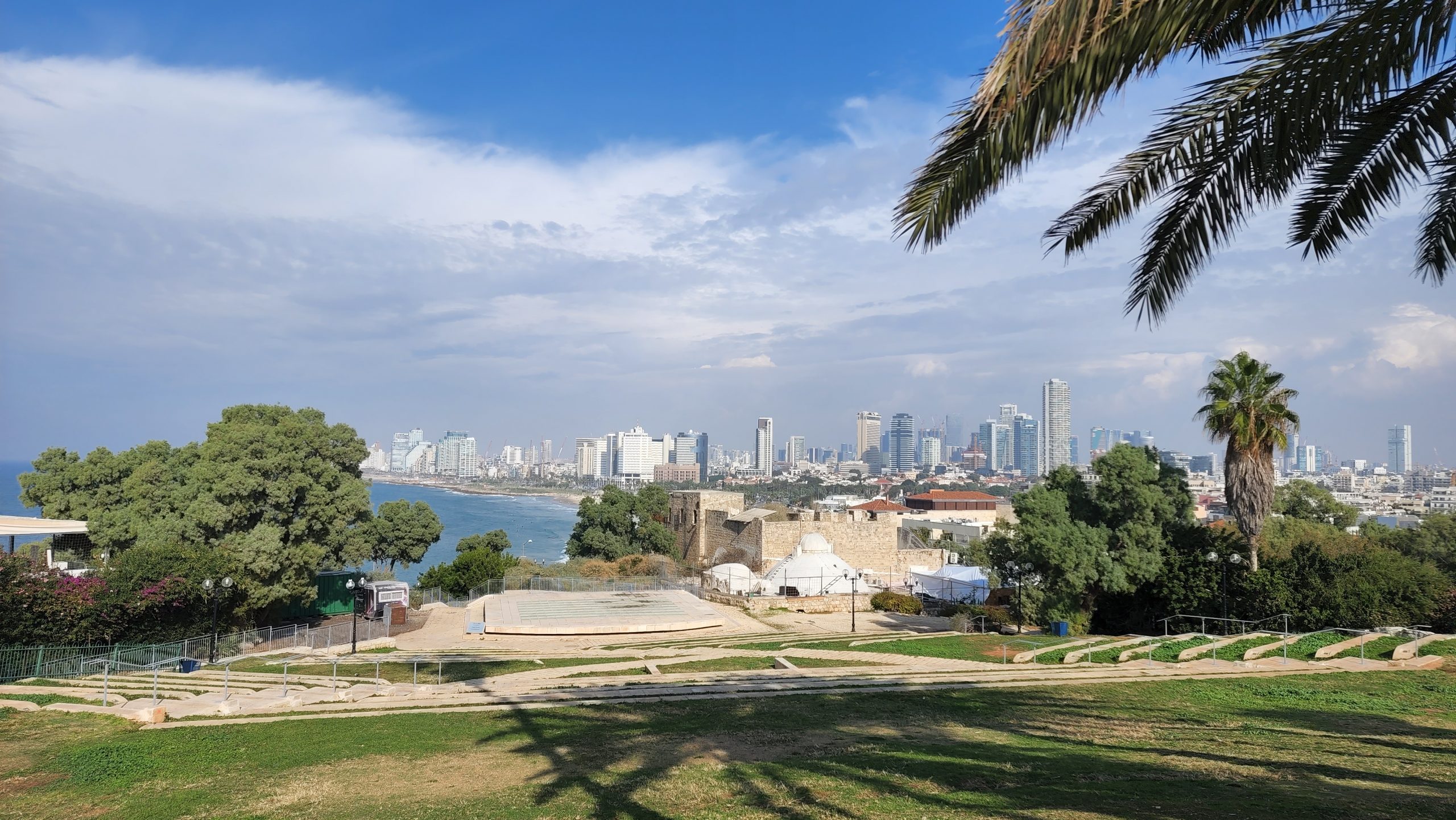
Tel Aviv was born on sand dunes. On April 11, 1909, sixty-six Jewish families gathered on a stretch of empty coast north of Jaffa and drew lots, using seashells as numbers, to divide plots of land for a new neighborhood they called Ahuzat Bayit. A photograph of that lottery, showing men and women in European dress standing on bare sand with nothing but sky behind them, has become one of the most iconic images in Israeli history. Within a generation, that empty sand would become the first Hebrew city in two thousand years. Within a century, it would become a metropolis of nearly half a million people, the center of Israel’s economy, culture, and nightlife, and one of the most vibrant cities on the Mediterranean.
From Sand Dunes to a City
The neighborhood was renamed Tel Aviv in 1910, “Hill of Spring”, borrowing the title of Nahum Sokolow’s Hebrew translation of Theodor Herzl’s utopian novel Altneuland (“Old New Land”). The name captured the founders’ ambition: a modern Jewish future built on ancient foundations. The driving force behind the young city was Meir Dizengoff, who served as head of the township council and later as mayor from 1921 until his death in 1936 (with a brief interruption in the late 1920s). Under his leadership, Tel Aviv grew from a few dozen houses to a thriving urban center. In 1925, the Scottish urban planner Sir Patrick Geddes was commissioned to design a master plan for the expanding city. His garden-city concept, wide boulevards, internal green spaces, a hierarchy of streets, shaped the urban layout that remains visible in central Tel Aviv today, and provided the framework for the architectural revolution that would follow.
The Site Today
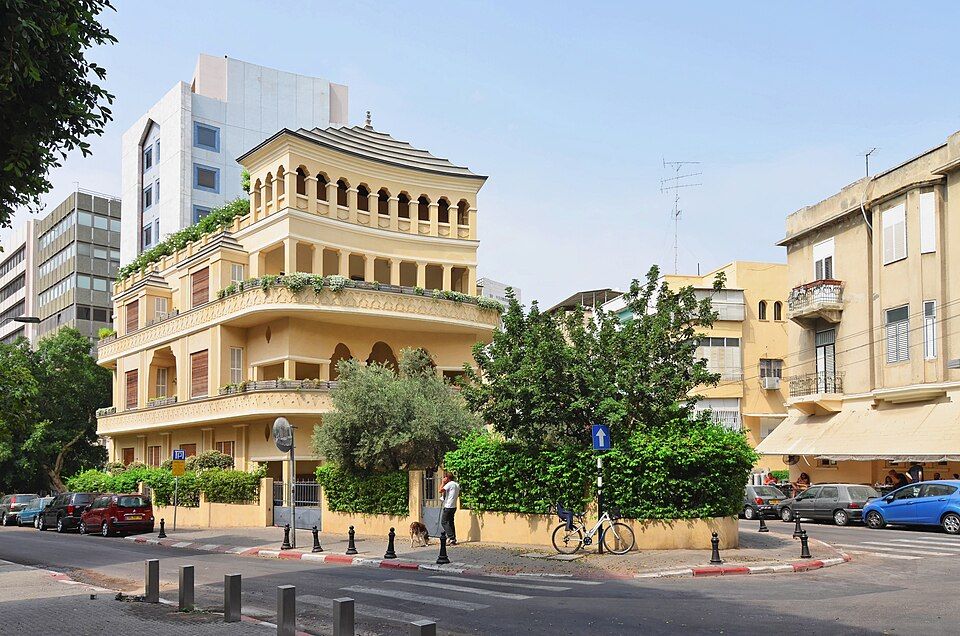 That revolution came in the 1930s, when thousands of Jewish architects and professionals fleeing Nazi Europe arrived in Palestine. Many had trained at the Bauhaus school in Germany or been influenced by Le Corbusier and the International Style. They found in Tel Aviv a blank canvas: a young city on flat ground with a Mediterranean climate, where modernist ideals of light, air, and functional design could be realized without the constraints of an existing urban fabric. Over the course of a decade, they built more than 4,000 buildings in what became known as the White City, the largest concentration of Bauhaus and International Style architecture anywhere in the world. In 2003, UNESCO designated the White City a World Heritage Site, recognizing it as “an outstanding example of new town planning and architecture in the early 20th century.”
Tel Aviv received full city status from the British Mandate authorities in 1934 and grew rapidly through the 1940s. By 1948, the population had reached approximately 230,000. After the War of Independence, the city was merged with Jaffa in 1950 to form the municipality of Tel Aviv-Yafo. Today, the city proper is home to roughly 460,000 people, while the greater metropolitan area, Gush Dan, holds over 3.5 million, making it by far the largest urban concentration in Israel.
The Cultural Capital
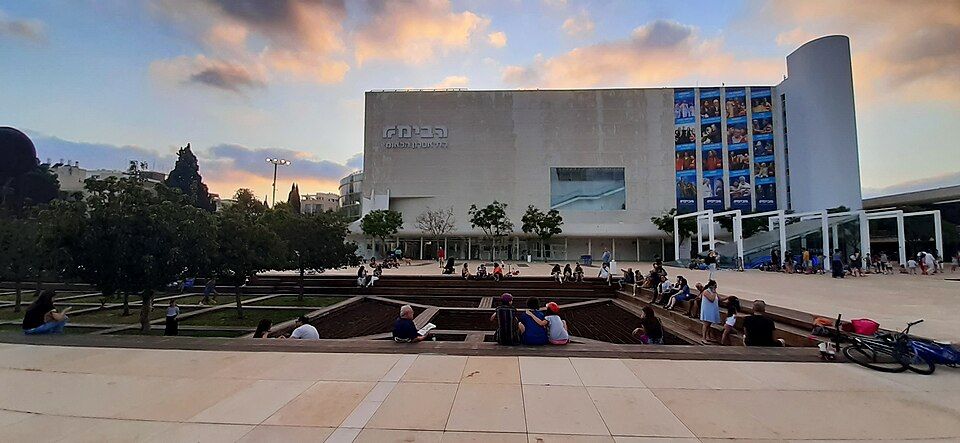 From its earliest days, Tel Aviv positioned itself as the cultural heart of the Jewish national project. The Habima Theatre, Israel’s national theater, was founded in Moscow in 1917 and relocated to Tel Aviv in the late 1920s. The Israel Philharmonic Orchestra, founded in 1936 by the violinist Bronislaw Huberman as the Palestine Philharmonic, gave its inaugural concert under the baton of Arturo Toscanini, a statement of cultural defiance in a world sliding toward catastrophe. The Tel Aviv Museum of Art, founded in 1932, has grown into one of the leading art institutions in the Middle East. And the ANU, Museum of the Jewish People, on the Tel Aviv University campus, tells the story of Jewish civilization across four thousand years.
But Tel Aviv’s cultural energy is not confined to institutions. The city’s identity is built on the street: the cafes of Rothschild Boulevard, the galleries of Neve Tzedek, the food stalls of the Carmel Market and Levinsky Market, the street art of Florentin, the beachfront promenade that runs from the old port to Jaffa. Tel Aviv is a city that lives outdoors, and its energy is palpable at almost any hour of the day or night. It is secular where Jerusalem is sacred, informal where other cities are stiff, and unapologetically forward-looking, a place that was built by people who had left the old world behind and were determined to create something new.
The Beach, the Markets, and the Food
 Tel Aviv is a Mediterranean city, and the sea defines its rhythm. Fourteen kilometers of sandy beaches stretch from the old port in the north to Jaffa in the south, connected by a promenade (tayelet) that fills with joggers, cyclists, and families from dawn to well past midnight. Each beach has its own character, the religious beach at Nordau, the surfer’s beach at Hilton, the family beaches at Frishman and Gordon, the drum circle at Dolphinarium on Friday afternoons. For many Israelis and visitors alike, the Tel Aviv beach is not a destination but a daily habit, the place where the city’s famously informal culture is most visible: business meetings in swimsuits, soldiers with rifles sunbathing between deployments, grandmothers playing matkot (beach paddleball) with the intensity of Olympic athletes.
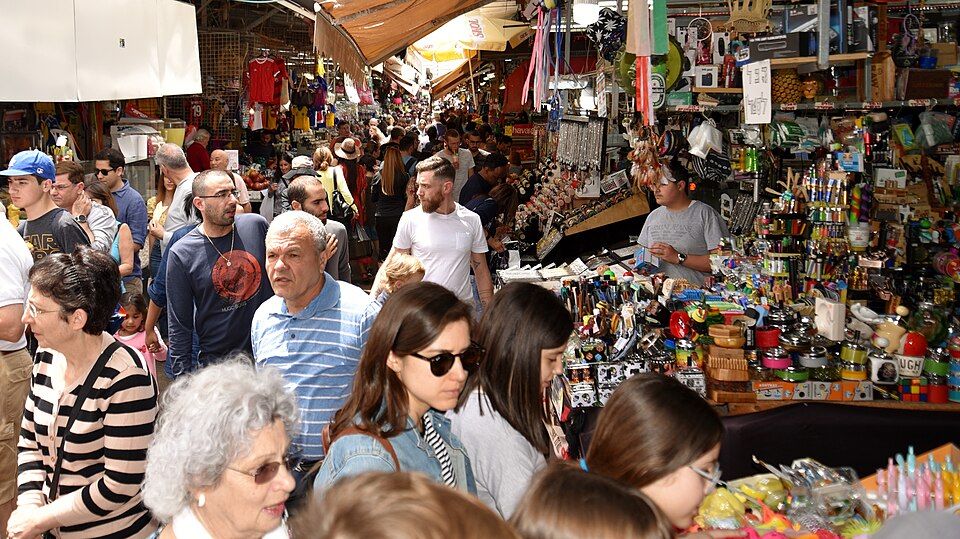
Inland, the city’s markets are as central to its identity as the beach. The Carmel Market (Shuk HaCarmel), the largest open-air market in the city, is a sensory overload of fruit, spices, halva, fresh juice, and street food, spilling from Allenby Street down to the Yemenite Quarter. Levinsky Market, a few blocks south, specializes in spices, dried fruits, and the flavors of Middle Eastern and North African Jewish cuisine. Sarona Market, housed in a restored Templar colony, offers an upscale indoor food hall. And the Jaffa Flea Market combines vintage furniture and antiques with some of the best restaurants in the country. Tel Aviv’s food scene, a fusion of Ashkenazi, Mizrahi, Arab, and global influences, has made it one of the most exciting culinary cities in the world.
Tel Aviv Israel Today
The city that began with 66 families on sand dunes is now the engine of Israel’s economy and its window to the world. The greater Tel Aviv metropolitan area produces a significant share of the country’s GDP, and the city has become a global center for technology and innovation, earning Israel the nickname “Startup Nation.” The concentration of tech companies, venture capital, and research institutions in and around Tel Aviv is among the densest anywhere outside Silicon Valley. At the same time, the city is the undisputed capital of Israeli nightlife, with bars, clubs, and restaurants that stay open until sunrise. Tel Aviv hosts one of the largest Pride parades in the world, drawing over 200,000 participants, and its reputation as an open, tolerant, and cosmopolitan city attracts young people from across Israel and beyond.
All of this exists in a city that is barely over a century old, a place that was sand dunes within living memory of some of its oldest residents. That tension between youth and ambition, between a city still being built and a city that already feels like it has always been here, is what gives Tel Aviv its particular energy. It is not a city of monuments and holy sites. It is a city of the present tense.
The City That Never Sleeps
Tel Aviv runs on coffee and runs late. The city’s cafe culture is not a lifestyle choice, it is a defining institution. Israelis consume more coffee per capita than almost any other country, and in Tel Aviv the cafe is where everything happens: business deals, first dates, screenplay writing, political arguments, and the essential art of sitting for hours over a single cappuccino and watching the street go by. Every neighborhood has its anchor cafes, from the old-school spots on Dizengoff and Ibn Gvirol to the third-wave roasters in Florentin and the south. The espresso is strong, the iced coffee (cafe kar) is a national obsession in the summer months, and the distinction between a cafe and a living room is, in Tel Aviv, largely theoretical.
When the cafes finally thin out, the bars open up. Tel Aviv’s nightlife is legendary, clubs and bars that don’t fill before midnight, after-parties that run until noon the next day, rooftop cocktail bars overlooking the sea, underground music venues in converted warehouses in the south of the city. The nightlife scene is fueled by a mix of locals, soldiers on weekend leave, expats, and tourists, and it operates on a schedule that would baffle most European cities: dinner at ten, drinks at midnight, dancing at two, the beach at sunrise. Thursdays and Fridays are the main nights out, and neighborhoods like Rothschild, Florentin, the old port, and the Jaffa Flea Market each have their own distinct after-dark personality. Tel Aviv has been called “the city that never sleeps”, and unlike most cities that claim that title, it actually means it.
Independence and Memory
Tel Aviv is where the State of Israel was born. On May 14, 1948, David Ben-Gurion stood beneath a portrait of Theodor Herzl in Meir Dizengoff’s former home on Rothschild Boulevard and read the Declaration of Independence. The audience sang Hatikvah, and a new country came into existence, hours before the British Mandate expired at midnight. Independence Hall has been preserved as a museum that recreates the scene of that moment. And at Rabin Square, a memorial marks the spot where Prime Minister Yitzhak Rabin was assassinated on November 4, 1995, after a peace rally attended by 100,000 people, a wound in the national consciousness that has never fully healed.
Visit with Hoshen Tours
A visit to Tel Aviv pairs beautifully with nearby destinations along your route. Consider combining it with a stop at Jaffa or Carmel Market, both just a short drive away. Many travelers also enjoy exploring Rothschild Boulevard and Neve Tzedek on the same day, while Tel Aviv Port offers another worthwhile addition to your itinerary. Your Hoshen Tours guide will craft a seamless route that brings each destination to life with expert commentary and insider knowledge.
Explore Our Tour Collection
Ready to experience Israel in true colors?
Plan Your TourPrivate tours designed around your interests, schedule, and pace.