



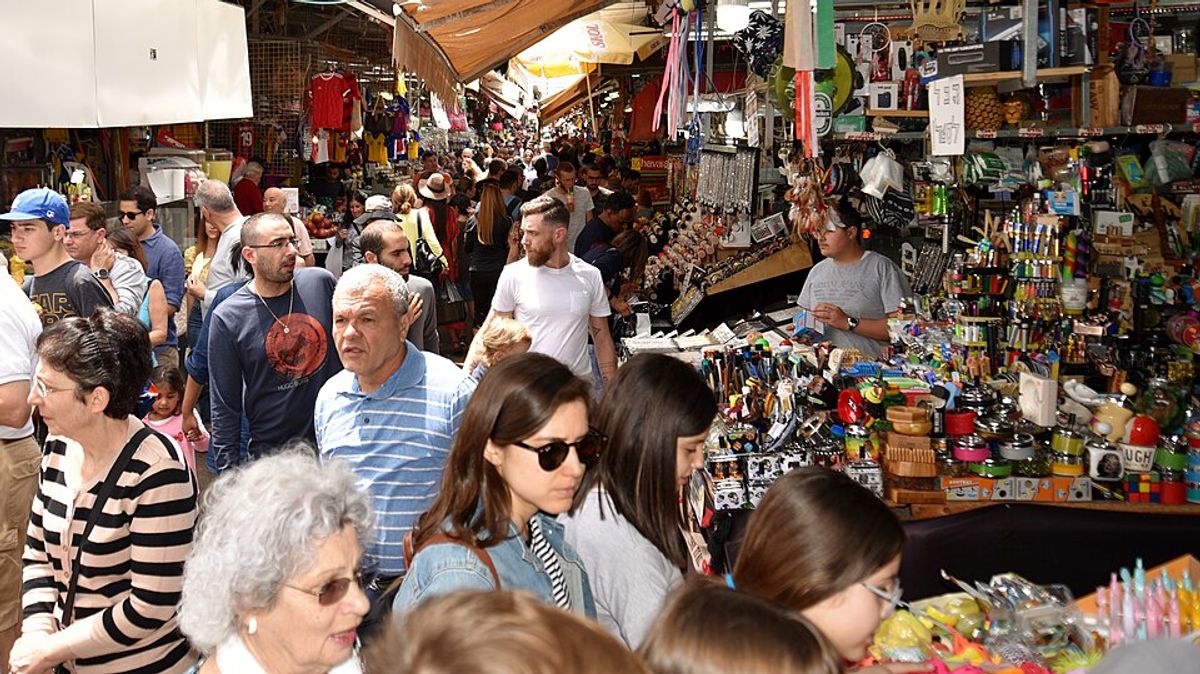
The Carmel Market (Shuk HaCarmel) is Tel Aviv’s largest and most vibrant market, stretching from Magen David Square southward toward the Kerem HaTeimanim neighborhood. The market is where Tel Aviv’s diverse population comes together, and the food, the noise, and the energy make it the city’s most intense sensory experience.
Magen David Square
The market begins at Magen David Square (Kikar Magen David), where six streets converge in a pattern that echoes the six-pointed star. The square is surrounded by Bauhaus and eclectic-style buildings from the 1920s and 1930s, including the distinctive Pagoda House with its Asian-inspired roofline. From here, the market stretches southward in a river of color and noise, while Nachlat Binyamin runs parallel to the east with its twice-weekly arts and crafts fair.
The 500-Meter Strip of Organized Chaos
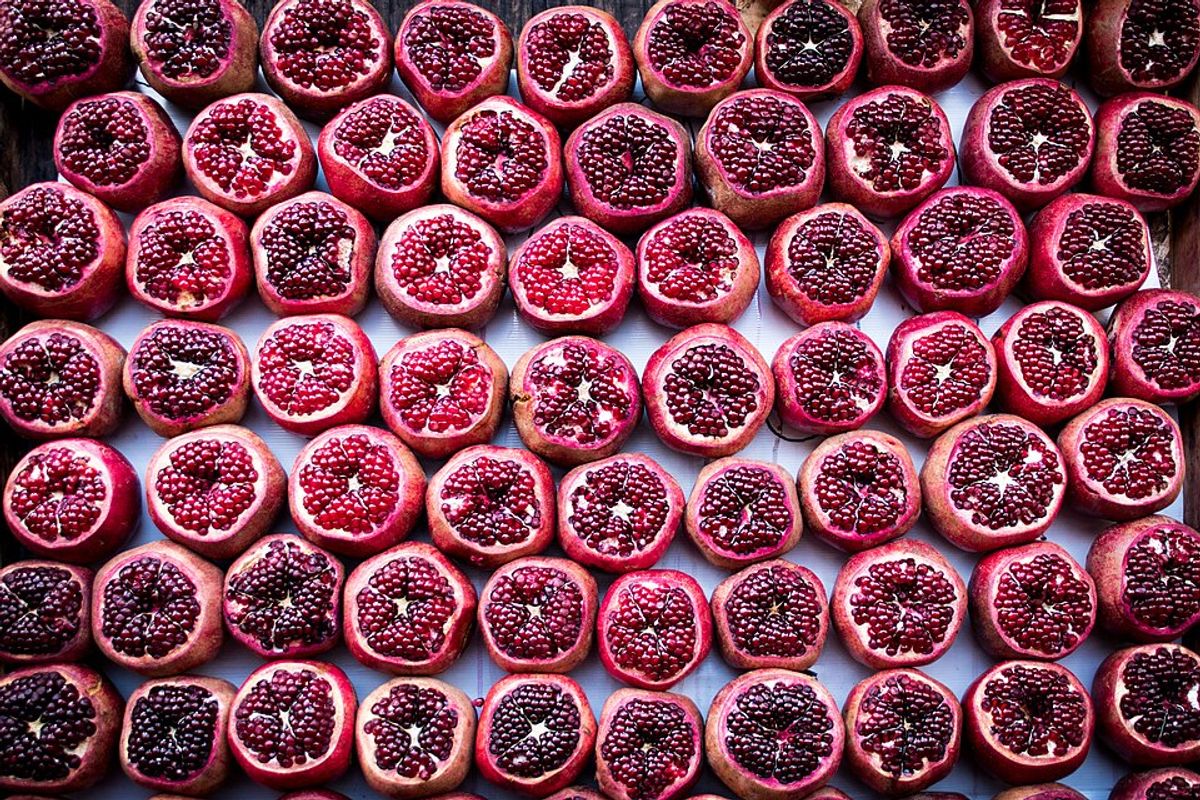
The Carmel Market is a 500-meter-long strip of organized chaos. The stalls sell everything: pyramids of fresh produce in colors that look artificially vivid but are not, freshly squeezed juices, dried fruits and nuts, olives in every cure and color, spices heaped in bins, fresh bread and pastries, fish on ice, meat hanging on hooks, cheap clothing, household goods, and flowers. The vendors call out prices and compete for customers with the aggressive hospitality that is uniquely Israeli: taste this, try that, you won’t find better. On Friday mornings, the market reaches peak intensity as all of Tel Aviv converges for last-minute Shabbat shopping. The aisles overflow, the vendors shout louder, and the energy is electric. By Friday afternoon the shutters come down and the silence is almost eerie.
The market dates to the early 1920s, when vendors began setting up stalls along what was then a sandy road south of the city center. As Tel Aviv grew, the market grew with it, absorbing wave after wave of immigrants who brought their foods, their spices, and their traditions. The Carmel Market became a mirror of Israeli society itself: Ashkenazi herring next to Mizrahi pickles, Russian smoked fish beside Yemenite hilbe, Ethiopian injera around the corner from a Romanian grill.
Kerem HaTeimanim: The Yemenite Quarter
Step off the southern end of the Carmel Market and you enter Kerem HaTeimanim, one of Tel Aviv’s oldest neighborhoods. Founded in 1904 by Yemenite Jewish immigrants who arrived as part of a steady migration that began in the 1880s, the quarter predates most of Tel Aviv itself. While the Ashkenazi founders were laying out Herzl Street in orderly European grids, the Yemenite community created something more intimate: low stone houses along narrow lanes, courtyards behind iron gates, and an atmosphere that still feels like a village inside a modern city.
The heart of the neighborhood is its food. Restaurants here serve dishes brought from Yemen over a century ago and preserved with fierce pride: kubaneh (slow-baked Shabbat bread with grated tomato), jachnun (caramelized overnight pastry), malawach (flaky flatbread), hilbe (fenugreek dip), and zhug (fiery chili paste). Meat soups simmered for hours with hawaij spice blend are the neighborhood’s soul food. The synagogues preserve Yemenite liturgical traditions distinct from both Ashkenazi and Sephardi practice, with melodies carried from Sana’a and Aden. Walking through Kerem HaTeimanim after a morning in the Carmel Market is a passage from the noise of commerce into the quiet of a community that has held its ground for over a century.
Running parallel to the market, Nachlat Binyamin hosts a twice-weekly arts and crafts fair where Israeli artisans display handmade jewelry, ceramics, and artwork. The pedestrian street is also lined with cafés and restaurants, making it a natural extension of a market visit.
Visit with Hoshen Tours
A visit to Carmel Market pairs beautifully with nearby destinations along your route. Consider combining it with a stop at Levinsky Market or Neve Tzedek, both just a short drive away. Many travelers also enjoy exploring Tel Aviv and Florentin on the same day, while Rothschild Boulevard offers another worthwhile addition to your itinerary. Your Hoshen Tours guide will craft a seamless route that brings each destination to life with expert commentary and insider knowledge.
Explore Our Tour Collection
Ready to experience Israel in true colors?
Plan Your TourPrivate tours designed around your interests, schedule, and pace.