



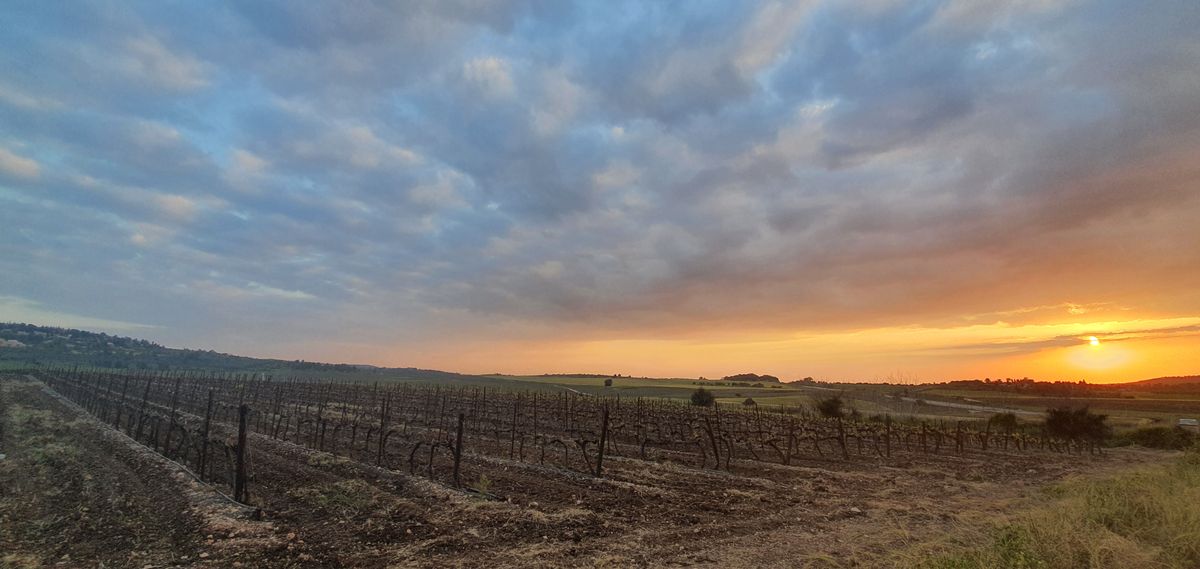
The Ella Valley (Emek HaElah) is the valley where David killed Goliath, one of the most famous stories in the Bible and one of the few biblical narratives that can be placed in a precise geographic location. The valley runs east-west through the Judean foothills, forming a natural corridor between the coastal plain and the hill country, and it was here, in the border zone between Israelite and Philistine territory, that the shepherd boy faced the giant. Come to this valley and the story stops being a story. It becomes a place.
The Story, From Beginning to End
The Philistines assembled on the southern ridge of the valley, the Israelites on the northern ridge, with the valley floor between them. The Philistine champion Goliath, described as “six cubits and a span” tall (roughly 2.9 meters), came out every day for 40 days and challenged any Israelite to single combat. King Saul’s army stood frozen. No one moved.
Then David arrived. He was a young shepherd who had come down from Bethlehem to bring food to his brothers serving in the army. He heard Goliath’s challenge, and he could not understand why no one was stepping forward. He volunteered. Saul tried to dress him in armor, but David shook it off. He knew what he could do. He went down to the brook running along the valley floor, picked five smooth stones, and put them in his bag.
“David put his hand into his bag and took out a stone, slung it, and struck the Philistine on his forehead. The stone sank into his forehead, and he fell face down on the ground” (1 Samuel 17:49). The giant who had terrified an entire army went down with a single stone from a shepherd boy.
What happened next is less often told. David had no sword of his own, so he ran to Goliath, drew the giant’s own sword from its sheath, and cut off his head. When the Philistines saw their champion was dead, they turned and fled, all the way back to Gath and Ekron (1 Samuel 17:52). The Israelites chased them down the road toward the coast, and David returned carrying Goliath’s head.
What It Meant: David’s Road to Kingship
That afternoon in the Ella Valley changed everything. Saul brought David into his household. The people celebrated him. Women came out singing “Saul has slain his thousands, and David his tens of thousands.” It was a song of praise, but it was the thing that planted a seed of fear and jealousy in Saul that never went away. From that day, Saul watched David differently. The boy who killed the giant became the man the king could not stop thinking about.
The Ella Valley is where David’s long journey to the throne began. Not in Jerusalem, not in Hebron, but here, in the foothills, with a sling and a stone and the nerve to walk toward something everyone else was running from.
The Landscape Has Not Changed
The geography of 1 Samuel 17 is described with unusual precision, and when you stand in the valley, you understand why. Two long ridges face each other across a narrow valley. The southern ridge, where the Philistines camped near Sokho and Azekah, rises steeply above the valley floor. The northern ridge, where Saul’s army waited, faces it directly. Between them, Nahal HaElah, the brook of the valley, still runs along the bottom in the wet season, and smooth stones still fill its bed.
Neither ridge has been built over. There are no roads cutting through the middle of the valley, no suburbs creeping down from the hillsides. The basic shape of the landscape, two armies on opposite hills looking down at a valley floor neither wanted to cross, is still exactly what it was 3,000 years ago. When you read the story standing there, the tactical logic is immediate. You can see why both sides waited. You can see the stream. You can understand why five smooth stones from that specific brook mattered.
The Elah Tree
The valley is named for the elah tree, known in English as the Atlantic pistachio or terebinth. It is a large, spreading tree with twisted branches and small red berries, and it has grown throughout the Shephelah for thousands of years. Ancient elah trees still stand in the valley, some of them enormous. The Hebrew word elah sounds like El, one of the ancient names for God, which gives the valley its name a kind of layered meaning. This is the valley of the God-tree, and it is also the valley where, tradition holds, God’s chosen champion defeated the Philistine giant.
Khirbet Qeiyafa: The Oldest Hebrew Inscription
On the northern ridge overlooking the valley sits Khirbet Qeiyafa, a fortified site excavated by archaeologist Yosef Garfinkel starting in 2007. The site dates to the early Iron Age, around the 11th to 10th centuries BCE, which places it squarely in the period of David and Saul. Garfinkel identified it as possibly biblical Sha’arayim, meaning “two gates,” because the site has two gates, which is unusual for a site this size and matches a detail in 1 Samuel 17:52.
The most remarkable find from Qeiyafa is the Khirbet Qeiyafa ostracon, a pottery shard inscribed with what may be the oldest Hebrew inscription ever found. The text is still debated, but the discovery set off serious academic discussion about literacy, administration, and the early Israelite state in the period when David’s kingdom was being established. Whether or not Qeiyafa is Sha’arayim, it is a real Iron Age fortress looking down at the real Ella Valley, and standing there while holding open 1 Samuel is a remarkable experience.
Five Biblical Tels in One Valley
The valley is surrounded by some of the most important archaeological sites in Israel. Khirbet Qeiyafa guards the northern ridge. Tel Sokho marks the area of the Philistine camp on the south. Tel Azekah guards the western entrance to the valley. And Tel Zafit (Gath), the city Goliath came from, is visible from the valley floor. The density of connected sites in a single landscape makes the Ella Valley one of the best places in Israel to read the Bible with the terrain open in front of you.
The Wineries
The Ella Valley is also part of the Judean foothills wine region, and several boutique wineries operate in the valley and on its ridges. The combination of biblical history and contemporary winemaking makes for an unusual and rewarding day trip from Jerusalem.
Visit with Hoshen Tours
The Ella Valley is where the David and Goliath story becomes real. Hoshen Tours reads 1 Samuel 17 in the valley, identifies the camps, the brook, and the ridges, and connects the story to the landscape where it happened. We also include Khirbet Qeiyafa for groups who want to see the archaeological side of the period.
Ready to experience Israel in true colors?
Plan Your TourPrivate tours designed around your interests, schedule, and pace.