


Call us today!
+1-917-9055850

Magazine
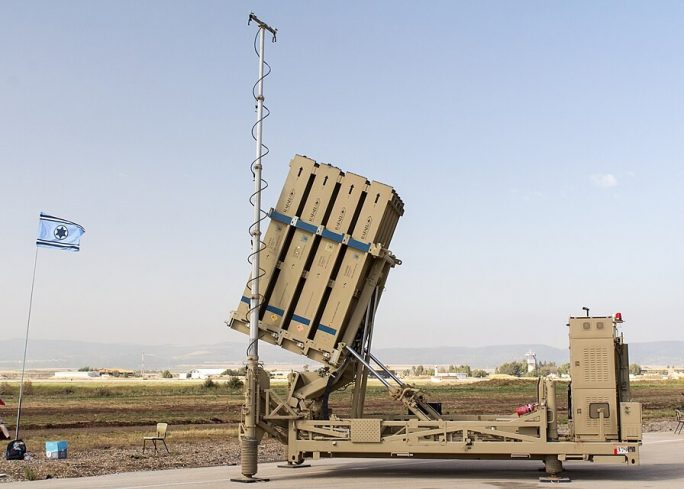
Israel's Missile Defense Systems: How a Small Country Built the World's Most Advanced Air Defense
In the summer of 2006, the Second Lebanon War exposed a critical vulnerability in Israel’s defences. Over 34 days of fighting, Hezbollah fired approximately 4,000 rockets into northern Israel — more than 100 per day — killing 53 Israeli civilians and displacing hundreds of thousands.
The war ended with a clear conclusion: Israel needed a fundamentally new approach to missile defence. What followed was one of the most ambitious defense development programs in modern military history.
In February 2007, just months after the Lebanon War ended, Israeli Defence Minister Amir Peretz authorized Rafael Advanced Defence Systems to begin developing a short-range rocket defence system. The initial budget was approximately $100 million.
The system, named Iron Dome, was designed to intercept short-range rockets and mortar shells with a range of 4 to 70 kilometres. Each Iron Dome battery uses radar to detect incoming rockets, a command-and-control system to calculate whether the rocket will hit a populated area, and Tamir interceptor missiles to destroy threats mid-air.
By March 2011, just four years after development began, Iron Dome was declared operational. Since then, it has intercepted thousands of rockets with a reported success rate of approximately 90%.
Cost per interception: Each Tamir interceptor missile costs an estimated $50,000–$150,000.
David’s Sling (also known as Magic Wand) was developed jointly by Rafael and Raytheon, and was declared operational in 2017. It is designed to intercept threats at ranges of 40 to 300 kilometres, filling the gap between Iron Dome and the Arrow system. It uses the Stunner interceptor, which employs advanced hit-to-kill technology.
Cost per interception: Approximately $1–2 million per Stunner interceptor.
The Arrow program is Israel’s answer to long-range ballistic missiles — the kind that could be launched from Iran. Developed jointly by Israel Aerospace Industries (IAI) and Boeing:
Arrow 2, operational since 2000, intercepts ballistic missiles within the atmosphere during their descent phase.
Arrow 3, operational since 2017, intercepts ballistic missiles in space. In November 2023, Arrow 3 made history when it successfully intercepted a ballistic missile in space during actual combat for the first time.
Cost per interception: Arrow 2 ~$3 million; Arrow 3 ~$4 million.
The game-changing advantage of Iron Beam is cost. While a single Iron Dome interceptor costs $50,000–$150,000, an Iron Beam interception costs approximately $2,000 — potentially hundreds of times cheaper than traditional missile-based systems.
| System | Range | Targets | Cost |
|---|---|---|---|
| Iron Beam | Short range | Rockets, mortars, drones | ~$2,000 |
| Iron Dome | 4–70 km | Short-range rockets | $50K–$150K |
| David’s Sling | 40–300 km | Medium-range missiles | $1–2M |
| Arrow 2 | Long range | Ballistic missiles | ~$3M |
| Arrow 3 | Space | Ballistic missiles, ICBMs | ~$4M |
Each layer handles specific threats at specific altitudes, creating overlapping zones of protection.
For visitors to Israel, the missile defense systems are not abstract military technology — they are a visible part of daily life. Iron Dome batteries can be spotted on hilltops across the country. What began as a desperate response to the devastating rocket attacks of 2006 has evolved into a technological achievement that has fundamentally changed the nature of modern warfare.
Contact Us
Related articles
Tours and Activities

7 Moments in Israel That Will Stay With You Forever
Some trips are measured in sights seen and boxes checked. Israel is not that kind of trip. Israel is measured…
Museums in Israel
A Country Rich in Museums and Heritage Israel is a very young country, just over 70 years old, but its…
Is Israel Safe to Visit? What You Need to Know
Is Israel Safe to Visit? What You Need to KnowIs Israel Safe to Visit? Yes, Millions Visit Safely Every Year…