



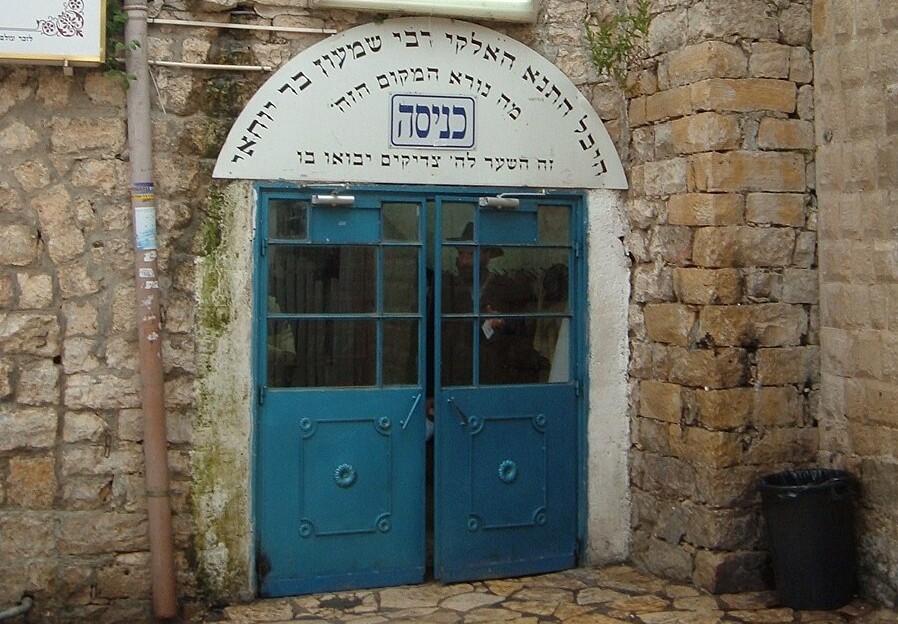
 , hundreds of thousands of people converge on a small hilltop in the upper Galilee to celebrate at the tomb of Rabbi Shimon bar Yochai. It is one of the largest annual gatherings in Israel, a night of bonfires, music, prayer, and three-year-old boys getting their first haircuts. The tomb of the Rashbi, as he is known, is the most visited Jewish holy site in Israel after the Western Wall, and the story behind it connects Safed’s Kabbalistic tradition to a cave, a book, and 12 years of hiding from the Romans.
Rabbi Shimon bar Yochai
Rashbi was one of the most important sages of the 2nd century CE, a student of the legendary Rabbi Akiva, and one of the most frequently cited authorities in the Mishnah. According to tradition, he was sentenced to death by the Romans after publicly criticizing Roman rule and its exploitation of the Land of Israel. He fled with his son to a cave near Peki’in, where they hid for 12 years, sustained miraculously by a carob tree and a spring that appeared at the mouth of the cave. Father and son buried themselves in sand up to their necks to preserve their clothing, and spent their days in deep study of the Torah, reaching levels of mystical understanding that, according to tradition, no one had achieved before or has achieved since. The Zohar, the foundational text of Kabbalah, is attributed to Rashbi’s teachings during this period.
The Tomb of Rabbi Shimon bar Yochai
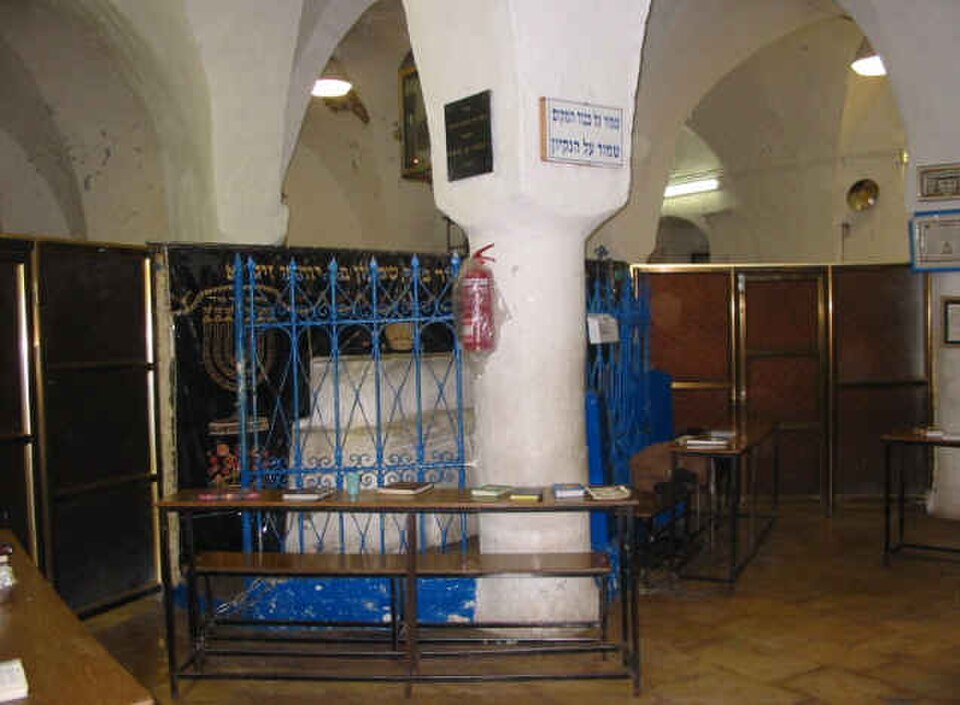
The tomb compound at Meron is a sprawling complex of prayer halls, courtyards, and gathering spaces built around the burial site. Separate prayer areas for men and women surround the tomb itself, which is draped in decorated cloths and illuminated by candles. Visitors press their hands against the tomb, whisper prayers, and leave written notes with personal requests, much as they do at the Western Wall.
The atmosphere reaches its peak on Lag BaOmer, the 33rd day of the Omer, which tradition identifies as the date of Rashbi’s death, or more precisely, as the day on which he revealed the deepest secrets of the Zohar, making it a day of celebration rather than mourning. Hundreds of thousands of people gather through the night, enormous bonfires are lit, and the hillside is filled with music, dancing, and prayer. One of the most distinctive customs is the chalaka, the first haircut given to three-year-old boys, a tradition with deep Kabbalistic significance related to the age at which a child begins formal Torah study.
Ancient Synagogue at Meron
 Near the tomb compound, the remains of an impressive ancient synagogue from the late Roman period (3rd, 4th century CE) have been excavated. The Meron synagogue was one of the largest and finest in the Galilee, built in the basilica style with two rows of columns creating a central nave and side aisles, and a monumental facade with three entrances oriented toward Jerusalem. The building was constructed from carefully cut local limestone, and its architectural quality places it among the most important synagogues of the period.
Excavations revealed richly carved architectural elements, including decorated lintels with floral motifs, column capitals with Corinthian-style designs, and carved stone fragments bearing Jewish symbols. The synagogue’s size and craftsmanship indicate that Meron was a prosperous and significant Jewish community in the centuries following the destruction of the Temple. The building was likely in use for several hundred years before being damaged by earthquake.
The Meron synagogue is part of the remarkable network of ancient Galilean synagogues that includes Bar’am, Gush Halav, Nabratein, and dozens of others scattered across the upper Galilee hills. Together, they testify to the dense and thriving Jewish population that lived in this region for centuries after the destruction of the Second Temple, building grand houses of worship in stone that have outlasted the communities that created them.
Mount Meron itself, at 1,208 meters, is the highest peak in the Galilee and is surrounded by the Meron Nature Reserve, one of the most important forest reserves in Israel.
Visit with Hoshen Tours
Meron is one of the most spiritually charged sites in the Galilee, drawing Jewish visitors from around the world to the tomb of Rabbi Shimon bar Yochai. With Hoshen Tours, the visit includes the historical context of the kabbalistic tradition, the story of Lag Ba’Omer, and the significance of the site within Jewish mysticism. Combine Meron with the artists’ colony and synagogues of Safed, the ancient village of Peki’in, and the Crusader fortress at Montfort for a full day in the upper Galilee.
Explore Our Tour Collection
Explore this site and 65 more in Sacred Steps in the Holy Land
225 pages · The Life, World, and Footsteps of Jesus · Maps, photos, and Scripture references
Ready to experience Israel in true colors?
Plan Your TourPrivate tours designed around your interests, schedule, and pace.