



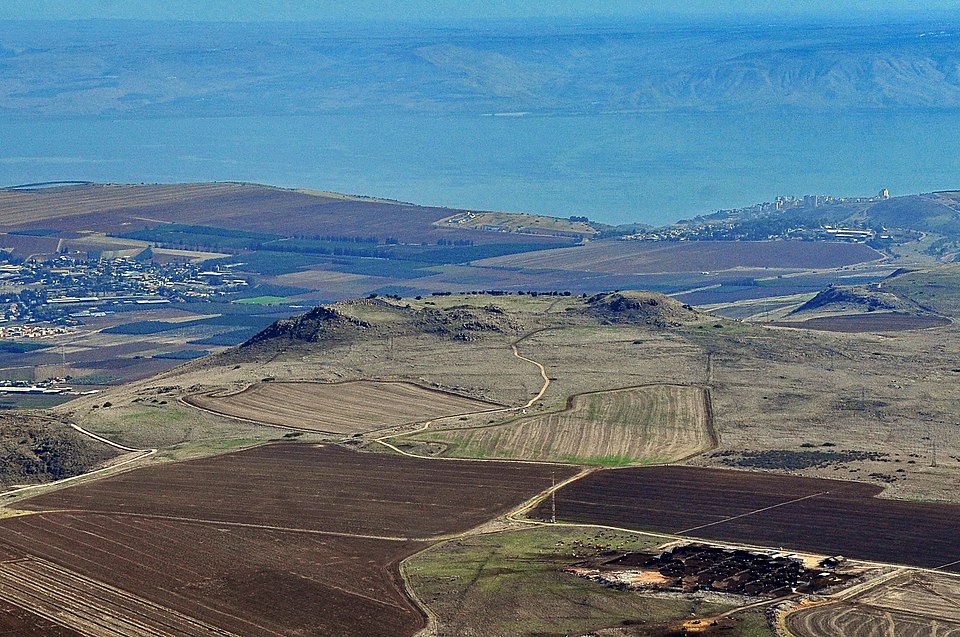
On July 4, 1187, the Battle of Hattin was fought at the Horns of Hattin, a twin-peaked extinct volcano west of the Sea of Galilee, Saladin’s Muslim army destroyed the army of the Crusader Kingdom of Jerusalem in one of the most decisive battles of the Middle Ages. The defeat at Hattin effectively ended Crusader control of the Holy Land and led directly to the fall of Jerusalem three months later.
The Road to Hattin: Saladin’s Provocation
Saladin had been probing the Crusaders for years, looking for a moment of weakness to exploit. In the summer of 1187, he found his opening. He crossed the Jordan with a large force and attacked Tiberias, capturing the city and laying siege to the citadel where Raymond of Tripoli’s wife was sheltering. Raymond was one of the most experienced Crusader commanders and the de facto regent of the kingdom. He urged King Guy de Lusignan not to march, to hold position at the springs of Saffuriya, let Saladin exhaust himself in the siege, and force a withdrawal. The springs of Saffuriya were the last reliable water source for miles. To abandon them and march across the dry plateau in July was, Raymond argued, exactly what Saladin wanted.
King Guy was swayed instead by Raynald of Chatillon, the lord of Oultrejourdain, a reckless and brutal baron whose attacks on Muslim caravans and pilgrim routes had provoked the war in the first place. Against Raymond’s explicit advice, Guy ordered the full army to march, abandoning the water and committing approximately 20,000 men, including the flower of Crusader knighthood and the relic of the True Cross, to a waterless route in the height of summer.
The Battle of Hattin Israel, July 1187
Saladin’s forces harassed the Crusader column throughout the march, cutting off stragglers, firing volleys of arrows, and blocking every attempt to reach the Sea of Galilee. By nightfall of July 3, the army was already in crisis, exhausted, desperate with thirst, the infantry on the verge of mutiny. Saladin set fire to the dry brush around the Crusader camp, and the smoke added to the torment of men who had not drunk since leaving Saffuriya.
On the morning of July 4, the Crusaders attempted to break through to the lake. They failed. The infantry, no longer able to fight, collapsed on the lower slopes of the Horns of Hattin. The knights made desperate charges from the hilltop, but charge after charge was absorbed and thrown back. The True Cross, carried into battle as the ultimate symbol of divine protection, was captured. King Guy was taken prisoner. Raymond of Tripoli, whose advice had been ignored, managed to break through the Muslim encirclement and escape with a small force, but there was nothing he could do with his freedom. The Crusader army had ceased to exist.
The Aftermath
Saladin treated the captive King Guy with the courtesy due a royal prisoner and ultimately released him. Raynald of Chatillon he executed personally, as he had vowed to do, drawing his own sword to kill the man whose attacks on Muslim caravans and his assault on the pilgrimage route to Mecca had made war inevitable. The captured Hospitaller and Templar knights presented a different problem: too dangerous to release, as they would return immediately to the battlefield, Saladin offered them conversion to Islam or death. Most chose death. Sufi volunteers from Saladin’s entourage carried out the executions. Within three months of the battle, Saladin had captured Jerusalem, Acre, Jaffa, Sidon, and most of the Crusader cities. The kingdom that the First Crusade had spent nearly a century building was, for all practical purposes, gone.
Why It Matters
The Battle of Hattin was the hinge of Crusader history. Before Hattin, the Kingdom of Jerusalem was a functioning state with cities, courts, agriculture, and a complex mixed population of Christians, Muslims, and Jews. After Hattin, it became a coastal rump, sustained only by the sea lanes that connected it to Europe. The battle’s outcome flowed directly from a single decision, to march away from the water, made against the advice of the man who understood the terrain best. The Horns of Hattin are a monument to the consequences of ignoring good counsel. Standing on the twin peaks today, looking out over the same dry plateau that swallowed an army, the lesson is written into the landscape.
Site Today
The Horns of Hattin are accessible by a moderate hike from the road below. The twin peaks are visible from across the Galilee, and the view from the summit encompasses the Sea of Galilee, the Golan Heights, and the Galilee mountains. The landscape has not changed since 1187, and standing on the hilltop where the True Cross was lost, you understand how the terrain, the heat, and the lack of water combined to destroy the most powerful Christian army in the East.
Visit with Hoshen Tours
The Battle of Hattin is the turning point of the Crusader story. Hoshen Tours tells the battle from the hilltop, connecting the terrain to the tactics, the personalities to the decisions, and the defeat to the fall of Jerusalem, making one of the Middle Ages’ greatest battles vivid and immediate on the very ground where it was decided. Hoshen Tours often combines this site with Nazareth, Hamat Tiberias, and Kafr Kanna for a memorable day exploring the region.
Explore Our Tour Collection
Ready to experience Israel in true colors?
Plan Your TourPrivate tours designed around your interests, schedule, and pace.