



Tel Sokho (Socoh) sits on the southern ridge of the Ella Valley, directly opposite Khirbet Qeiyafa on the northern ridge. The Bible identifies Sokho as one of the two cities where the Philistines camped before the battle with David: “Now the Philistines gathered their forces for war and assembled at Sokho in Judah” (1 Samuel 17:1). The tell, though modest in size, occupies one of the most strategically important positions in the Shephelah.
Philistine Camp
Standing on Tel Sokho and looking across the valley to the northern ridge where the Israelites camped, the geography of 1 Samuel 17 comes alive. The valley floor, with the brook where David chose his five smooth stones, lies between the two ridges. The distance between the camps is less than a kilometer, close enough for Goliath’s challenge to be heard, far enough for two armies to face each other without engaging. The Philistines chose this position deliberately. Sokho controlled the southern approach to the valley and sat along the route leading from their coastal cities up into the hill country of Judah. By camping here, the Philistine army blocked the Israelites from moving south while maintaining a clear line of retreat westward toward their own territory. The ridge also offered a commanding view of the entire valley floor, making any surprise approach from the Israelite camp nearly impossible.
The Ella Valley View
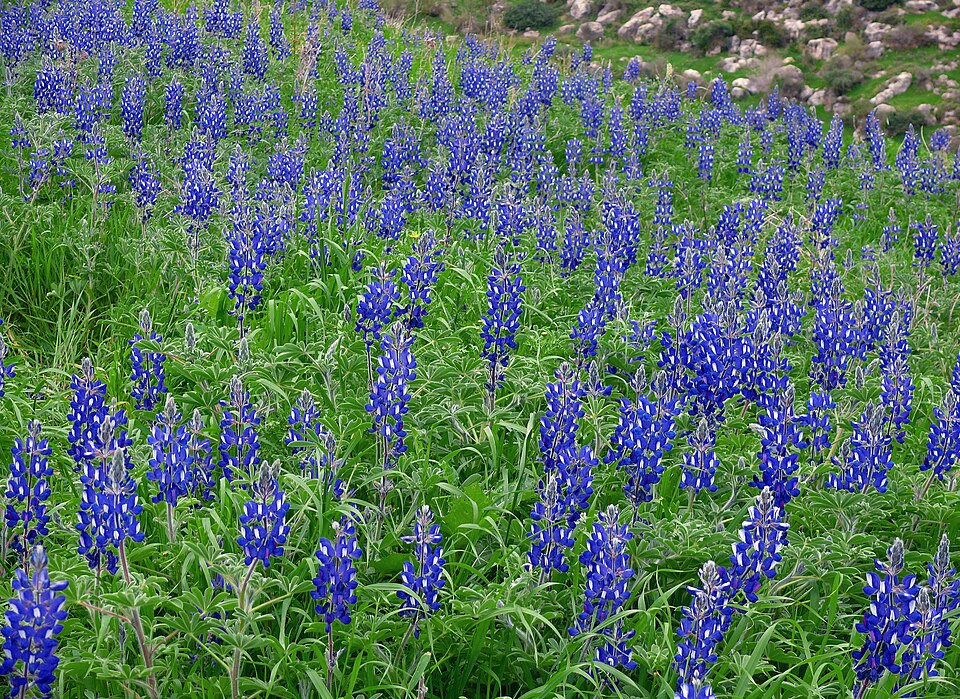
From the top of Tel Sokho, the panorama of the Ella Valley is striking. To the north, the ridge of Khirbet Qeiyafa rises clearly, and between the two ridges the valley opens wide toward the west, where it meets the coastal plain. The green fields of the valley floor trace the path of Nahal Elah, the seasonal brook that runs through the center. Looking east, the terrain rises steeply toward the Judean highlands and the road to Bethlehem and Jerusalem. This is the borderland the Philistines were trying to penetrate, and the view from the tell makes the strategic stakes of the David and Goliath encounter unmistakable.
The LMLK Seals
Sokho is one of four cities whose names appear on the LMLK (“belonging to the king”) jar handles, royal storage jar stamps from the late 8th century BCE that are among the most important artifacts of the Kingdom of Judah. The four cities (Sokho, Hebron, Ziph, and an unidentified MMST) are believed to have served as royal administrative centers or distribution points for the kingdom’s supplies, possibly in preparation for the Assyrian invasion.
Goliath’s Challenge
Imagine standing on this ridge 3,000 years ago. Below you, in the valley, a giant stands between the two armies: “A champion named Goliath, who was from Gath, came out of the Philistine camp. His height was six cubits and a span. He had a bronze helmet on his head and wore a coat of scale armor of bronze weighing five thousand shekels. On his legs he wore bronze greaves, and a bronze javelin was slung on his back. His spear shaft was like a weaver’s rod, and its iron point weighed six hundred shekels” (1 Samuel 17:4-7). For forty days, morning and evening, this man walked into the valley and challenged any Israelite to single combat. The entire army of Israel, camped on the opposite ridge, was terrified. And then a shepherd boy arrived with bread and cheese for his brothers, and everything changed.
The detail that Goliath challenged Israel for forty days is significant: forty is the biblical number of testing (the flood lasted 40 days, Moses spent 40 days on Sinai, Israel wandered 40 years, Jesus fasted 40 days). The test was not only military but spiritual: would Israel trust God or remain paralyzed by fear? David’s response was theological before it was tactical: “Who is this uncircumcised Philistine that he should defy the armies of the living God?” (1 Samuel 17:26).
The LMLK Seals: Royal Jars of King Hezekiah
Among the most significant finds at Tel Sokho and across the Judean Shephelah are the LMLK seal impressions — stamped handles on large storage jars bearing the Hebrew word lamelech, meaning “belonging to the king.” These royal stamps, dated to the late 8th century BCE, are associated with the reign of King Hezekiah and his preparations for the Assyrian invasion under Sennacherib in 701 BCE. Each seal names one of four distribution cities: Hebron, Ziph, Sokho, and MMST (possibly Mamshit or another unidentified site). The mention of Sokho on these seals confirms the city’s importance as a royal administrative center during the Iron Age. Hundreds of LMLK handles have been found across Judah, but discovering them at the very site named on the stamp gives Tel Sokho a special place in the story. The jars are believed to have been used for collecting and distributing agricultural products — olive oil, wine, and grain — as part of Hezekiah’s centralized effort to prepare his kingdom for war.
Visit with Hoshen Tours
Tel Sokho marks the Philistine camp in the Ella Valley battle described in 1 Samuel 17, and standing on the tell with Hoshen Tours you can see the entire battlefield laid out before you. The Philistines assembled here on the southern ridge while the Israelites faced them from the north, with the valley between. This is one of the places where the Bible’s geography becomes instantly clear. Combine it with the Ella Valley, David’s fortress at Khirbet Qeiyafa, the view from Tel Azekah, and the caves of Adulam Park.
Explore Our Tour Collection
Ready to experience Israel in true colors?
Plan Your TourPrivate tours designed around your interests, schedule, and pace.