



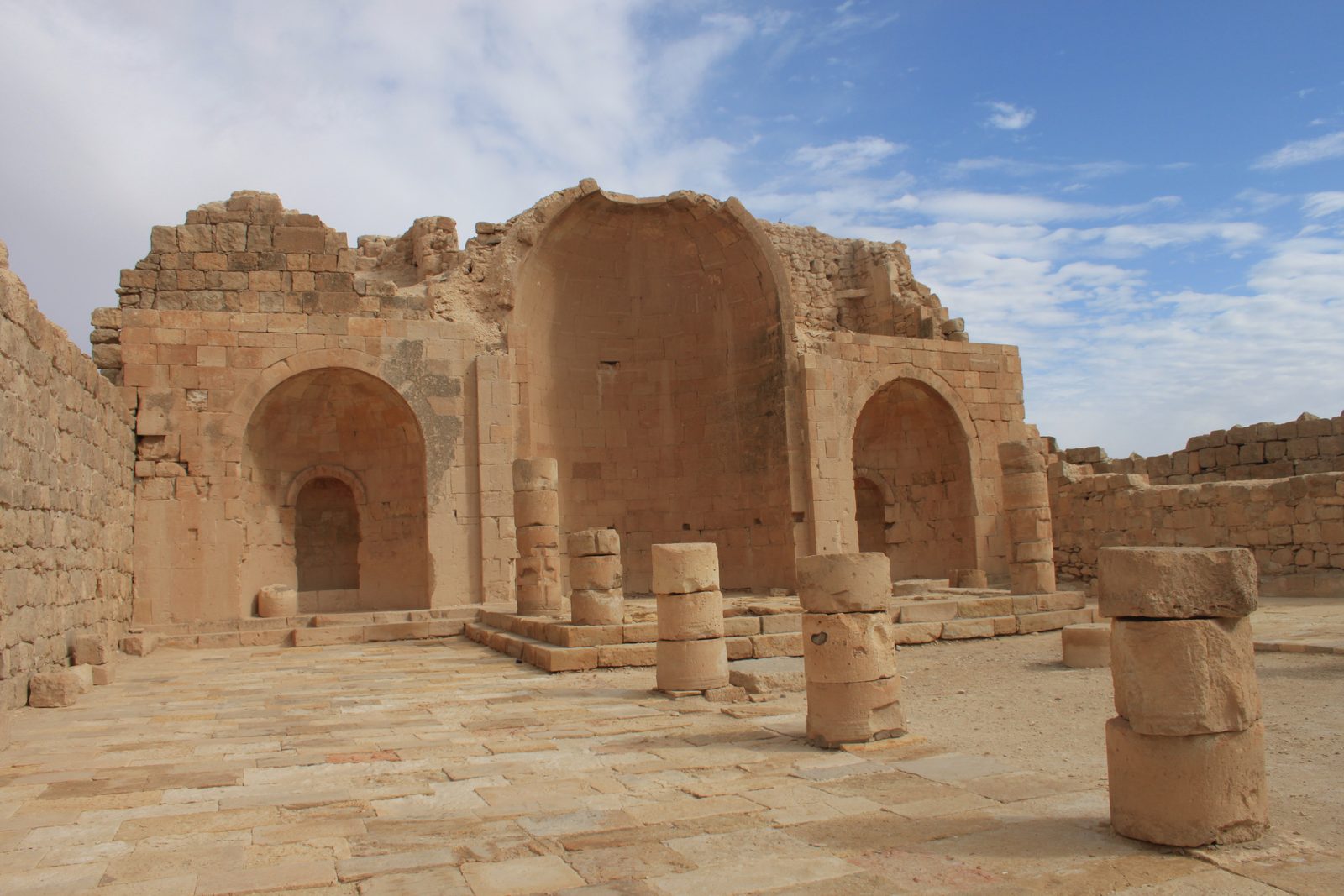
Shivta is a ghost city in the western Negev, an eerily preserved Nabatean and Byzantine settlement that stands in the desert exactly as its last inhabitants left it. Unlike other Negev cities that were destroyed by earthquake or conquest, Shivta was simply abandoned when the trade routes shifted and the water systems failed. The buildings stand to considerable height, the streets are intact, and the silence of the empty city creates an atmosphere unlike any other archaeological site in Israel. No modern town was ever built on top of the ruins, which means the entire ancient city is exposed and accessible, a rare situation in a region where most sites lie beneath modern habitation.
The Byzantine City of Shivta Negev
Shivta was never walled, suggesting it was a prosperous agricultural town rather than a military outpost. The city contains three large churches (North, Central, and South), residential blocks, wine presses, cisterns, and an elaborate system of water channels and reservoirs. The population at its peak may have reached several thousand, sustained entirely by the desert water-collection systems that the Nabateans perfected. Founded as a Nabatean way station along the trade routes sometime in the 1st century BCE, the city grew during the Roman and Byzantine periods into a thriving agricultural community. Its decline began in the 7th century during the transition from Byzantine to early Islamic rule, when the trade routes shifted and the complex water infrastructure could no longer be maintained.
Three Byzantine Churches
The three Byzantine churches at Shivta are among the best preserved in the Negev. The North Church has a baptismal font and traces of wall paintings. The Central Church, the largest, has an atrium and a well-preserved apse. The South Church, with its attached monastery, has columns still standing. All three churches had mosaic floors, fragments of which survive in the North and South churches. In 2018, researchers announced the discovery of what may be one of the earliest known depictions of Jesus’ face in a painting on the wall of the North Church baptistery, a face with short, curly hair that differs from the later European tradition of long-haired Jesus. The presence of three churches in a relatively small city speaks to the importance of Christianity in the late Byzantine Negev.
Farming in 100mm of Rain
Shivta’s most remarkable achievement was agriculture in a region that receives less than 100 millimeters of rain per year. The inhabitants built an elaborate system of terraces, channels, and cisterns that captured every drop of rainwater from the surrounding hillsides and directed it to fields where they grew grapes, wheat, barley, and other crops. Channels carved into bedrock directed runoff from large catchment areas into collection pools, and from there into agricultural terraces. Wine presses found in the city confirm that they produced wine in the desert, a feat that modern researchers have struggled to replicate. This system of runoff farming allowed the city to sustain a population of thousands in one of the driest inhabited places on earth.
Visit with Hoshen Tours
Shivta is the Negev’s most atmospheric site, a place where you walk through a complete ancient city without fences, roofing, or tourist infrastructure between you and the stones. Hoshen Tours visits for the ghost-city experience and the story of a community that made the desert bloom before the phrase became a national slogan.
Explore Our Tour Collection
Ready to experience Israel in true colors?
Plan Your TourPrivate tours designed around your interests, schedule, and pace.