



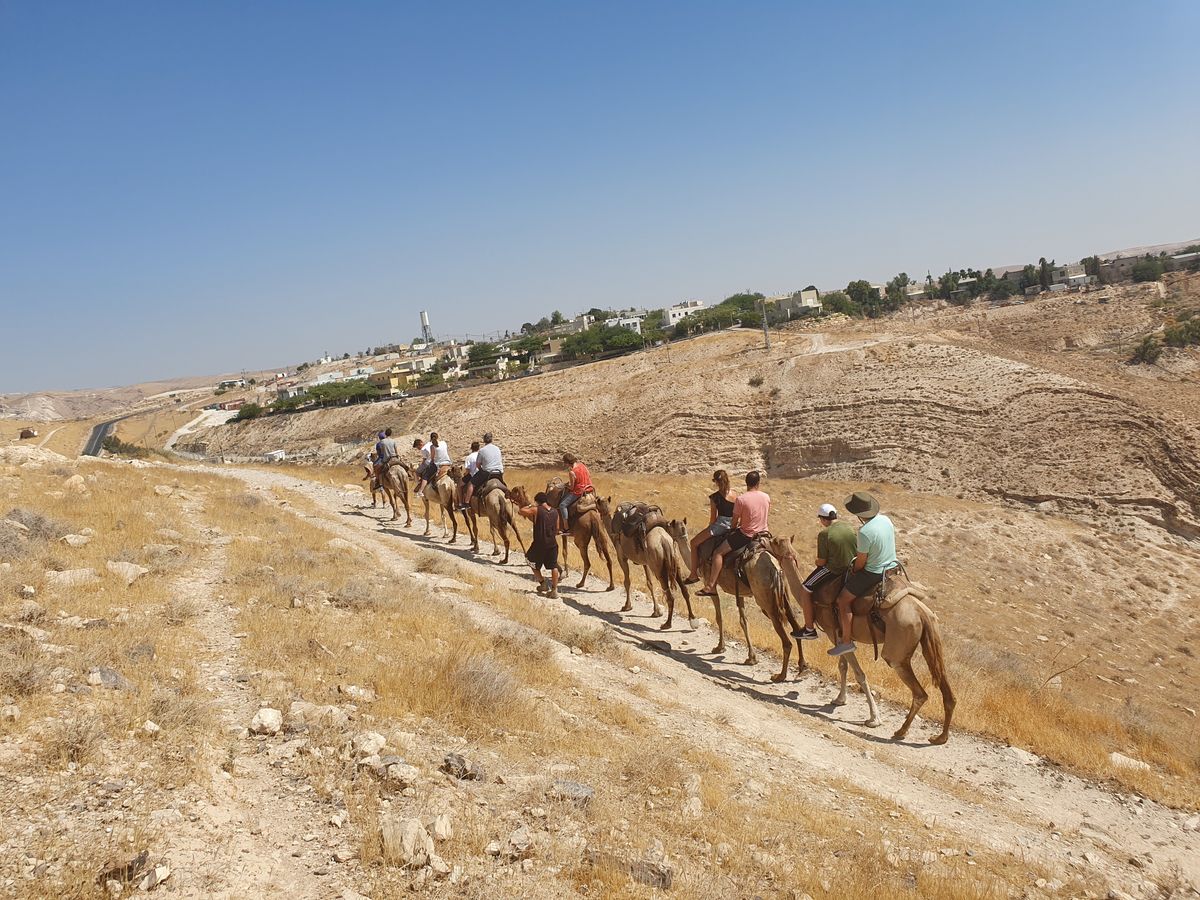
The Bedouin of the Negev are the largest indigenous community in Israel, numbering approximately 300,000 people. They have lived in the southern desert for centuries, maintaining a semi-nomadic lifestyle based on herding, trade, and a code of hospitality that is legendary throughout the Middle East. Today, the Negev Bedouin are a community in transition, balancing traditional culture with the pressures of modernity, urbanization, and a complicated relationship with the Israeli state.
Coffee, Tent, and Desert Code
Bedouin hospitality is not a tourist product. It is a deeply held cultural obligation. A guest in a Bedouin tent is offered coffee brewed on an open fire (served in three rounds, each with its own meaning), sweet tea, and food. The host is honor-bound to provide for his guest regardless of the guest’s identity or the host’s means. This tradition, which predates Islam and even the Bedouin presence in the Negev, has survived urbanization and modernity with remarkable resilience.
History in the Negev
The Bedouin have lived in the Negev for centuries, moving with their flocks across the desert in a pattern of seasonal migration that was attuned to the land’s sparse resources. Under the Ottoman Empire, the Bedouin had their own system of land ownership based on customary use rather than formal title, and the tribes maintained a complex social hierarchy of sheikhs, clans, and alliances.
During the British Mandate, the authorities attempted to register Bedouin lands, but the process was incomplete and many claims were never formalized. When the State of Israel was established in 1948, the new government did not recognize the customary land claims, and the Bedouin found themselves in a legal no-man’s land that persists to this day.
From Nomads to Towns
In the 1960s and 1970s, the Israeli government built planned towns for the Bedouin, including Rahat (today the largest Bedouin city in the world, with over 70,000 residents), Tel Sheva, Segev Shalom, and others. The transition from semi-nomadic life to urban housing was wrenching for many families. Traditional family structures, gender roles, and economic patterns were disrupted, and the planned towns faced chronic underinvestment in infrastructure, education, and employment.
Unrecognized Villages
Approximately 90,000 Bedouin live in villages that the Israeli government does not officially recognize. These villages, some of which predate the state, lack basic services: paved roads, electricity, running water, schools, and clinics are either absent or provided at minimal levels. The residents argue that they have lived on their land for generations. The government argues that the land was never legally theirs. The dispute has produced demolition orders, court battles, and periodic confrontations that draw international attention.
The Negev Bedouin face significant challenges. Disputes over land ownership and unrecognized villages have created tension with the Israeli government. Education and employment gaps persist. And the transition from semi-nomadic herding to settled urban life has put pressure on traditional family structures and cultural practices.
Visit with Hoshen Tours
Meeting the Negev Bedouin is one of the most authentic cultural experiences in Israel. Hoshen Tours arranges private visits and pairs them with Tel Be’er Sheva, the desert homestead of Sde Boker, the Israelite temple at Tel Arad, and the craters of the Makhteshim.
Explore Our Tour Collection
Ready to experience Israel in true colors?
Plan Your TourPrivate tours designed around your interests, schedule, and pace.