



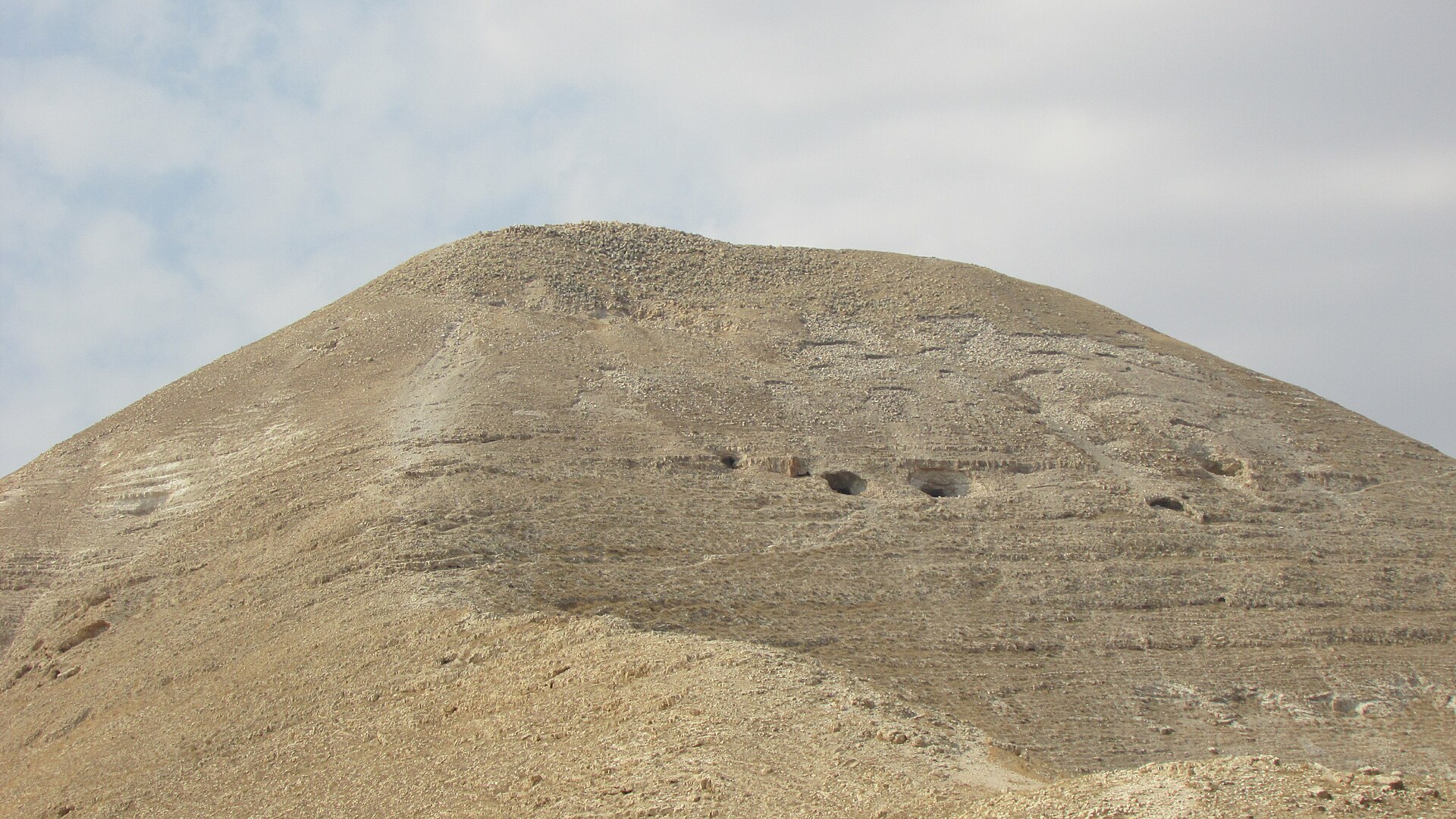
Sartaba (Alexandrion) is a cone-shaped mountain standing 379 meters above sea level and rising approximately 650 meters above the Jordan Valley floor, crowned by the ruins of a Hasmonean and Herodian fortress that was one of the most strategically important strongholds in the ancient world. The fortress, visible from vast distances across the valley, served as a signal station, a military base, and a royal prison where the Hasmonean dynasty and Herod the Great disposed of their enemies.
The Sartaba Fortress
The fortress was built by the Hasmonean king Alexander Jannaeus (hence the Greek name Alexandrion) in the late 2nd century BCE. Its location, commanding views of the Jordan Valley from the Dead Sea to the Jezreel Valley, made it an ideal signal station: fire signals lit on Sartaba could be seen at Jerusalem to the west and at other fortresses along the valley. The Mishnah records that fire signals were passed from mountaintop to mountaintop to announce the new moon and the festivals, and Sartaba was one of the stations in this chain.
Herod the Great used Alexandrion as a prison for members of the Hasmonean royal family whom he saw as threats. Josephus records that Herod executed his own sons Alexander and Aristobulus at Sebaste (Samaria), strangling them after a trial for treason. Their bodies were brought to the fortress of Alexandrion for burial. The fortress, remote and impregnable, was the perfect place for the kind of family murders that defined Herod’s reign. The Roman general Pompey had earlier ordered the fortress dismantled, but Herod rebuilt it, recognizing its strategic and domestic value.
Fire Signals
The Mishnah (Rosh Hashanah 2:4) describes the chain of fire signals used to announce the new moon from Jerusalem across the Land of Israel. The signal began on the Mount of Olives, and from there was relayed to Sartaba, then to Grofina, to Hauran, and to Beit Baltin, until “the entire diaspora looked like a bonfire.” Sartaba’s position, visible both from Jerusalem to the west and from the mountains of Gilead across the Jordan to the east, made it the critical link in this chain. The system was eventually abandoned after the Samaritans lit false signals to confuse the calendar, and the Sanhedrin switched to sending messengers instead.
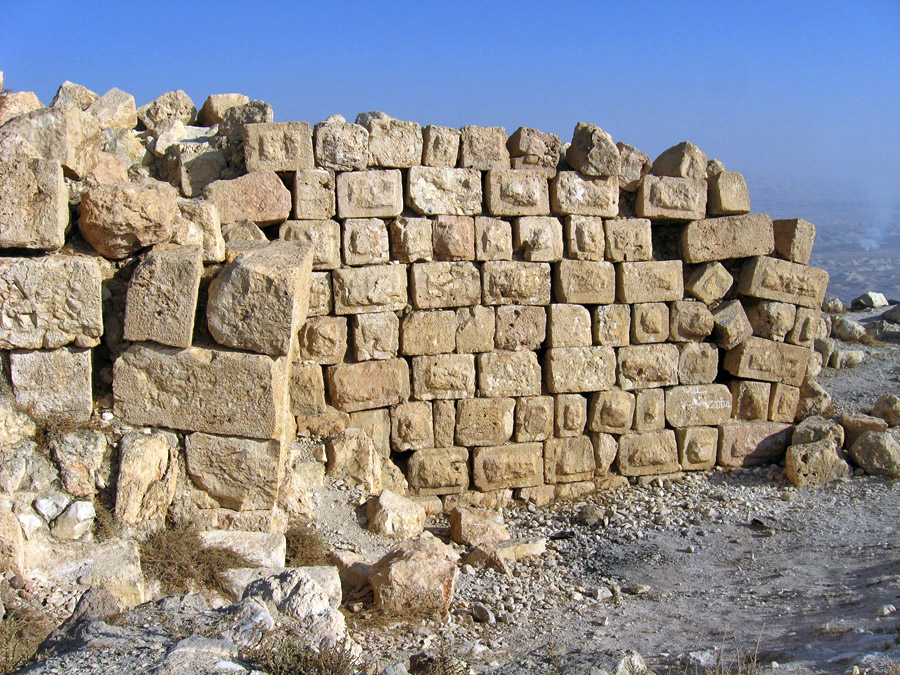
At the summit, the remains of the fortress are scattered across the narrow ridge. Sections of the Hasmonean fortress walls still stand, with their characteristic masonry style clearly visible in the cut stone blocks, a construction technique that allows archaeologists to distinguish Hasmonean-era building from later Herodian or Roman work. Cisterns carved into the rock, fragments of towers, and sections of the outer wall are scattered across the narrow ridge. The site has never been fully excavated, and much of the fortress lies beneath the rubble. A large cistern on the summit, still holding rainwater, testifies to the engineering required to sustain a garrison on a mountaintop in the desert. Pottery and coins from both the Hasmonean and Herodian periods have been found on the surface.
Hiking to the Fortress of Alexandrion
Sartaba was part of a network of fortresses that the Hasmoneans and later Herod built to control the borders of their kingdom. To the south, Masada and Herodium guarded the Judean Desert and the Dead Sea. To the east, Machaerus (in modern Jordan), where, according to Josephus, John the Baptist was imprisoned and executed, watched over the Transjordan. And Alexandrion, perched on its cone-shaped summit above the central Jordan Valley, connected them all through a system of visual signals. Standing on Sartaba’s summit, you can often see Herodium to the south and the mountains of Gilead to the east, and you understand viscerally why these hilltops mattered: whoever controlled the high ground controlled the land.
The hike to the summit of Sartaba is steep and demanding (about 45 minutes from the trailhead), but the view from the top is one of the most spectacular in the Jordan Valley. The entire rift valley is spread below: the Jordan River winding through the green valley floor, the mountains of Jordan (Gilead) to the east, and on clear days, Jerusalem and the Judean hills to the west.
Visit with Hoshen Tours
Sartaba combines a challenging hike with Hasmonean drama and one of the best panoramic views in the Jordan Valley. Hoshen Tours tells the story of the fire signals that announced the new moon from Jerusalem to Babylon, the political murders that Herod committed here, and the dynasty that tore itself apart on this mountaintop. The hike to the summit is demanding but rewarding, and the ruins at the top offer views from the Mediterranean coast to the mountains of Jordan. Combine with Jericho, the Hasmonean Palaces, and Qasr el-Yahud.
Explore Our Tour Collection
Ready to experience Israel in true colors?
Plan Your TourPrivate tours designed around your interests, schedule, and pace.