



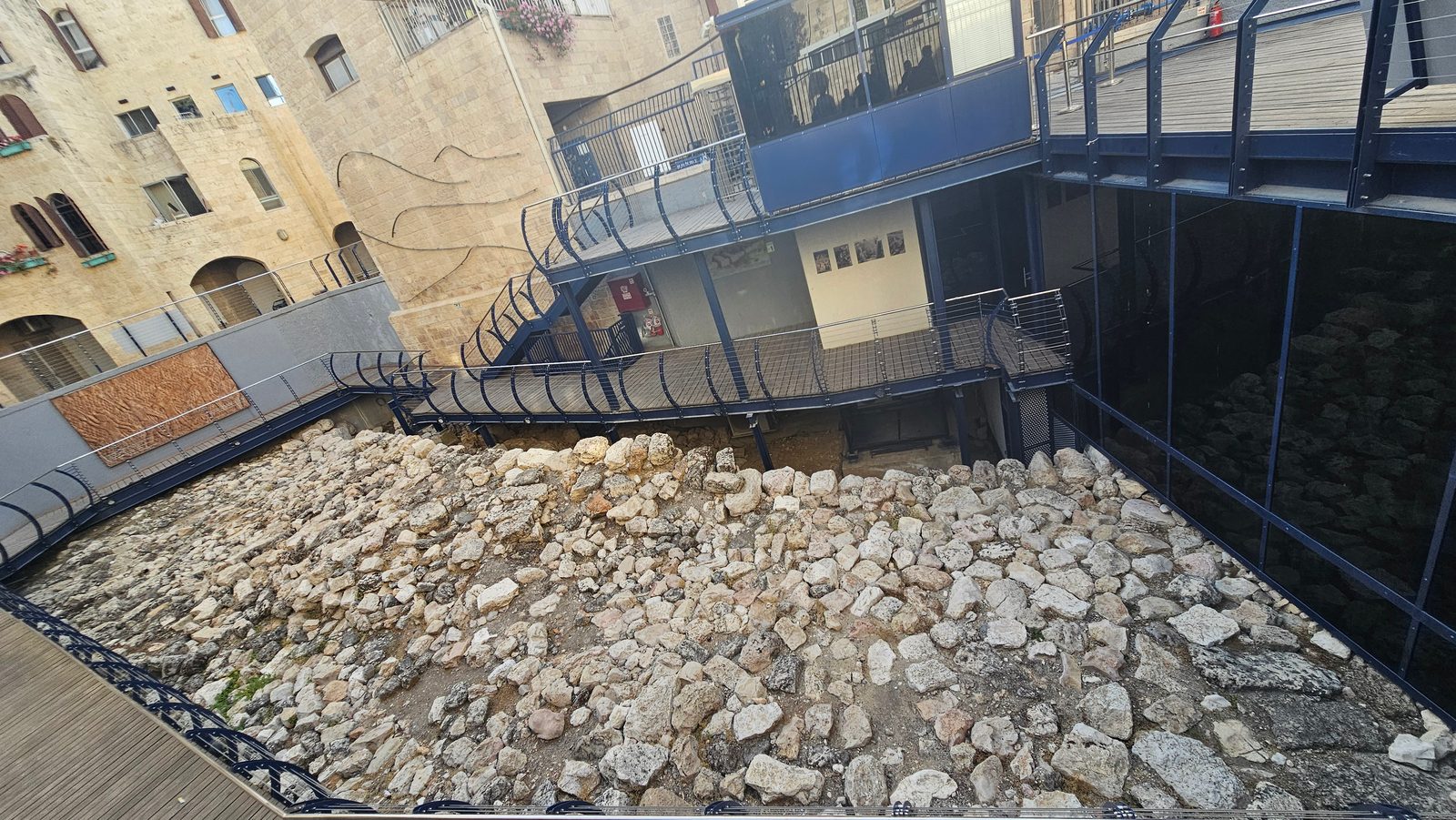
The Broad Wall is a massive 8th-century BCE fortification wall discovered in the Jewish Quarter, one of the most important biblical-period finds in Jerusalem. The wall, 7 meters wide and preserved to a height of over 3 meters, was built by King Hezekiah of Judah in preparation for the Assyrian invasion of 701 BCE, confirming the biblical account in detail that is almost unprecedented.
Nahman Avigad’s Discovery
The Broad Wall was discovered in 1970 by archaeologist Nahman Avigad during systematic excavations of the Jewish Quarter following the 1967 reunification of Jerusalem. Avigad’s team uncovered a massive segment of wall running approximately 65 meters in length, built of large, roughly hewn stones. The scale of the find was immediately apparent: at 7 meters wide, this was not a residential wall or a property boundary but a major defensive fortification, the kind of structure that only a king could commission. Avigad identified it as the “other wall” mentioned in the biblical description of Hezekiah’s defensive preparations, a conclusion that has been broadly accepted by archaeologists ever since.
Biblical Connection
The Bible describes Hezekiah’s emergency fortification of Jerusalem in several passages. The Book of Isaiah records: “You counted the buildings in Jerusalem and tore down houses to strengthen the wall” (Isaiah 22:10). The Second Book of Chronicles adds: “He set to work resolutely and built up all the wall that was broken down and raised towers upon it, and outside it he built another wall” (2 Chronicles 32:5). The Broad Wall is that “another wall,” the outer wall that Hezekiah built to enclose the neighborhoods that had grown outside the original city walls on the Western Hill during the prosperous 8th century BCE.
Evidence of Hezekiah’s Preparations
Excavations at the wall revealed exactly what the Bible describes: houses that had been demolished to make way for the wall. The foundations of these houses are visible beneath the wall’s course, cut through and built over, confirming Isaiah’s account of buildings being torn down to strengthen the defenses. The wall was built in haste, using whatever materials were available, and the urgency of the construction is visible in the rough masonry. The fact that Hezekiah demolished private homes to build this wall speaks to the desperation of the moment: Sennacherib’s army was approaching, and the western neighborhoods of Jerusalem lay completely exposed without this fortification.
Assyrian Threat
In 701 BCE, the Assyrian king Sennacherib invaded Judah with a massive army, destroying 46 fortified cities and besieging Jerusalem. Hezekiah’s preparations, including the Broad Wall, Hezekiah’s Tunnel (which brought water inside the walls), and the Siloam Pool, were desperate measures to survive the siege. Jerusalem did survive, the only city in Judah that did, and the Assyrian withdrawal is described in the Bible as divine intervention: “That night the angel of the Lord went out and put to death a hundred and eighty-five thousand in the Assyrian camp” (2 Kings 19:35).
Visit with Hoshen Tours
The Broad Wall is a remarkable First Temple-period relic nestled in the heart of the Jewish Quarter. Your Hoshen Tours guide will explain how this massive fortification fits into the biblical narrative and connect it to other archaeological highlights nearby, including the Cardo with its Roman and Byzantine columns, the Hurva Synagogue, the Burnt House museum, and the Herodian Quarter with its lavish Second Temple-era mansions. Together, these sites create a vivid picture of Jerusalem across the centuries.
Explore Our Tour Collection
Explore this site and 65 more in Sacred Steps in the Holy Land
225 pages · The Life, World, and Footsteps of Jesus · Maps, photos, and Scripture references
Ready to experience Israel in true colors?
Plan Your TourPrivate tours designed around your interests, schedule, and pace.