



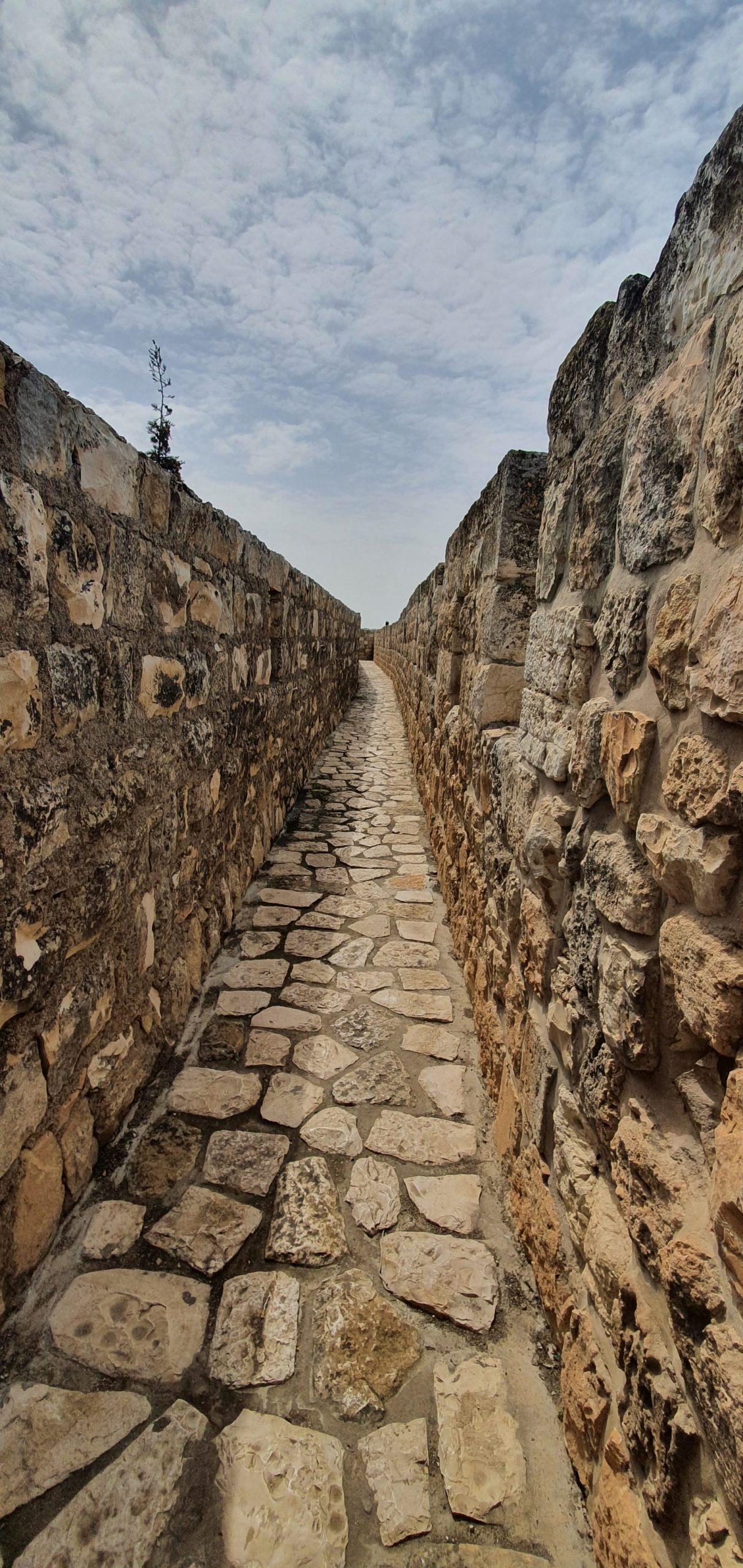
The Ramparts Walk follows the top of the Old City walls, offering a perspective on Jerusalem that no other experience provides. From the walls, you look down into the city on one side and out across Jerusalem on the other, seeing the Old City’s four quarters, its rooftops, its hidden courtyards, and its relationship to the surrounding hills from above. The walk is divided into two sections: the northern route (from the Jaffa Gate to the Lions’ Gate) and the southern route (from the Jaffa Gate to the Dung Gate, near the Western Wall).
The Walk Jerusalem
The walk is divided into two sections: the northern route runs from Jaffa Gate to Lions’ Gate, passing above the Christian and Muslim Quarters with views down into the domes of churches and the chaos of the market streets. The southern route runs from Jaffa Gate to the Dung Gate, above the Armenian and Jewish Quarters, with views of Mount Zion, the Kidron Valley, and the Mount of Olives. From above, the density of the Old City becomes clear: buildings piled on buildings, rooftops used as walkways, and hidden courtyards invisible from street level.
The Walls
The walls themselves were built by the Ottoman Sultan Suleiman the Magnificent between 1535 and 1542. They are 4 kilometers long, average 12 meters high, and include 34 watchtowers and 7 open gates. Suleiman built them on the foundations of earlier walls, some dating to the Roman and Crusader periods, and the occasional Roman column or Crusader stone is visible in the Ottoman construction.
Walls During the Division
From 1948 to 1967, the Old City was under Jordanian control, and the walls served a military purpose that Suleiman would have recognized. Jordanian soldiers patrolled the ramparts and manned firing positions along the sections facing Israeli-controlled West Jerusalem. The walls that tourists now walk for panoramic views were, within living memory, a military firing line.
The Israelis knew the phenomenon as the meshuga toran, the “mad man on duty.” Every few weeks or months, a Jordanian soldier on the walls would open fire toward the Israeli side of the border, sometimes without provocation or apparent reason. After protests through the UN armistice machinery, the quiet would return, until the next incident. The shootings were not constant, but they were unpredictable, and that unpredictability shaped life along the border. In July 1962, another meshuga toran killed Captain Avshalom Sela during a patrol.
Concrete anti-sniper walls were erected at exposed points in the city: at the end of Mamilla Street facing Jaffa Gate, and at Tzahal Square on both sides of the old municipality building. Residents of border neighborhoods like Musrara learned to walk on the sheltered side of the street. Bullet holes from Jordanian fire are still visible in buildings along the former border. After the Six-Day War in 1967, one of the first orders given by Defense Minister Moshe Dayan was to demolish the anti-sniper walls, clear the minefields, and remove the barbed wire that had divided the city. Walking the ramparts today, looking down at neighborhoods that were once in the line of fire, is a reminder of how recently Jerusalem was a divided and dangerous city.
Visit with Hoshen Tours
The Ramparts Walk offers a unique perspective on Jerusalem from atop the Ottoman walls. Starting near Jaffa Gate by the Tower of David, the route circles the Old City with views stretching from Damascus Gate in the north to Dung Gate in the south, with glimpses of the sealed Golden Gate on the eastern wall. Your Hoshen Tours guide will point out landmarks above and below as you walk, making this an unforgettable way to see the city from a vantage point most visitors miss.
Explore Our Tour Collection
Ready to experience Israel in true colors?
Plan Your TourPrivate tours designed around your interests, schedule, and pace.