



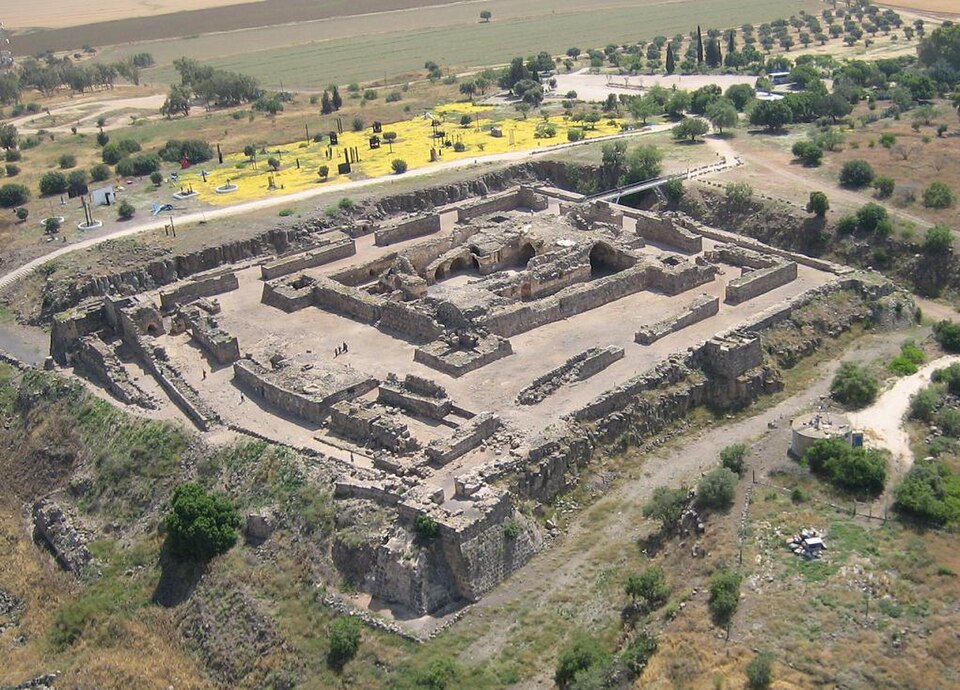
Belvoir (Kokhav HaYarden, Star of the Jordan) is one of the best-preserved Crusader castles in Israel, perched on a cliff 500 meters above the Jordan Valley with views stretching from the Sea of Galilee in the north to the mountains of Gilead in Jordan to the east. The castle’s dramatic setting, its concentric defensive design, and the story of its 18-month siege make it one of the most rewarding Crusader sites in the country.
Three Names: Belvoir, Kokhav HaYarden, Kawkab al-Hawa
The castle has three names that tell three stories. “Belvoir” is French for “beautiful view,” the name the Crusaders gave it for obvious reasons. “Kokhav HaYarden” is Hebrew for “Star of the Jordan,” referring to the castle’s position shining above the Jordan Valley like a star. In Arabic, the site is known as Kawkab al-Hawa, “Star of the Wind,” for the strong winds that sweep the hilltop. All three names capture something true about a place that is defined by its height, its beauty, and its exposure to the elements.
Knights Hospitaller
Belvoir was built by the Knights Hospitaller (the Order of St. John) in 1168, after they purchased the land from a French nobleman named Velos. The Hospitallers, who had begun as a charitable organization running a hospital for pilgrims in Jerusalem (at the Muristan), had evolved into a military-religious order that combined the care of the sick with the defense of the Crusader Kingdom. At Belvoir, they built one of the most sophisticated fortifications of the Crusader period.
Concentric Design
Belvoir is a concentric castle: a square fortress within a square fortress, each with its own walls, towers, and moat. This was one of the earliest examples of concentric fortification in the Crusader world, a design that would later become standard in castle-building across Europe. The outer wall, with massive corner towers, surrounds the inner keep on all sides. Between the two walls, a vaulted passageway runs the full perimeter, creating a covered fighting corridor from which defenders could rain fire on attackers who breached the outer wall. The dry moat, cut into the bedrock on the eastern side, is over 20 meters wide and several meters deep. An attacker who took the outer wall still faced the inner keep, which had its own walls, its own towers, and its own supplies. The castle was designed to be impregnable, and for 18 months it very nearly was.
Siege (1187-1189)
After Saladin’s devastating victory at the Battle of Hattin on July 4, 1187, most Crusader castles and cities fell within weeks. Belvoir refused. While Jerusalem, Jaffa, Caesarea, and dozens of other strongholds surrendered or were taken by force, the Hospitaller garrison at Belvoir held out for 18 months.
Saladin’s forces surrounded the castle and attempted multiple assaults. The garrison, though cut off from reinforcement and supplies, used the castle’s concentric design to maximum effect: every wall that fell revealed another wall behind it. The moat, the towers, and the narrow approaches forced the attackers into killing zones where the defenders’ crossbows and boiling oil could do maximum damage.
In January 1189, after a year and a half of siege, Saladin’s engineers managed to undermine one of the outer towers, collapsing it into the moat. With the outer defenses breached, the Hospitaller commander negotiated a surrender. The terms were honorable: the garrison was allowed to march to the Crusader stronghold of Tyre with their arms, a testament to the respect their defense had earned. Saladin, who had seen too many castles fall in days or weeks, recognized the quality of the defense at Belvoir by granting generous terms to the men who had defied him for 18 months.
The Destruction
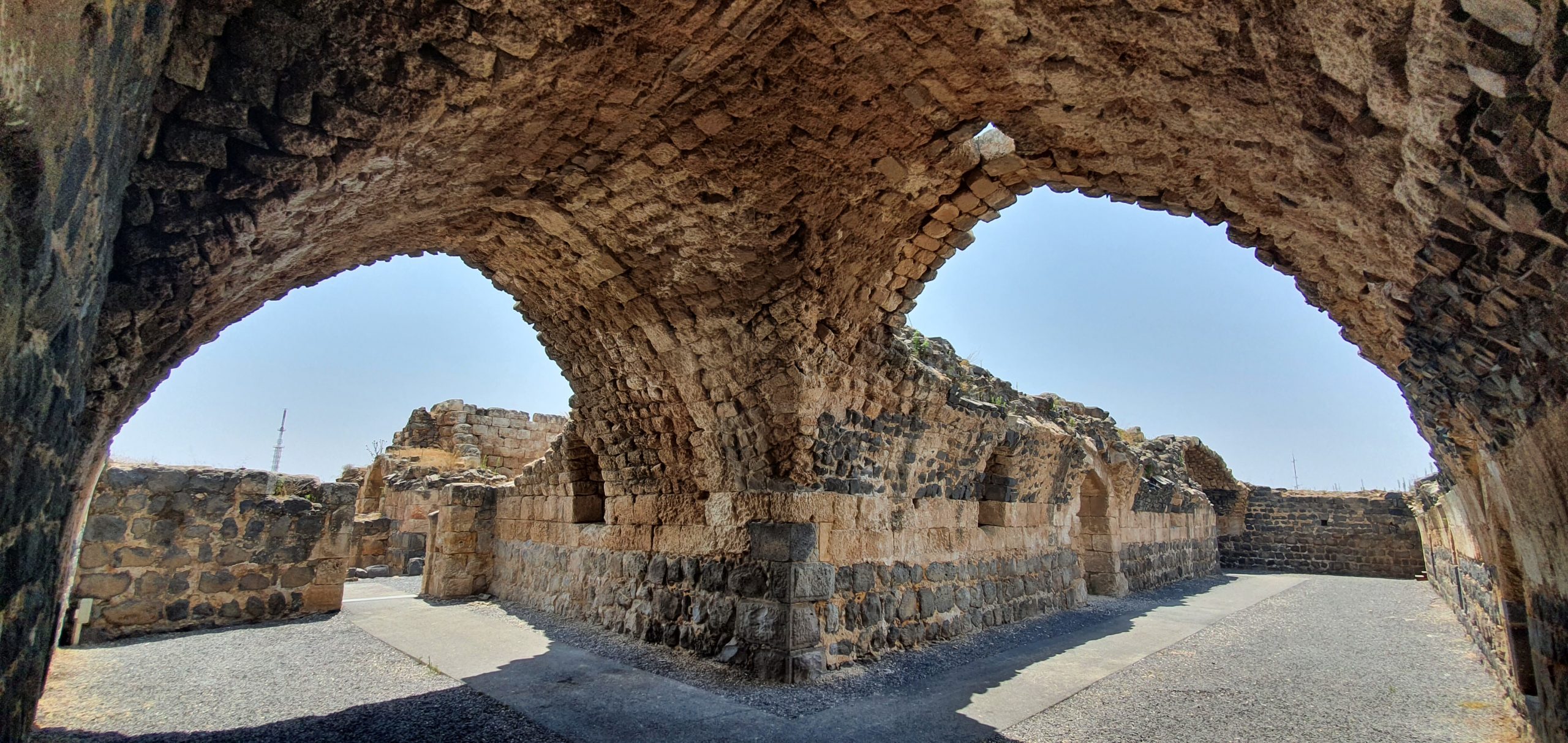
After the surrender, Saladin ordered the castle partially dismantled to prevent its reuse. His engineers systematically destroyed sections of the walls and towers, but the massive scale of the construction meant that much of the castle survived the demolition. The ruins that visitors see today, while damaged, still convey the power and sophistication of the original fortress. The inner keep, the vaulted corridors, the chapel, the kitchen with its oven and chimney, the cisterns, and large sections of both the inner and outer walls are well preserved.
The Crusader Fortress Ruins
Walking through Belvoir today, visitors can trace the full defensive system. The outer wall with its corner towers shows the first line of defense. The vaulted corridor between the walls shows the second. The inner keep, with its own towers and walls, shows the third. The chapel, a small vaulted room in the inner keep, is where the Hospitaller knights prayed before battle. The kitchen, with its stone oven and chimney, is where they ate. The cisterns, carved into the bedrock beneath the castle, stored rainwater for the siege. And the moat, still deep and wide, shows the engineering that made the castle so difficult to take.
The View of the Jordan Valley and the Gilead
The view from Belvoir is one of the most sweeping in northern Israel. The Jordan Valley lies 500 meters below, a green ribbon of farmland following the Jordan River through the rift valley. The Gilead mountains of Jordan rise on the eastern horizon, their brown slopes catching the afternoon light. The southern end of the Sea of Galilee is visible to the north. And on clear days, Mount Gilboa is visible to the south, connecting the Crusader story to the biblical one: the mountain where Saul fell is visible from the castle that Saladin besieged.
Visit with Hoshen Tours
Belvoir is a Crusader castle with commanding views of the Jordan Valley. Hoshen Tours pairs it with the mosaic at Beit Alpha, the springs at Gan HaShlosha, the border history at Naharayim, and the early Zionist settlement of Moshava Kinneret.
Explore Our Tour Collection
Ready to experience Israel in true colors?
Plan Your TourPrivate tours designed around your interests, schedule, and pace.