



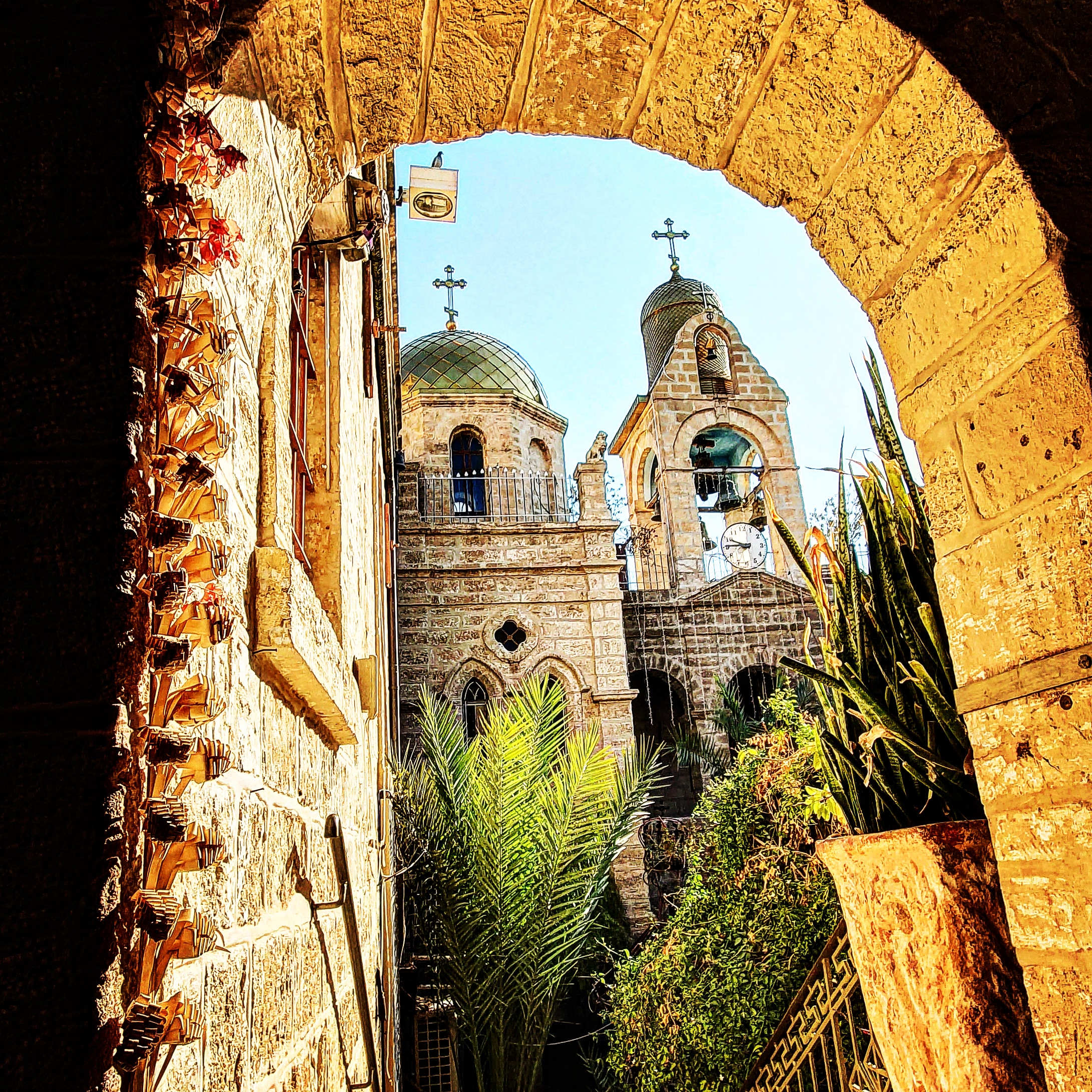
Deir Hajla: The Monastery of St.Deir Hajla (the Monastery of St. Gerasimus) sits in the flat, desolate plain between Jericho and the Dead Sea, a Greek Orthodox monastery built around one of the most beloved stories of the desert fathers: the monk who tamed a lion.
St. Gerasimus and the Lion
According to tradition, the 5th-century monk Gerasimus was walking in the desert when he encountered a lion with a thorn in its paw. Gerasimus removed the thorn and bandaged the wound, and the lion became his devoted companion, following him like a dog and serving the monastery by guarding the donkeys. When Gerasimus died, the lion lay on his grave and died of grief. The story (which may have been confused with the similar story of St. Jerome, leading to the artistic convention of depicting Jerome with a lion) is depicted in icons and frescoes throughout the monastery.
Gerasimus was part of a remarkable wave of Christian monasticism that swept through the Judean Desert in the 4th, 6th centuries CE. Inspired by the Desert Fathers of Egypt and by the biblical tradition of prophets who sought God in the wilderness, Elijah, John the Baptist, and Jesus himself, hundreds of monks settled in the caves, wadis, and desolate plains between Jerusalem and the Dead Sea. They founded lauras (loose communities of hermits who lived alone during the week and gathered for communal worship on Saturdays) and cenobia (communal monasteries). Chariton the Confessor established the first laura at Pharan (Ein Prat) around 330 CE. Euthymius, Sabas, Theodosius, and Gerasimus followed in the 5th century, each founding communities that attracted monks from across the Christian world. At its peak, the Judean Desert housed an estimated 3,000 monks in dozens of monasteries, an extraordinary density of monastic life in one of the harshest environments on Earth. Gerasimus’s monastery near the Jordan became one of the most important in this network, and its location near the traditional site of Jesus’s baptism gave it a special significance for pilgrims arriving from the east.
The Holy Family and the Monastery
The monastery also marks a tradition that the Holy Family, Joseph, Mary, and the infant Jesus, rested at this spot during their flight into Egypt, making it a site of pilgrimage for Christians who trace the journey described in Matthew 2:13–15. A chapel within the monastery commemorates this tradition, and icons depicting the Flight into Egypt line its walls. The association with both Gerasimus and the Holy Family gives this remote desert monastery a double layer of sacred meaning that few other sites in the Holy Land possess.
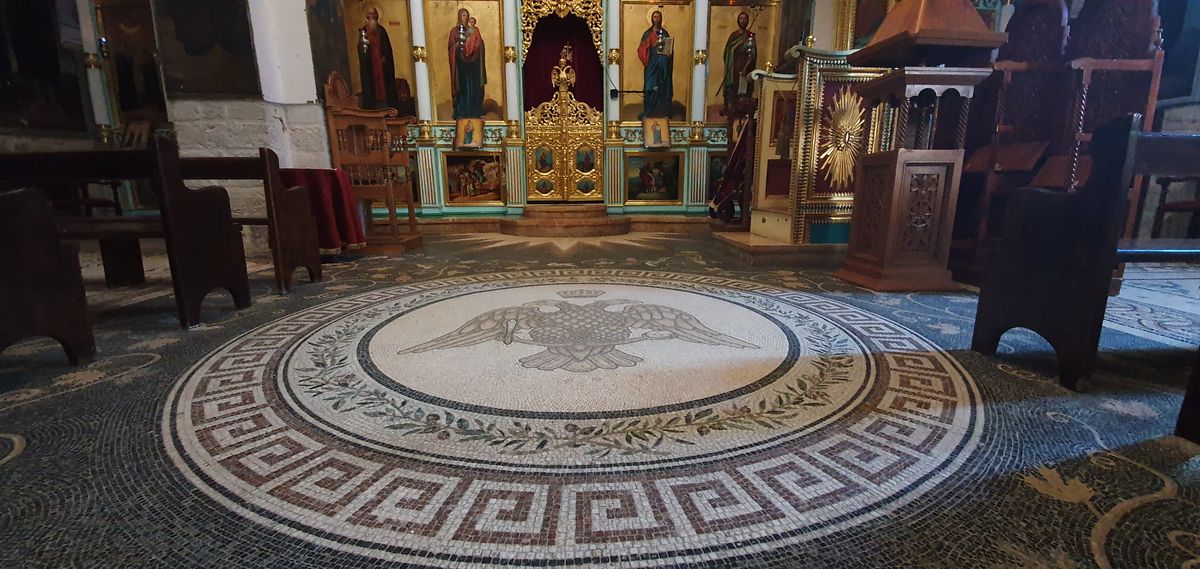
The current monastery, rebuilt in the 19th century by the Greek Orthodox Patriarchate on ancient foundations, is a compact, walled compound that feels like a fortress against the surrounding emptiness. Inside, the chapel is richly decorated with icons, oil lamps, and gilded woodwork in the Greek Orthodox tradition. A mosaic floor from the original Byzantine church survives beneath the modern structure. The monastery’s small community of monks maintains the site and welcomes visitors, offering a glimpse of a contemplative life that has continued in this spot, with interruptions, for over fifteen centuries.
Hermits of the Jordan Valley
The area around Deir Hajla was not only the site of Gerasimus’s laura but also home to some of the most devoted hermits in the Judean Desert. The flat, sun-scorched plain between Jericho and the Dead Sea was dotted with individual hermit cells where monks lived in total isolation, having graduated from communal monastic life to live entirely alone.
A hermit near Deir Hajla would live in a small mud-brick cell or a cave in the cliffs, sometimes with only a single opening for light and the delivery of bread and water. He would spend his days in prayer and weaving palm-frond baskets. Some were walled in by their own request, seeing no human face for years at a time. The laura of Gerasimus provided their weekly bread, but otherwise they lived in complete solitude.
Cyril of Scythopolis and John Moschus both describe visiting hermits in this area and recording their stories. One monk had lived alone for 40 years without speaking. Another had memorized the entire Bible. A third refused to leave his cell even when the Jordan flooded the plain, trusting that God would protect him. These stories, collected in “The Spiritual Meadow,” made the Jordan Valley hermits famous throughout the Christian world.
Visit with Hoshen Tours
Deir Hajla preserves the memory of St. Gerasimus and his legendary lion in the stark wilderness of the Jordan Valley. This working monastery, maintained by Greek Orthodox monks, offers visitors a rare glimpse into a contemplative tradition that has continued here since the Byzantine period. Hoshen Tours provides the historical context of desert monasticism and arranges visits when the chapel and courtyard are open. Combine it with Jericho, the Mount of Temptation, the Hasmonean Palaces, and the pioneering kibbutz at Beit HaArava.
Explore Our Tour Collection
Ready to experience Israel in true colors?
Plan Your TourPrivate tours designed around your interests, schedule, and pace.