



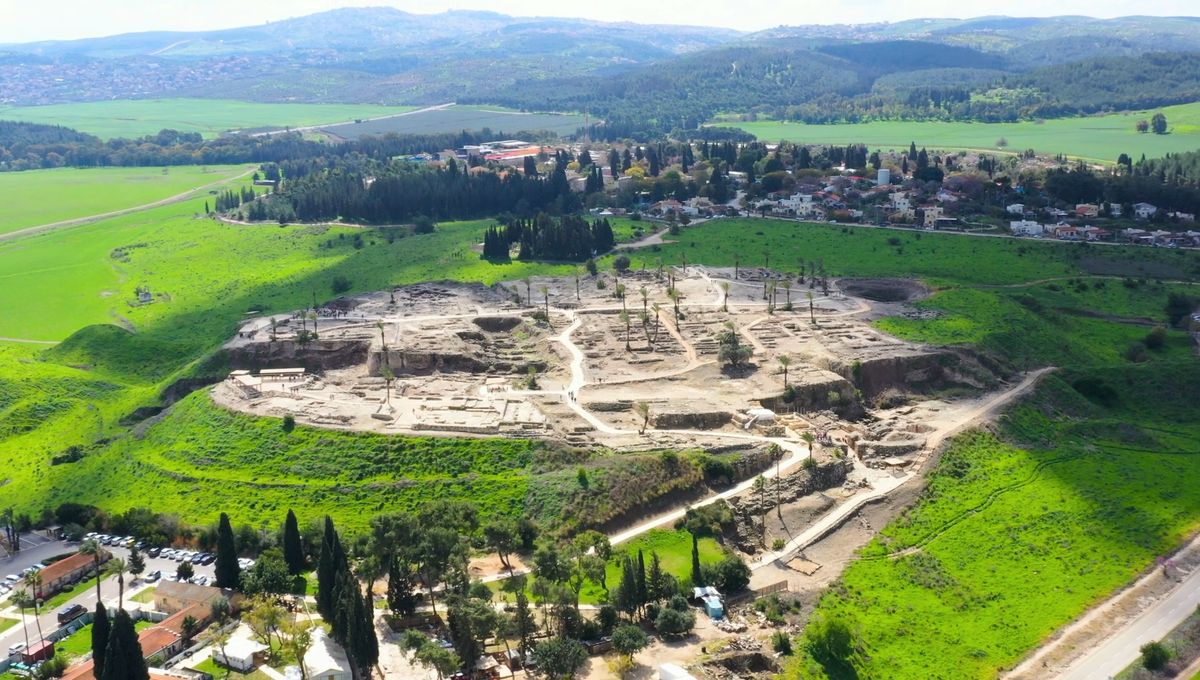
Megiddo (Armageddon) is one of the most important archaeological sites in the world, a massive tell that guards the most strategic pass in the ancient Near East. The Megiddo Pass connects the coastal Via Maris highway to the Jezreel Valley and the routes leading north to Syria, Mesopotamia, and Anatolia. Every empire that sought to control the region, Egypt, Canaan, Israel, Assyria, Persia, Rome, had to control Megiddo, and the result is a tell containing over 30 layers of civilization spanning 6,000 years. UNESCO designated Tel Megiddo a World Heritage Site in 2005.
Canaanite City
Long before the Israelite period, Megiddo was one of the wealthiest Canaanite cities in the region. A treasure trove of carved ivory objects, found in the Late Bronze Age palace, reveals the luxury of the Canaanite rulers. The ivories, depicting sphinxes, lions, and scenes of royal life, are now displayed at the Rockefeller Museum in Jerusalem and are among the finest examples of Canaanite art ever found.
The Canaanite sacred precinct at Megiddo is one of the most important religious complexes uncovered in the ancient Near East. A massive round stone altar, dating to the Early Bronze Age (around 2700 BCE), was used for animal sacrifices and communal rituals centuries before Abraham. Nearby, a series of temples built one on top of another over more than a thousand years testifies to the continuous sacred importance of this spot. The earliest temples predate the pyramids of Egypt, making Megiddo’s sacred precinct one of the oldest known places of organized worship in the world.
Egyptian Conquest
The earliest recorded battle in history took place at Megiddo in 1457 BCE, and its documentation is one of the most remarkable military records from the ancient world. Pharaoh Thutmose III, often called the Napoleon of ancient Egypt, launched a massive campaign to reassert Egyptian control over Canaan after a coalition of Canaanite kings, led by the King of Kadesh, had rebelled against Egyptian authority. Thutmose marched his army north from Egypt with a force of perhaps 10,000 soldiers and faced a critical decision at the Carmel Ridge: three passes led through the mountains to the Jezreel Valley, and the most direct route, through the narrow Wadi Ara, was considered suicidally dangerous because an ambush in the gorge could destroy the entire army.
Thutmose’s generals begged him to take one of the safer, wider routes. The pharaoh overruled them, gambling that the Canaanites would not expect him to risk the narrow pass. He was right. The Egyptian army emerged from the gorge onto the plain before Megiddo and caught the Canaanite coalition unprepared. The battle was swift and decisive. The Canaanite forces broke and fled toward the walled city of Megiddo, and the defenders pulled the fleeing soldiers up the walls using ropes made of clothing. Thutmose then laid siege to the city for seven months until it surrendered.
The entire campaign, the march, the debate over the passes, the battle, the siege, and the surrender, was recorded on the walls of the Karnak Temple in Egypt. The entire spoils, including over 900 chariots and thousands of horses, were recorded on the walls of the Karnak Temple in Egypt. It is the oldest detailed military narrative in recorded history.
Solomon’s City
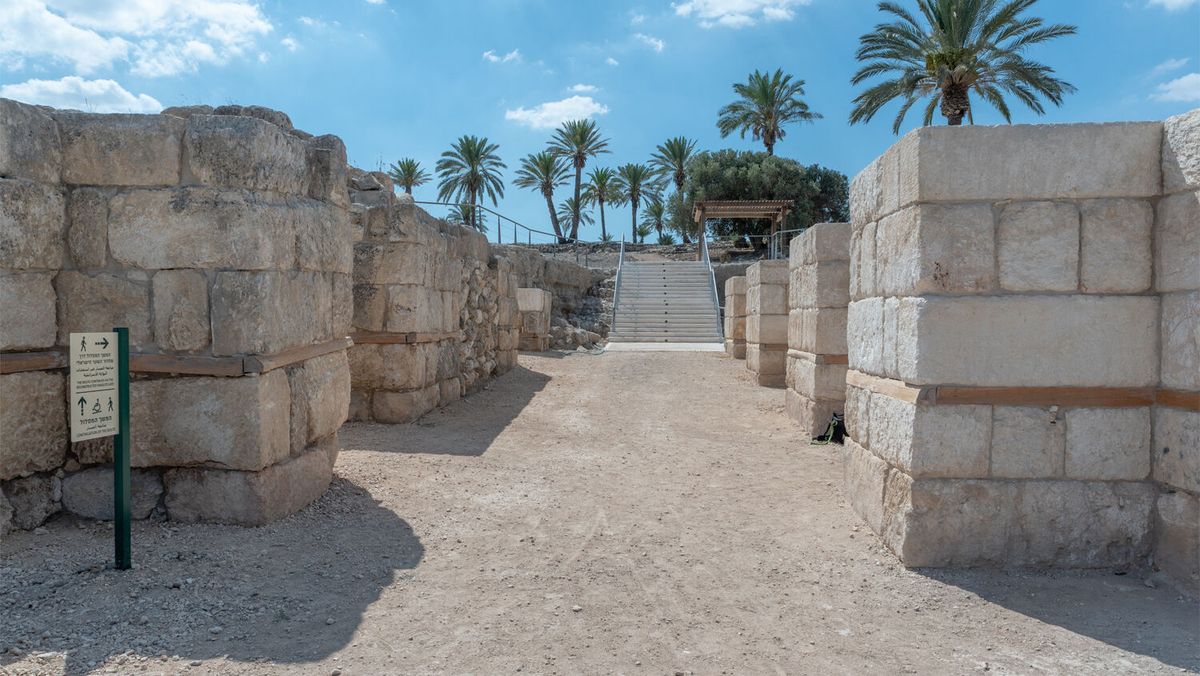
The Bible lists Megiddo as one of the three cities fortified by King Solomon, alongside Gezer and Hazor: “Here is the account of the forced labor King Solomon conscripted to build… Hazor, Megiddo and Gezer” (1 Kings 9:15). Excavations uncovered a six-chambered gate, identical in design to gates found at Gezer and Hazor, massive palace buildings, and administrative structures consistent with a royal center of power. The gate, with its three chambers on each side creating a fortified passageway, is one of the most recognizable architectural features of the Solomonic period and a highlight of any visit to the site.
Solomon transformed Megiddo from a Canaanite ruin into one of the three pillars of his kingdom’s defense. The city controlled the pass through the Carmel Ridge, and whoever held it controlled all movement between the coast and the interior. Solomon designated Megiddo as one of his “chariot cities” (1 Kings 9:19), and the massive infrastructure uncovered here, palaces, storehouses, and the famous stables, reflects a city that served as both an administrative capital and a military base of the first order.
The Stables: Chariot Capital of the Ancient Levant
The most striking structures uncovered at Megiddo are two enormous stable complexes, each consisting of multiple long buildings arranged around limestone-paved courtyards. Each building was divided into three aisles: two stone-paved horse stalls flanking a central corridor, separated by rows of stone pillars. Stone feeding troughs were set between the pillars, many still bearing the chewing marks of the horses that fed from them thousands of years ago. Holes bored through the pillars served as hitching posts. Together, the two complexes could house approximately 450 to 480 horses. Adjacent to the stables, archaeologists found a large mudbrick water tank near the central courtyard, and a granary for storing fodder.
Megiddo was not just a city that happened to have stables. It was a purpose-built military horse facility, the premier chariot base of the Israelite monarchy, guarding the only viable pass through the Carmel Ridge into the flat, open terrain of the Jezreel Valley. The valley was ideal chariot country, one of the few places in the hilly Levant where massed chariot formations could operate at full effectiveness. Each war chariot required a team of two trained horses, a driver, and a warrior, sometimes a third man as shield-bearer. Maintaining hundreds of war-ready horses and chariots demanded a permanent infrastructure of stabling, training, water, and grain supply, and Megiddo had all of it.
The debate over whether Solomon or Ahab built the stables has occupied archaeologists for decades. The early excavators attributed them to Solomon, but Yigael Yadin’s re-excavation in the 1960s reassigned them to King Ahab and the Omride dynasty of the 9th century BCE. The strongest evidence for Ahab comes from an Assyrian inscription recording the Battle of Qarqar in 853 BCE, where Ahab of Israel contributed the largest chariot force of any member of the anti-Assyrian coalition. Megiddo’s stables are the most likely base from which that force was maintained and deployed.
Water System
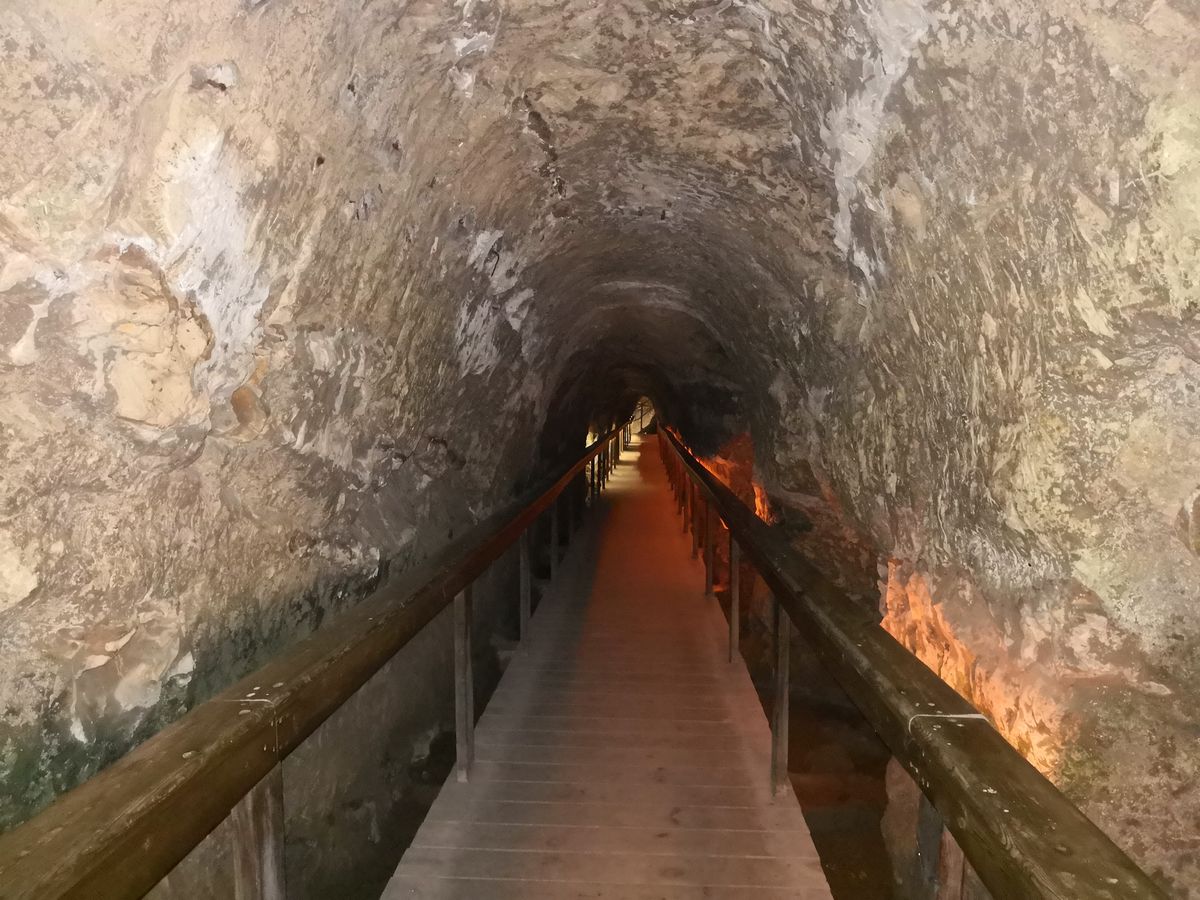
Megiddo’s water system is one of the most impressive engineering achievements in the ancient Near East. A vertical shaft descends 30 meters through the bedrock from inside the city, connecting to a horizontal tunnel that extends 70 meters to a spring outside the walls. The system allowed the inhabitants to access water during sieges without leaving the city. Visitors descend through the shaft and walk through the tunnel, an experience that conveys the scale and ambition of the project. The tunnel was carved from both ends simultaneously, meeting in the middle with remarkable precision, an engineering feat that parallels Hezekiah’s Tunnel in Jerusalem, built around the same period. Once the tunnel was complete, the original entrance to the spring was blocked and concealed, so that an enemy besieging the city would not even know the water source existed.
Death of Josiah
King Josiah of Judah was the last great reformer of the biblical period, a king who centralized worship in Jerusalem, purged the land of pagan altars, and led a religious revival that gave the kingdom of Judah one final moment of spiritual clarity before its destruction. In 609 BCE, Josiah made the fateful decision to intercept the Egyptian Pharaoh Necho II, who was marching north through the Jezreel Valley to support the crumbling Assyrian Empire against the rising power of Babylon.
Necho had no quarrel with Judah. He sent messengers to Josiah warning him to stand aside: “What quarrel is there, king of Judah, between you and me? It is not you I am attacking at this time, but the house with which I am at war” (2 Chronicles 35:21). But Josiah refused to let the Egyptian army pass unchallenged. He deployed his forces at Megiddo, the same pass that had determined the fate of armies for a thousand years before him, and was struck down in the battle. “Archers shot King Josiah, and he told his officers, ‘Take me away; I am badly wounded.’ So they took him out of his chariot… and he died” (2 Chronicles 35:23–24).
Josiah’s death at Megiddo was one of the most consequential events in biblical history. Without his leadership and reforms, Judah descended into political chaos, became a vassal of Egypt and then Babylon, and within 23 years Jerusalem and the Temple were destroyed by Nebuchadnezzar. The mourning for Josiah was so great that it became proverbial: the prophet Zechariah would later compare a future day of mourning to “the weeping of Hadad Rimmon in the plain of Megiddo” (Zechariah 12:11).
Assyrian Conquest
In 732 BCE, the Assyrian king Tiglath-Pileser III conquered the northern Kingdom of Israel and turned the Jezreel Valley into an Assyrian province. Megiddo became the provincial capital, and the Assyrians rebuilt parts of the city in their own architectural style. A large, well-planned Assyrian administrative building was constructed on the tell, and the city served as a base for Assyrian control of the region’s trade routes. The Assyrian period at Megiddo is a reminder that the great empires of Mesopotamia left their mark here just as the Egyptians and Canaanites did before them.
Armageddon: The End of the World
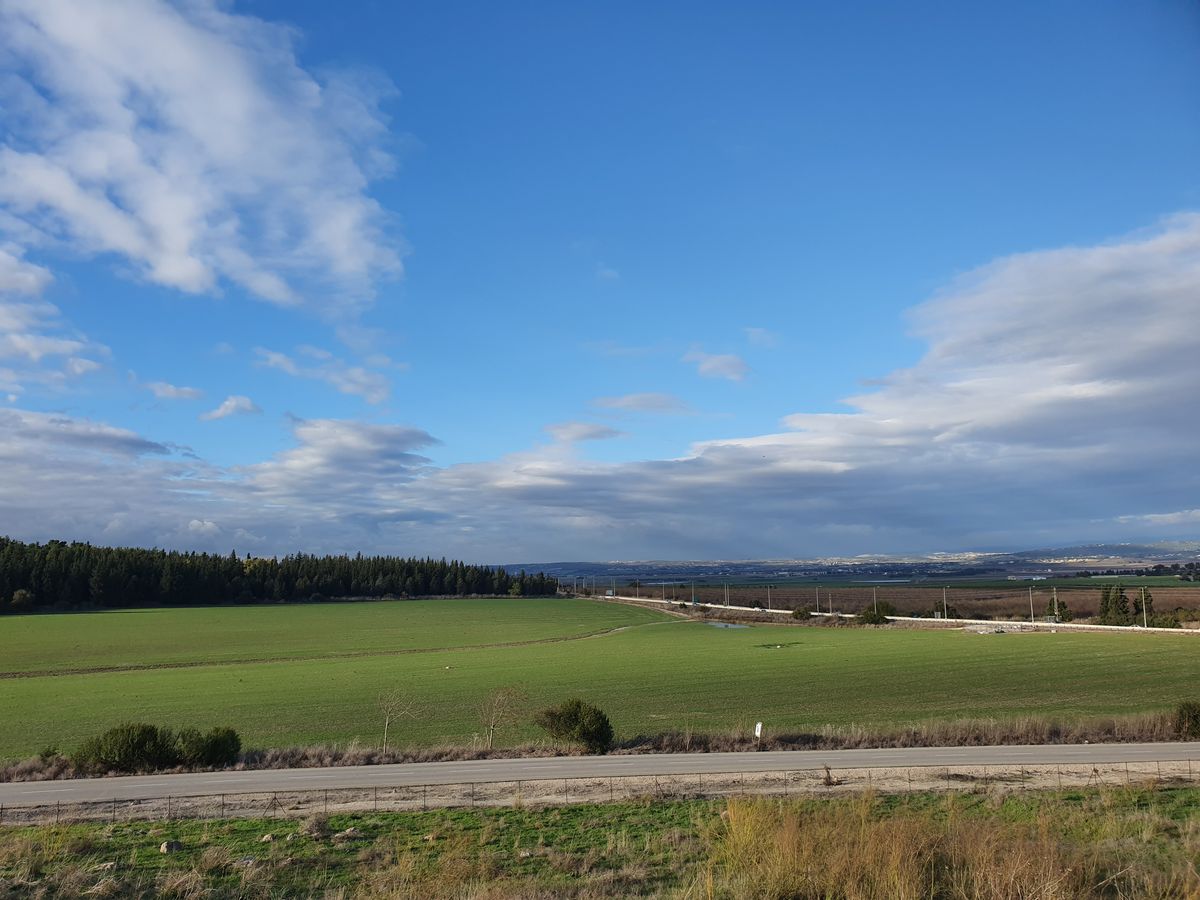
The word Armageddon has entered every language on earth as a synonym for the end of the world, the final catastrophe, the battle to end all battles. Few people who use the word realize that it refers to a real place. Armageddon is a corruption of the Hebrew Har Megiddo, the Mount of Megiddo, and the hill you are standing on when you visit Tel Megiddo is, according to the Book of Revelation, the site where the final battle between good and evil will take place.
The prophecy appears in Revelation 16:16: “Then they gathered the kings together to the place that in Hebrew is called Armageddon.” In the apocalyptic vision of the author of Revelation, writing in the late 1st century CE, the forces of God and the forces of Satan will converge on this valley for a climactic confrontation. Angels will pour out the seven bowls of God’s wrath upon the earth, and the kings of the world, gathered by demonic spirits, will assemble their armies at Armageddon for the war that will bring the current age to its end.
Why Megiddo? The author of Revelation did not choose this location at random. By the 1st century CE, Megiddo had already been a battlefield for over 3,000 years. Egyptians, Canaanites, Israelites, Assyrians, Babylonians, Persians, and Greeks had all fought here. The Jezreel Valley, spread out below the tell, had witnessed more military campaigns than any comparable stretch of ground on earth. If you were looking for a place that embodied the concept of perpetual warfare, a place where empires had always clashed and would always clash, Megiddo was the obvious choice.
The idea of Armageddon has had an extraordinary afterlife. It has shaped Christian eschatology for two thousand years, inspired countless books, films, and sermons, and influenced the worldview of political leaders from the Crusaders to modern-day evangelical Christians. Some visitors come to Megiddo not as tourists but as pilgrims, standing on the tell and looking out over the valley where they believe the final chapter of human history will be written. Whether one reads Revelation as prophecy, allegory, or apocalyptic literature written in response to Roman persecution, the power of the image is undeniable: the armies of the world, gathered on the plain below this ancient hill, for the last battle the world will ever see.
More than 34 major battles have been documented at or near Megiddo over 4,000 years, from Thutmose III in 1457 BCE to General Allenby in 1918 CE. No other place on earth has seen as much warfare. Standing on the tell, looking out over the valley, you understand why the author of Revelation chose this spot. If the world is going to end in battle, it will end here.
Allenby and World War I
The most recent major battle at Megiddo took place in September 1918, when British General Edmund Allenby launched a devastating surprise attack against the Ottoman forces defending the Jezreel Valley. The Battle of Megiddo broke the Ottoman line, and within days Allenby’s forces had captured Nazareth, Haifa, and Damascus. The victory effectively ended Ottoman rule in the Middle East after 400 years. Allenby was so conscious of the biblical resonance of his triumph that he took the title Viscount Allenby of Megiddo. Napoleon, who had campaigned in the region over a century earlier, reportedly called the Jezreel Valley “the most natural battlefield on the whole earth”, and history proved him right, from Thutmose III to Allenby, over 3,400 years of warfare on the same ground.
The View
From the summit of the tell, the Jezreel Valley spreads out in every direction, one of the most fertile and strategically important landscapes in the Middle East. The pass through the Carmel ridge is visible to the northwest. Mount Gilboa rises to the southeast. Mount Tabor is visible to the northeast. The panorama explains why this location has been fought over for 5,000 years and why the author of Revelation chose it as the setting for the end of the world.
Visit with Hoshen Tours
Megiddo is one of the essential sites in Israel, where 6,000 years of history converge at a single crossroads. Hoshen Tours descends into the water tunnel, walks the ruins, and tells the story from Thutmose III to Armageddon.
Ready to experience Israel in true colors?
Plan Your TourPrivate tours designed around your interests, schedule, and pace.