



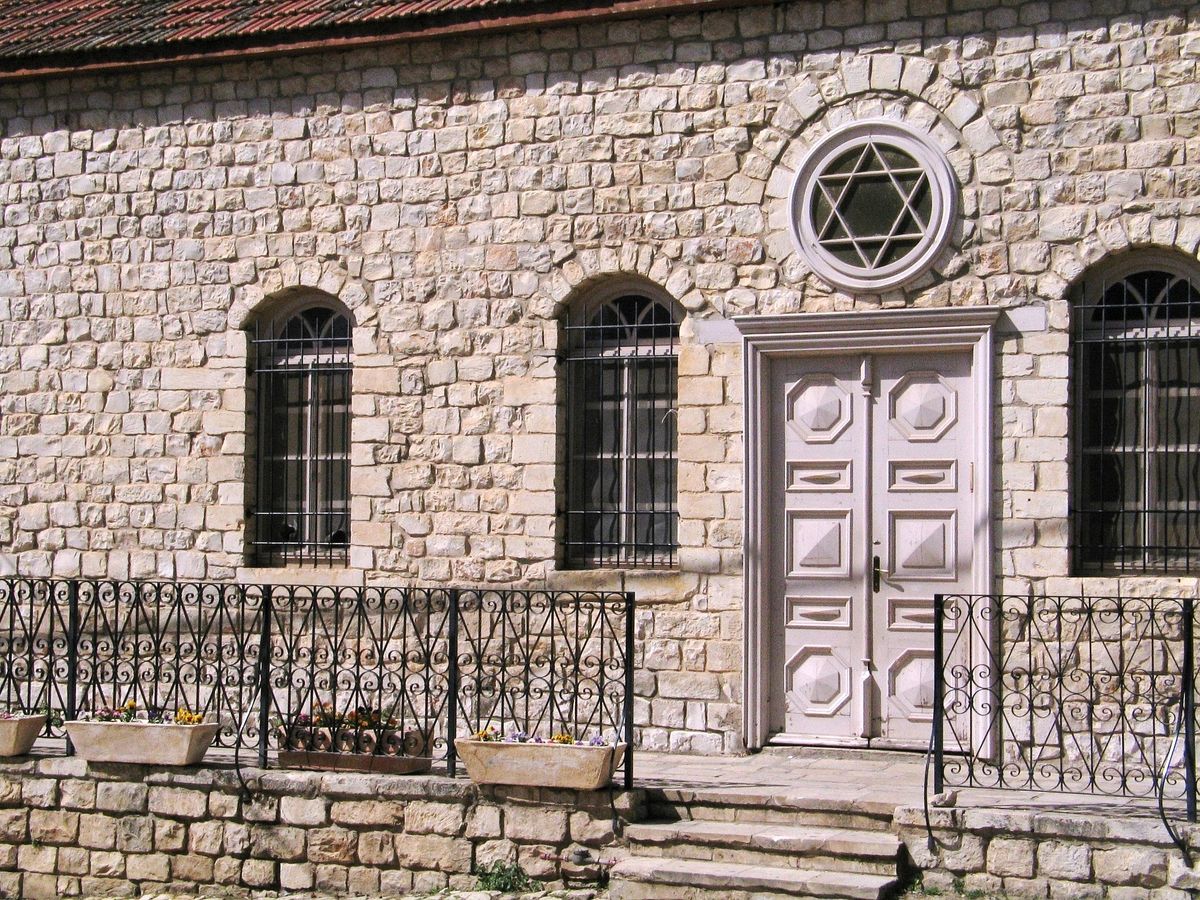
Rosh Pina (“Cornerstone,” from Psalm 118:22) is one of the oldest Jewish settlements in the Galilee, founded in 1882 by Romanian immigrants of the First Aliyah. It sits on a hillside overlooking the Hula Valley, with views stretching from the snow-capped peak of Mount Hermon to the green expanses of the Hula Valley below. The restored historic quarter, the pioneer story, and the views make Rosh Pina one of the most charming destinations in northern Israel.
The Founding
In 1882, approximately 30 families from Romania, members of the Hovevei Zion (“Lovers of Zion”) movement, arrived in the Galilee carrying a dream of rebuilding Jewish life in the ancestral homeland. They purchased land on a hillside above the Hula Valley, initially calling their settlement Gei Oni. The early years were brutal: malaria from the swamps below, unfamiliar soil, insufficient water, and poverty so severe that the settlement repeatedly teetered on the edge of collapse. These Romanian pioneers were among the very first wave of modern Jewish agricultural settlement in the Land of Israel, part of the same cohort that established Rishon LeZion and Zikhron Ya’akov in that same landmark year of 1882.
The settlement chose its new name from Psalm 118:22, “The stone the builders rejected has become the cornerstone”, a deliberate declaration of faith by people who had been rejected by Europe and were attempting to build something lasting from almost nothing. The name Rosh Pina, meaning “Cornerstone,” captured both the biblical resonance and the settlers’ self-understanding: they were the foundation stone of a new chapter in Jewish history in the Galilee.
Like so many First Aliyah colonies, Rosh Pina was saved by Baron Edmond de Rothschild. The Baron’s intervention, money, agronomists, doctors, and infrastructure, arrived at a moment when the settlement might otherwise have been abandoned entirely. Rothschild planted the Baron’s Garden, funded housing and public buildings, and brought the expertise that enabled the settlers to turn a struggling hillside camp into a lasting community. His administrators could be heavy-handed, dictating what to plant and how to farm, but without them the settlement would not have survived its first decade. Rosh Pina stands as one of the clearest examples of the partnership, tense and complicated as it was, between the idealistic pioneers of the First Aliyah and the philanthropic power of the Rothschild family.
Professor Gideon Mer and the Fight Against Malaria
One of Rosh Pina’s most significant contributions to the history of the Galilee came through Professor Gideon Mer (1894–1961), a malariologist who made the village his base for decades of pioneering research. Malaria, carried by mosquitoes breeding in the swamps of the Hula Valley below, was the single greatest killer of settlers in the Upper Galilee. Entire families were lost to it. Communities that survived the hardships of farming and poverty still fell to the disease that arrived with the summer heat and the standing water.
Working from Rosh Pina, Mer studied malaria transmission with meticulous rigor, experimenting with drainage of standing water, introducing mosquito-eating fish (Gambusia) into the irrigation channels, and developing protocols for quinine distribution among settler families. His findings were applied across the region and made a measurable difference in settler mortality throughout the Galilee. His work preceded and complemented the larger drainage projects that eventually eliminated malaria from the Hula Valley during the 1950s. The Mer House, one of the oldest buildings in Rosh Pina, is preserved in the historic quarter as a monument to this quiet but essential chapter of Galilee history.
The Historic Quarter
The restored Old Rosh Pina quarter is widely regarded as the most charming historic village in the Galilee. A cluster of original First Aliyah-era stone buildings lines a steep, narrow main street, their dressed limestone walls and red tile roofs catching the afternoon light. The buildings have been converted into galleries, boutique hotels, restaurants, and artisan shops, but the original architecture, arched doorways, small courtyard gardens, and the gentle irregularity of 19th-century construction, has been carefully preserved. Walking up the steep main street with the Hula Valley spreading far below is, quite literally, walking through the opening chapter of modern Jewish settlement in the Galilee.
Key sites within the quarter include the old synagogue, one of the earliest in any Galilee settlement, still standing at the heart of the village. The HaRishonim Cemetery holds the graves of the original founders, the Romanian pioneers who came in 1882 and are buried in the land they chose. The Baron’s Garden, planted at Rothschild’s direction, offers a shaded terrace with long views over the valley. The Mer House recalls the malaria research that helped make the region livable for those who followed. Together these sites form a compact, walkable heritage trail through one of the most important chapters of early Zionist settlement history.
The Panoramic View
Rosh Pina’s hillside location provides one of the finest panoramas in northern Israel. From the old quarter and from viewpoints along the ridge, the entire Hula Valley stretches below, the former swampland that was once the most malaria-infested region in Palestine, now a patchwork of fish ponds, agricultural fields, and the restored Hula Nature Reserve with its vast seasonal flocks of migrating cranes and pelicans. Mount Hermon rises to the northeast, its summit carrying snow well into spring. The Golan Heights roll eastward, and the mountains of the Upper Galilee close the horizon to the west. At sunset, when the light turns gold over the valley and the shadows lengthen across the hills, the view from Rosh Pina is among the most beautiful in the country.
Rosh Pina Israel Today
Today Rosh Pina has grown from a struggling pioneer colony into a community of several thousand residents, known across Israel for its artists, its restaurants, and its carefully cultivated atmosphere of quiet, unhurried charm. The town has become a popular base for exploring the Upper Galilee and the Golan Heights, with boutique hotels and guesthouses occupying renovated pioneer buildings in the historic quarter. A number of respected restaurants have opened here, taking advantage of the Galilee’s reputation for fresh produce, local cheeses, and regional wine. Galleries display the work of artists who have made Rosh Pina their home, drawn by the light, the history, and the long views.
The combination of pioneer history, beautiful stone architecture, excellent food, proximity to the Hula Valley and the Golan, and the panoramic views makes Rosh Pina one of the most complete visitor experiences in northern Israel. Very few places carry this much history in so compact and beautiful a setting.
Visit with Hoshen Tours
Rosh Pina tells the story of the First Aliyah in a single hillside village, the dream, the suffering, the Rothschild rescue, the fight against malaria, and the beauty that emerged from it all. Hoshen Tours walks the historic quarter, visits the pioneer cemetery, the old synagogue, and the Mer House, and takes in the panoramic view of the Hula Valley and the Golan, connecting Rosh Pina’s story to the broader history of Jewish return to the land.
Visitors exploring the upper Galilee often combine Rosh Pina with nearby destinations such as Hula Valley, Safed, and Tel Hai, each offering its own distinctive perspective on the region’s layered history and landscape. A broader itinerary might also include Yesod HaMaala and Nahal Amud, both within easy reach and rich in their own right.
Every Hoshen Tours itinerary is private and fully customizable. Contact us to begin planning your journey through the upper Galilee.
Explore Our Tour Collection
Ready to experience Israel in true colors?
Plan Your TourPrivate tours designed around your interests, schedule, and pace.