



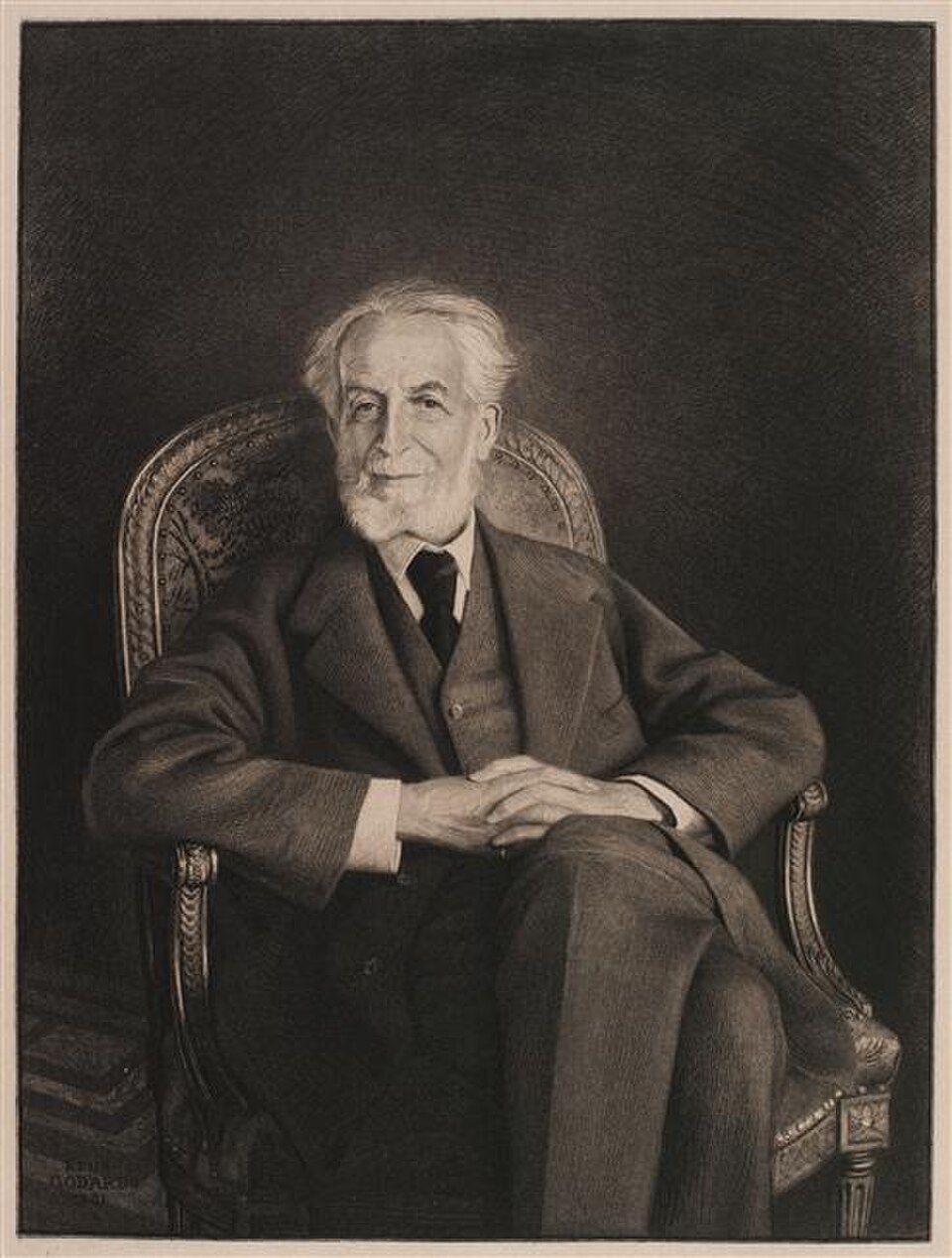
 Baron Edmond de Rothschild never lived in Israel, but without him, the modern state might not exist. Between 1882 and 1899, the French Jewish philanthropist poured the equivalent of hundreds of millions of dollars into the struggling Jewish settlements of the Land of Israel, funding farms, wineries, schools, and entire communities that would otherwise have collapsed within their first years.
Rothschild Coat of Arms
The Rothschild family crest tells the story of a dynasty. At its center, a shield bearing a clenched fist holding five arrows, representing the five sons of Mayer Amschel Rothschild, who were sent to five European capitals (Frankfurt, London, Paris, Vienna, and Naples) to establish banking houses. The motto beneath reads “Concordia, Integritas, Industria” (Harmony, Integrity, Industry). A lion and a unicorn flank the shield, and an eagle crowns it. The five arrows, like the five brothers, are stronger together than any one alone. It was this family’s wealth, and Edmond’s personal conviction, that kept the dream of Jewish settlement in the Land of Israel alive when almost everyone else had given up.
Well-Known Benefactor
Rothschild, a member of the famous banking dynasty, was initially skeptical of the Zionist movement. But when he learned that the newly founded settlements at Rosh Pina, Zikhron Ya’akov, and Rishon LeZion were on the verge of failure, he stepped in. His approach was hands-on and sometimes heavy-handed. He sent agricultural experts from France, established wine production (the cellars he built at Zikhron Ya’akov are still in use today), and imposed French farming methods on settlers who sometimes resented his paternalism.
The settlers called him “HaNadiv HaYadu’a” (the Well-Known Benefactor), a title that reflected both gratitude and a hint of irony. Rothschild demanded control in exchange for his money, and his administrators sometimes clashed with the independent-minded pioneers. But without his funding, most of the First Aliyah settlements would have disappeared within a few years of their founding.
50 Million Francs and a Dream
Rothschild’s investment went far beyond money. He funded the purchase of land across the Galilee and the coastal plain, created employment for thousands of settlers, and established the infrastructure that allowed the settlements to become self-sustaining. By the time he transferred management of the colonies to the Jewish Colonization Association (ICA) in 1899, the agricultural foundations of the future state were in place.
His contributions included founding the wine industry at Zikhron Ya’akov and Rishon LeZion, establishing glass and perfume factories, building synagogues and schools, and funding the draining of malarial swamps. The scope of his involvement was extraordinary: at its peak, Rothschild was personally financing the survival of virtually every Jewish agricultural settlement in the Land of Israel.
Ramat HaNadiv
Rothschild visited the Land of Israel twice, in 1887 and 1914, and was deeply moved by what the settlers had built with his support. He is buried, by his own wish, at Ramat HaNadiv (the Benefactor’s Heights) near Zikhron Ya’akov, overlooking the land he helped build. His wife, Baroness Adelaide, is buried beside him. The memorial gardens surrounding the tomb are among the most beautiful in Israel, designed in the French style that Rothschild brought to everything he touched.
Visit with Hoshen Tours
Rothschild’s fingerprints are visible across Israel, from the wineries of the Carmel to the settlements of the Galilee. Hoshen Tours traces his legacy in itineraries that connect Rosh Pina, Zikhron Ya’akov, and the pioneering story of modern Israel. Because the man who never lived here made it possible for millions of others to call it home.
Explore Our Tour Collection
Ready to experience Israel in true colors?
Plan Your TourPrivate tours designed around your interests, schedule, and pace.