



In 2005, during construction work at the Megiddo Prison (adjacent to the archaeological site of Tel Megiddo), prisoners and archaeologists uncovered the remains of a 3rd-century Christian prayer hall that may be the oldest purpose-built Christian worship space ever found. The discovery, which predates the Emperor Constantine’s legalization of Christianity by over 50 years, provides evidence of Christian worship during the period of Roman persecution. The site was excavated by the Israel Antiquities Authority under the direction of Yotam Tepper, and its significance was recognized immediately. The Israeli government has since announced plans to relocate the prison and turn the site into a major tourist destination.
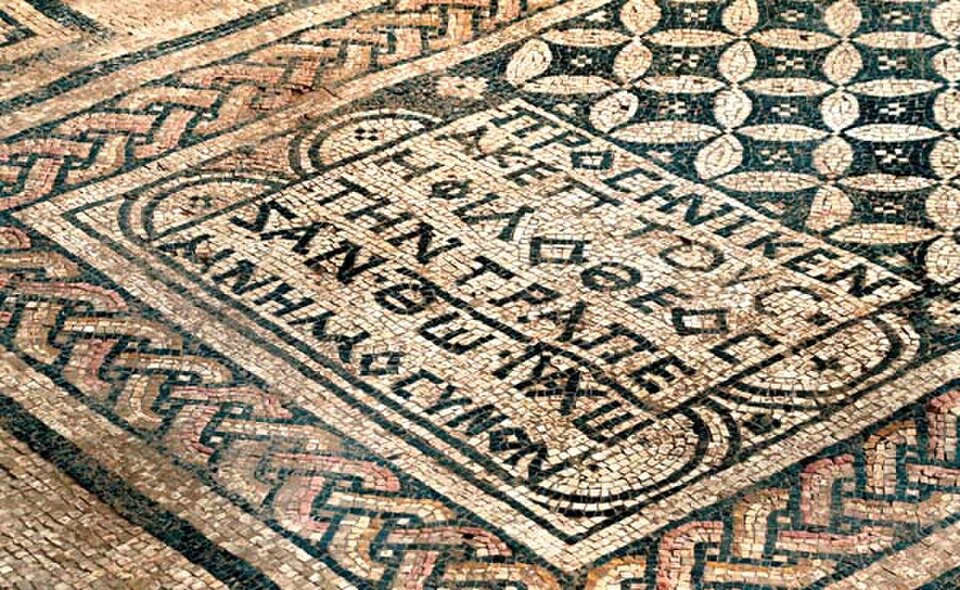
Mosaics Beneath a Prison Floor
The prayer hall contains a remarkably well-preserved mosaic floor with three inscriptions in Greek. One reads: “The God-loving Akeptous has offered this table to God Jesus Christ as a memorial.” The reference to a “table” (not an altar) is significant: early Christians met around a table for communal meals, and the inscription confirms this practice before the development of formal church liturgy.A second inscription commemorates women named Primilla, Cyriaca, Dorothea, and Chreste. A third inscription mentions a Roman army officer named Gaianus, a centurion, who donated funds for the mosaic. The fact that a serving Roman centurion would publicly identify with an illegal faith speaks to how deeply Christianity had penetrated Roman military ranks even during the era of persecution.
The Fish Symbol
The mosaic also depicts two fish, the ichthys symbol that early Christians used as a recognition sign. The Greek word for fish (ichthys) formed an acronym for “Jesus Christ, God’s Son, Savior” (Iesous Christos Theou Yios Soter). The fish at Megiddo represents one of the earliest known uses of this symbol in a worship context. Notably, no cross appears anywhere in the prayer hall. The cross did not become a standard Christian symbol until after Constantine, when crucifixion was abolished and the instrument of execution could be reinterpreted as a symbol of salvation rather than shame. The geometric patterns surrounding the fish are simple but carefully executed, suggesting a community with modest resources but genuine artistic care.
Before Churches Existed
The Megiddo prayer hall dates to the mid-3rd century, at least 50 years before Constantine legalized Christianity in 313 CE and decades before the first purpose-built basilica churches. The building is modest in size, consistent with a community that worshipped quietly during a period when Christianity was illegal under Roman law. Christians who were discovered faced imprisonment, confiscation of property, and execution. The mosaics, with their inscriptions naming Jesus Christ openly, suggest a community bold enough to leave a permanent record of their faith despite the danger. The site provides physical evidence for a period of Christian history that was previously known only from literary sources and fills a gap between the house churches of the 1st century and the grand basilicas of the 4th.
Visit with Hoshen Tours
The Megiddo Prison church tells the story of Christianity before it was legal, before it had power, before it had architecture. Hoshen Tours includes the story in Megiddo visits, connecting the oldest worship space to the site where the Book of Revelation places the final battle at the end of days. Hoshen Tours often combines this site with Nir David, Tel Shimron, and Nahalal for a memorable day exploring the region.
Explore Our Tour Collection
Ready to experience Israel in true colors?
Plan Your TourPrivate tours designed around your interests, schedule, and pace.