



On the night of December 10, 1936, a convoy of trucks wound through the darkness of the Beit She’an Valley, carrying timber, wire, gravel, and hundreds of workers toward a patch of land at the foot of Mount Gilboa. By the time dawn broke over the valley, a watchtower stood, a double stockade enclosed the compound, and the first Tower and Stockade settlement in the history of the Yishuv was a fait accompli. That place was Tel Amal, today known as Nir David, and the method it pioneered would be repeated more than fifty times across the land of Israel over the next three years, reshaping the geography of Jewish settlement in ways that would echo for generations.
The Tower and Stockade Movement
To understand what happened at Nir David, it is necessary to understand the conditions that produced it. The Arab Revolt of 1936 to 1939 made the roads of the Galilee and the valleys dangerous for Jewish travelers, and British Mandatory authorities responded by severely restricting the establishment of new Jewish settlements. The Yishuv’s leadership, determined not to cede ground under pressure, needed a method that could create settled facts on the ground before the British had time to intervene legally or politically.
The solution was elegant in its simplicity. Settlers and workers would prefabricate all the components of a settlement in advance: a wooden watchtower assembled from pre-cut sections, and a double-walled wooden stockade filled with gravel and soil to create a defensive barrier. Ottoman law, still in force under the Mandate, contained a critical provision, a building with a standing roof could not be demolished by the authorities. If a settlement could be erected between nightfall and dawn, and present itself as an established fact by morning, the British would face a legal obstacle to its removal. The race was always against the clock, and the workers who took part in these overnight construction efforts knew that the hours before sunrise were everything.
The Night of December 10, 1936
The founding of Tel Amal unfolded exactly as planned, though the tension of those night hours cannot be fully conveyed by the bare record. More than two hundred workers participated in the operation, arriving in coordinated convoys from different directions to avoid drawing attention. The components of the watchtower and the stockade were unloaded under cover of darkness, and teams worked simultaneously on every element of the structure. The tower was raised in sections, the double walls of the stockade were bolted together, the gravel and earth were shoveled into the cavity between the walls, and the area within was cleared and staked for the earliest essentials of daily life.
By morning, the settlement stood. British officers who arrived at the site found a roofed, walled compound with a functioning watchtower, and the Ottoman legal provisions that the Yishuv’s planners had studied carefully ensured that demolition was not a straightforward option. The original watchtower from that night has been preserved and stands at the site today as a monument to those who built it, a timber structure that looks modest against the open valley but carries the full weight of what it represented in December 1936.
Tel Amal. The Ancient Mound
The settlers chose this location deliberately, not only for its agricultural potential but for its proximity to one of the valley’s ancient sites. The tel, the layered archaeological mound beside which the kibbutz was established, bears the name Amal, and tradition holds that it may be identified with biblical Abel-meholah, the hometown of the prophet Elisha. According to the book of First Kings, Elijah was instructed to anoint Elisha son of Shaphat of Abel-meholah as his successor (1 Kings 19:16), and the region around the Beit She’an Valley has long been associated with this identification, though the precise location of Abel-meholah remains debated among scholars and archaeologists.
The land itself was shaped by water. The Amal spring, Ein Amal, and the broader network of springs at the edge of the valley contributed to the fertility that made this a settled agricultural zone across many periods of history. The same natural abundance that drew ancient communities to the tel drew Zionist settlement planners to the site in the 1930s. The valley floor here is among the most productive agricultural land in the country, and the pioneers of Tel Amal understood that what they were settling was land that had sustained human life for thousands of years.
The Kibbutz Today
From its dramatic overnight beginning, Nir David grew into an established and prosperous kibbutz with a character quite distinct from most agricultural communities in Israel. One of its most beloved institutions is Gan Garoo, an Australian animal park that has become a regional attraction and a favorite destination for Israeli families. The park houses kangaroos, wallabies, and a range of other Australian fauna in a naturalistic setting, an unexpected encounter with the Southern Hemisphere in the middle of the Beit She’an Valley.
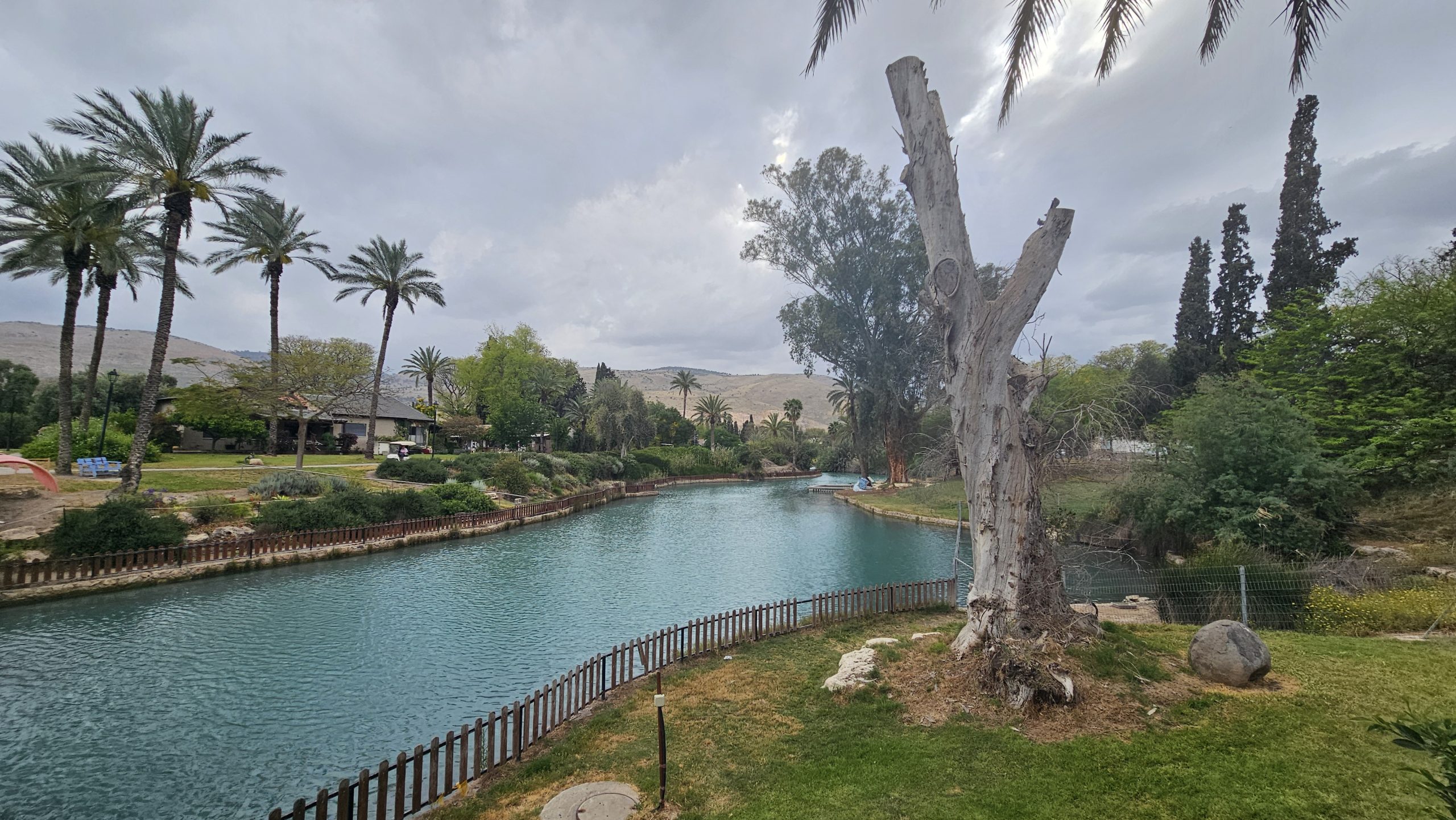
Nir David is also home to the Museum of Mediterranean Archaeology, which houses a significant collection of artifacts from across the ancient Mediterranean world, Egyptian, Greek, Etruscan, and other cultures, assembled over decades by kibbutz members. For visitors with an interest in the ancient world beyond the boundaries of the land of Israel, the museum offers a thoughtful and unusual collection. The kibbutz itself, with its mature trees and the seasonal stream that runs along its edge, has the settled, green character of a community that has been working the land for nearly ninety years. Just a short distance away lie the warm springs of Gan HaShlosha (Sahne), a natural bathing site where spring-fed pools maintain a year-round temperature that makes swimming possible in any season.
The Legacy of Tower and Stockade
What began at Tel Amal in December 1936 became a movement. Between 1936 and 1939, more than fifty settlements were established across the Galilee, the valleys, the Negev foothills, and the Jordan Valley using the Tower and Stockade method. Each one followed the same pattern: prefabricated components, nighttime convoys, hundreds of workers, and a race to raise a roofed structure before sunrise. The locations chosen were not random, they were selected to establish a continuous and defensible presence across strategic areas of the country, and the cumulative effect of these overnight settlements was to significantly alter the map of Jewish landholding and presence in the region.
When the boundaries of what would become the State of Israel were drawn, both in the UN Partition Plan of 1947 and in the armistice lines of 1949, the physical presence of these settlements carried real weight. Communities that existed on the ground were harder to partition away than areas that were merely claimed. The Tower and Stockade settlements demonstrated that land could be settled, held, and made productive even under conditions of active hostility and legal constraint. Nir David, as the first of them, occupies a founding place in that chapter of Israeli history.
Visit with Hoshen Tours
Nir David was the first Tower and Stockade settlement, established in a single dramatic night in 1936 and setting the pattern for dozens more across the country. Hoshen Tours tells the full story of the overnight construction and the strategy behind it, explaining how a building method became a national survival tactic. The reconstructed tower and stockade bring the story to life on the original site. Combine it with the nearby springs at Gan HaShlosha, Mount Gilboa, the spring at Ma’ayan Harod, and Tel Jezreel.
Explore Our Tour Collection
Ready to experience Israel in true colors?
Plan Your TourPrivate tours designed around your interests, schedule, and pace.