



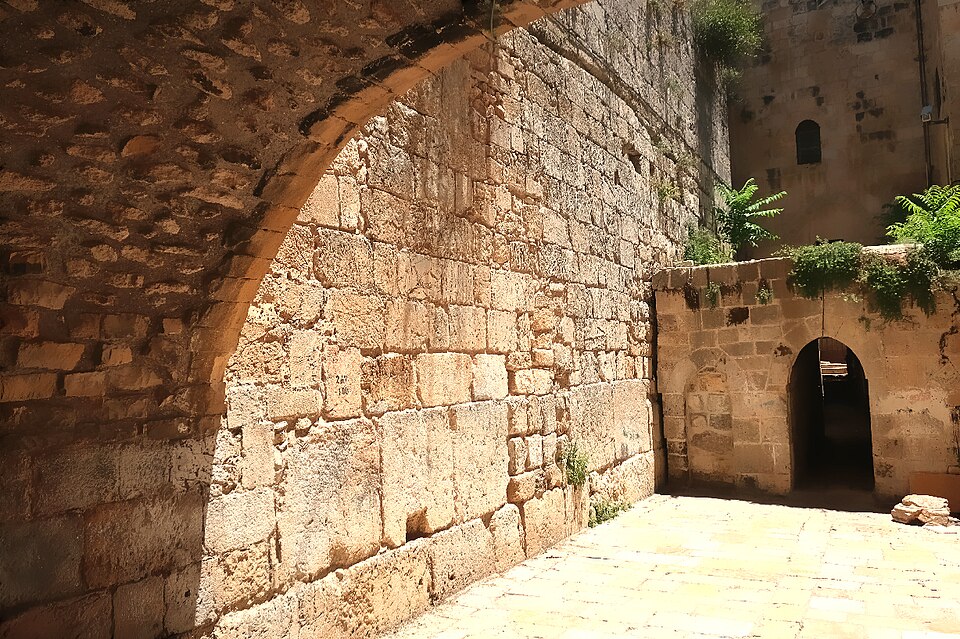
Hidden in the narrow alleys of the Muslim Quarter, a short section of the Western Wall is exposed to the sky. The Little Western Wall (HaKotel HaKatan) is only about 8 meters long, but it is actually closer to the spot where the Holy of Holies once stood than the main Western Wall Plaza. For those who know about it, this unassuming stretch of ancient Herodian stone is one of the most sacred and intimate prayer spaces in Jerusalem. The stones themselves are massive Herodian ashlars, identical in size and craftsmanship to those at the main Western Wall plaza, dating to the construction of the Temple Mount retaining walls by Herod the Great in the late 1st century BCE. But where the main plaza has been cleared, expanded, and developed into a national monument, the Little Wall remains embedded in the fabric of the Muslim Quarter, surrounded by the residential buildings of a living neighborhood.
Why It Matters
The main Western Wall plaza is located at the western section of the Temple Mount retaining wall. But the Holy of Holies, the innermost sanctum of the Temple where God’s presence dwelled, was located further north, roughly opposite the section of wall that is now the Little Western Wall. This means that worshippers praying at the Kotel HaKatan are standing at the closest accessible point to where the Divine Presence was believed to reside.
The Talmud teaches that “the Divine Presence never departed from the Western Wall” (Midrash Rabba, Shir HaShirim 2:9). Those who pray at the Little Wall believe they are standing at the very heart of that promise.
Praying at the Hidden Wall
Unlike the bustling main plaza, the Little Western Wall is quiet, narrow, and easy to miss. The alley that leads to it passes through the Muslim Quarter, and the wall itself is tucked between residential buildings. There are no security checkpoints, no plaza, and usually no crowds. Just the ancient stones, a few prayer books tucked into the crevices, and the silence. The stones here are often damp, and moss and small plants grow in the cracks between the massive blocks. The sound of the muezzin’s call to prayer drifts down from above, a reminder of the layers of faith that share this city. There are no mechitzot (dividers), no bar mitzvah celebrations, no tour groups. Many visitors who have prayed at both walls describe the Little Wall as the more powerful experience, precisely because there is nothing between the worshipper and the stone. For visitors who find the main Western Wall overwhelming, the Little Wall offers the same spiritual connection in an atmosphere that feels almost private.
Visiting the Little Western Wall
The Little Western Wall is accessed through the Muslim Quarter, via a narrow alley off the route between the Via Dolorosa and the Iron Gate (Bab al-Hadid). It is not signposted and can be difficult to find without a guide. The alley is residential, and visitors should be respectful of the neighborhood. It is advisable to visit during daylight hours and to dress modestly. The site is accessible at all hours, but early morning and late afternoon tend to be the quietest times for prayer.
Visit with Hoshen Tours
The Little Western Wall is a hidden gem tucked into the Muslim Quarter, known mainly to locals and experienced guides. Unlike the grand Western Wall plaza, this quiet spot offers an intimate prayer experience beside stones that are actually closer to the original Holy of Holies on the Temple Mount above. Your Hoshen Tours guide can include this special stop as part of a walk along the Via Dolorosa or a deeper exploration of the Old City’s lesser-known treasures. Hoshen Tours often combines this site with Sephardic Synagogues, Deir es-Sultan, and Sisters of Zion for a memorable day exploring the region.
Explore Our Tour Collection
Explore this site and 65 more in Sacred Steps in the Holy Land
225 pages · The Life, World, and Footsteps of Jesus · Maps, photos, and Scripture references
Ready to experience Israel in true colors?
Plan Your TourPrivate tours designed around your interests, schedule, and pace.