



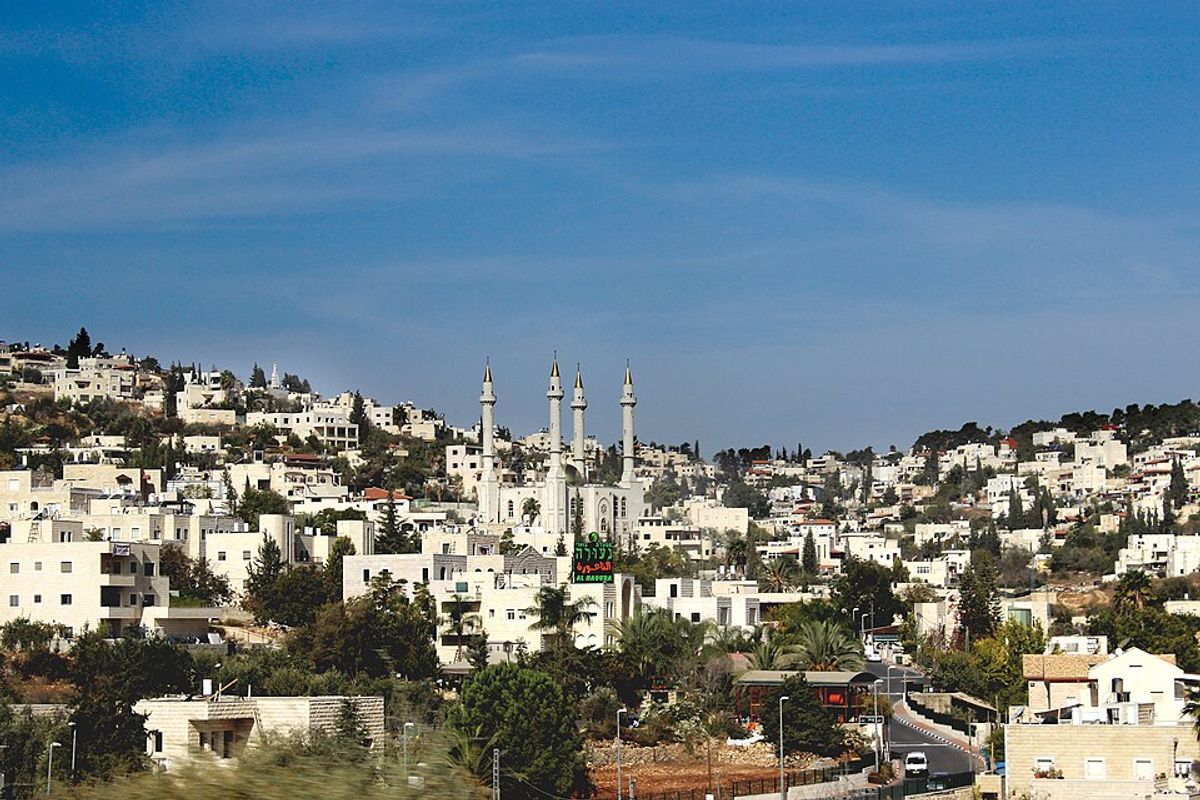
Abu Ghosh is an Arab village in the Judean Hills, twelve kilometers west of Jerusalem on the main road from the coast. For centuries, the clan that gave the village its name controlled this stretch of road and levied tolls on every traveler, pilgrim, and merchant heading to the Holy City. Today the village is famous for something else entirely: the best hummus in Israel, a remarkable record of coexistence with its Jewish neighbors, and one of the finest Crusader churches in the country.
The Abu Ghosh Clan
The village takes its name from Sheikh Abu Ghosh, a powerful chieftain who dominated the western approaches to Jerusalem during the late Ottoman period. The family, believed to be of Circassian or mixed descent, consolidated power over the Jaffa-Jerusalem road during the 18th and 19th centuries. Their position was strategic: the road from the coast to Jerusalem must climb through narrow passes in the Judean Hills, and Abu Ghosh sat at one of the key points in this ascent. The clan levied tolls and protection fees on caravans and pilgrim groups, operating with a degree of autonomy that Ottoman authorities in Istanbul periodically tried, and failed, to curtail. European travelers and pilgrims recorded these encounters in their diaries, sometimes with frustration, sometimes with grudging respect for a family that understood the value of the ground they stood on.
1948: The Decision
During the 1948 war, the Jerusalem corridor was one of the fiercest battlegrounds. Arab forces fought to cut the road to Jerusalem, and most Arab villages along the corridor were depopulated during the fighting. After the massacre at nearby Deir Yassin in April 1948, fear spread through every Arab village in the area. Abu Ghosh made a different choice. The village leadership, drawing on pre-existing relationships with neighboring Jewish communities and making a pragmatic assessment of the military situation, chose not to take up arms. The decision was difficult and courageous, made under extreme duress, with the knowledge of what had happened to villages that fought. Because Abu Ghosh did not engage in hostilities, the village was not depopulated. Its residents remained in their homes and became citizens of the new state. Today Abu Ghosh is one of the only Arab communities in the Jerusalem corridor that survived 1948 intact.
Coexistence
In the decades since, Abu Ghosh has become one of Israel’s most prominent symbols of Jewish-Arab coexistence. The village is known for flying Israeli flags on Independence Day, a voluntary gesture that is remarkable in the context of a day that many Arab citizens of Israel experience with ambivalence. Relations with surrounding Jewish communities are warm, and the village has cultivated its reputation as a place where Jewish Israelis feel welcome. This is not a fairy tale: the village navigates real tensions and maintains both its Arab and Muslim identity and its genuine integration into the Israeli fabric. But it is a place where coexistence is not an abstraction but a daily practice.
The Hummus Capital
On weekends, thousands of Israelis drive to Abu Ghosh to eat hummus. The village’s restaurants, including the famous village restaurants and several competitors, serve it in the traditional way: a broad plate, the hummus warm and smooth, topped with whole chickpeas, olive oil, and lemon, with fresh pita on the side. The restaurants open early and close when the hummus runs out, which on busy days can be by early afternoon. In 2010, Abu Ghosh set a Guinness World Record for the largest dish of hummus, weighing over 4,000 kilograms. The village also hosts the Abu Ghosh Vocal Music Festival, a well-regarded choral festival held twice a year during Sukkot and Shavuot in the acoustically superb Crusader church, drawing classical music lovers from across the country.
The Churches
Abu Ghosh is home to one of the best-preserved Crusader churches in the Holy Land, built by the Knights Hospitaller in the 12th century. The church, maintained since 1900 by French Benedictine monks, retains remnants of original frescoes on its walls and is the venue for the music festival. On the hilltop above the village, the Church of Notre Dame of the Ark of the Covenant stands on the site traditionally identified with Kiryat Yearim, where the Ark of the Covenant rested for decades before David brought it to Jerusalem (1 Samuel 7:1-2). A large statue of the Virgin Mary crowns the dome, visible from the highway.
Visit with Hoshen Tours
Abu Ghosh is a friendly Arab village on the ancient road to Jerusalem, known for its hummus and its Crusader church. Hoshen Tours pairs it with the Ark’s resting place at Kiryat Yearim, the Crusader spring at Ein Hemed, the road to Emmaus, and Ayalon Valley and Canada Park.
Explore Our Tour Collection
Ready to experience Israel in true colors?
Plan Your TourPrivate tours designed around your interests, schedule, and pace.