



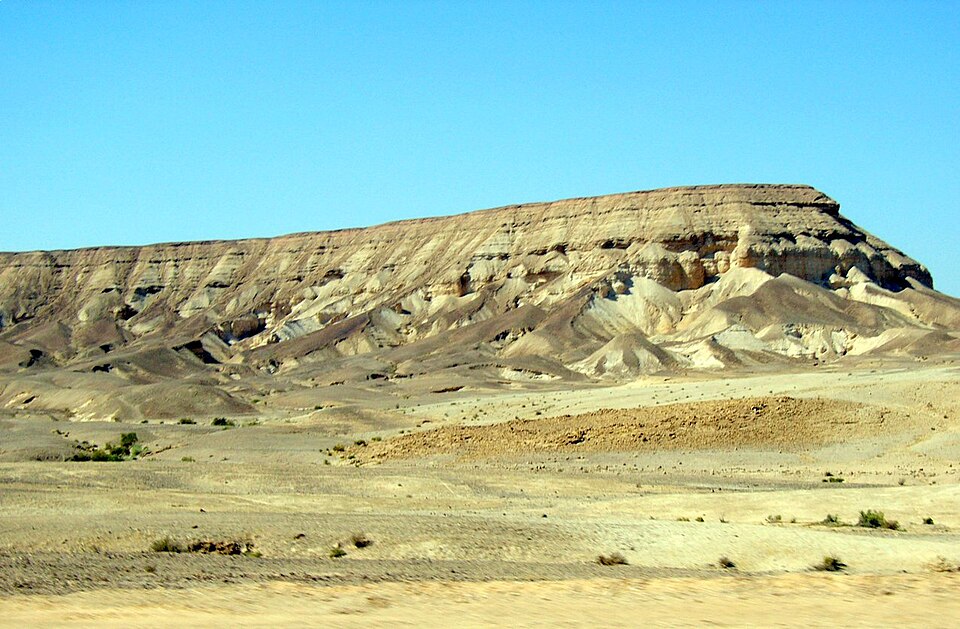
Mount Sodom — Har Sedom in Hebrew — rises at the southwestern end of the Dead Sea, an 11-kilometer-long ridge made almost entirely of rock salt. It is one of the most unusual geological formations anywhere on earth: a mountain that is dissolving and rebuilding itself at the same time, sculpted by rain and wind into towers, caves, chimneys, and crystals of pure white salt. Standing on its slopes, you look out over the flat, hazy expanse of the Dead Sea far below, with the mountains of Moab shimmering across the water and the pale Judean Desert stretching in every direction. It is a landscape that feels alien and ancient in equal measure, a place where the earth itself seems to have been turned inside out and put on display.
The Salt Mountain: A Geological Wonder
Mount Sodom is what geologists call a salt diapir — a massive body of rock salt that has been pushed upward through the surrounding sedimentary layers by tectonic pressure over millions of years. The mountain is composed of roughly 80% halite (rock salt), with the remainder being gypsum, marl, and other evaporite minerals deposited when this region lay beneath an ancient sea. The result is a mountain unlike any other: white and crystalline in places, streaked with gray and amber in others, constantly being reshaped by the forces of erosion.
Rain dissolves the salt on the surface, carving deep channels, sinkholes, and caves into the mountain’s flanks. But at the same time, tectonic forces continue to push the salt body upward, so the mountain is in a state of perpetual renewal — dissolving from the top while growing from below. This dynamic process creates an ever-changing landscape of salt formations: delicate crystalline pillars, overhanging salt shelves, deep fissures, and smooth white surfaces that gleam in the desert sun. For anyone interested in geology, Mount Sodom is a living classroom, a place where the processes that shape the earth are visible and immediate in a way that few other locations can match.
Lot’s Wife: The Pillar of Salt
On the eastern slope of Mount Sodom stands a tall, freestanding pillar of rock salt that tradition has long identified with the biblical figure of Lot’s wife. According to the Book of Genesis (19:26), when God destroyed the cities of Sodom and Gomorrah with fire and brimstone, Lot and his family were permitted to flee — but were warned not to look back. Lot’s wife turned to look at the destruction behind her and, according to the biblical account, was transformed into a pillar of salt. The column on Mount Sodom, standing solitary against the desert sky, has been pointed out as her memorial for centuries.
It is worth noting that erosion has reshaped the pillar over time, and previous formations identified as “Lot’s Wife” have dissolved and been replaced by new ones. The identification is a matter of tradition rather than archaeology, but it remains one of the most evocative landmarks in the region. Whether or not one takes the story literally, the sight of a lone salt column standing on a mountain of salt beside the Dead Sea is powerful and memorable, a physical anchor for one of the most dramatic narratives in the Hebrew Bible. Visitors often pause here to take in the view and reflect on the story that has given this desolate landscape its enduring fame.
Sodom and Gomorrah in the Biblical Account
The story of Sodom and Gomorrah is told in Genesis chapters 18 and 19 and is one of the most well-known narratives in the Bible. According to the biblical account, the cities of Sodom and Gomorrah were destroyed by God with fire and brimstone as a judgment for their wickedness. Abraham pleaded with God to spare the cities if righteous people could be found within them, but in the end only Lot and his daughters escaped the destruction. The account describes a catastrophic event — sulfur and fire raining from the sky, the entire plain consumed — that has captured the imagination of readers for thousands of years.
The actual location of the biblical Sodom remains a subject of scholarly debate. Some researchers have proposed sites near the southern basin of the Dead Sea, pointing to the geological evidence of ancient destruction and the region’s association with salt and sulfur. Others have suggested locations on the eastern shore of the Dead Sea in present-day Jordan, including the site of Bab edh-Dhra. There is no archaeological consensus on the matter, and it is possible that the question may never be definitively resolved. What is certain is that the landscape around Mount Sodom — with its salt formations, its sulfurous springs, and its atmosphere of desolation — has shaped how generations of readers have imagined the biblical story.
The Salt Caves of Mount Sodom
Beneath the surface of Mount Sodom lies a network of salt caves that ranks among the most remarkable underground formations in the world. The most famous of these is the Malham Cave, which was surveyed by researchers from the Hebrew University of Jerusalem and the Israel Cave Explorers Club. At approximately 10 kilometers in length, Malham is believed to be one of the longest salt caves ever documented. Its passages wind through the interior of the mountain, opening into chambers adorned with stalactites and stalagmites made entirely of salt — translucent, crystalline formations that glitter when a light is shone upon them.
The caves are formed by rainwater seeping through cracks in the salt, dissolving channels that gradually widen into passages and chambers. The process is fast by geological standards: a single heavy rainstorm can visibly alter the cave’s interior. This also means that the caves are dangerous during the rainy season, as flash floods can surge through the narrow passages with little warning. Guided tours of some of the more accessible caves are available, and they offer a genuinely otherworldly experience — walking through corridors of pure white salt, with crystal formations overhead and underfoot. For those with caving experience, more adventurous routes are possible with proper guidance and equipment.
Visiting Mount Sodom
Mount Sodom is located along Route 90, the highway that runs along the western shore of the Dead Sea, making it easily accessible as part of a day trip through the region. One of the most popular stops is the Flour Cave (Me’arat HaKemach), a short and easy cave walk where the walls and ceiling are coated in a fine white powder of chalk that gives the cave its name. The cave is suitable for families and requires no special equipment, though a flashlight is recommended. Nearby, several marked viewpoints along the mountain offer sweeping panoramas of the Dead Sea, the salt flats below, and the desert mountains stretching to the horizon.
The best time to visit is during the cooler months, from October through April, when temperatures in the Dead Sea region are more comfortable for hiking and exploration. Summer visits are possible but require early starts, plenty of water, and respect for the extreme heat. Mount Sodom is typically combined with other destinations in the area: the ancient fortress of Masada, the springs and nature reserve of Ein Gedi, the beaches and spas of Ein Bokek, and of course the Dead Sea itself. Together, these sites make the southwestern Dead Sea one of the richest and most varied touring areas in all of Israel.
Visit Mount Sodom with Hoshen Tours
Mount Sodom is one of those places that benefits enormously from an experienced guide — someone who can explain the geology beneath your feet, bring the biblical narratives to life, and lead you safely through the caves and along the mountain’s trails. At Hoshen Tours, we include Mount Sodom as part of our Dead Sea touring itineraries, combining it with visits to Masada, Ein Gedi, and other highlights of the Judean Desert. Whether you are a geology enthusiast, a history lover, or simply someone who wants to see one of the strangest and most beautiful landscapes on the planet, we will design a private tour that brings Mount Sodom to life. Contact us to start planning your visit to this extraordinary corner of Israel.
Explore Our Tour Collection
Ready to experience Israel in true colors?
Plan Your TourPrivate tours designed around your interests, schedule, and pace.