



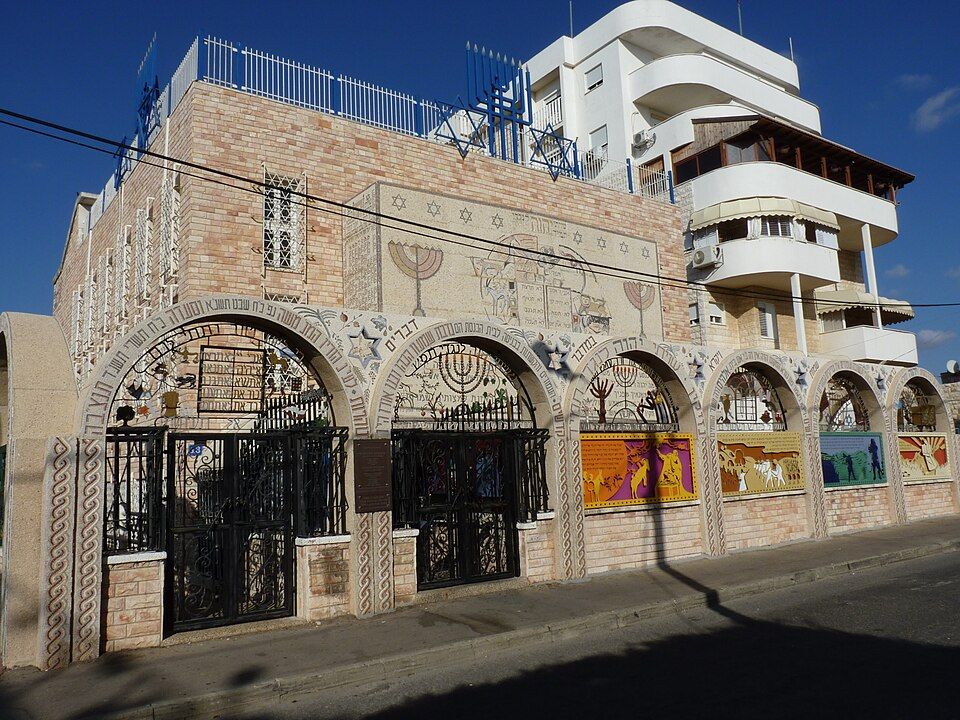
 Hidden in the streets of Akko’s old city, behind an unremarkable exterior, the Or Torah Synagogue (also known as the Tunisian Synagogue) contains one of the most stunning interiors in Israel. Every surface, walls, columns, arches, and ceiling, is covered with intricate mosaics depicting biblical scenes, Jewish symbols, and decorative patterns, created by artists from the Tunisian Jewish community who built the synagogue in the 1950s.
A Synagogue Covered in Mosaic
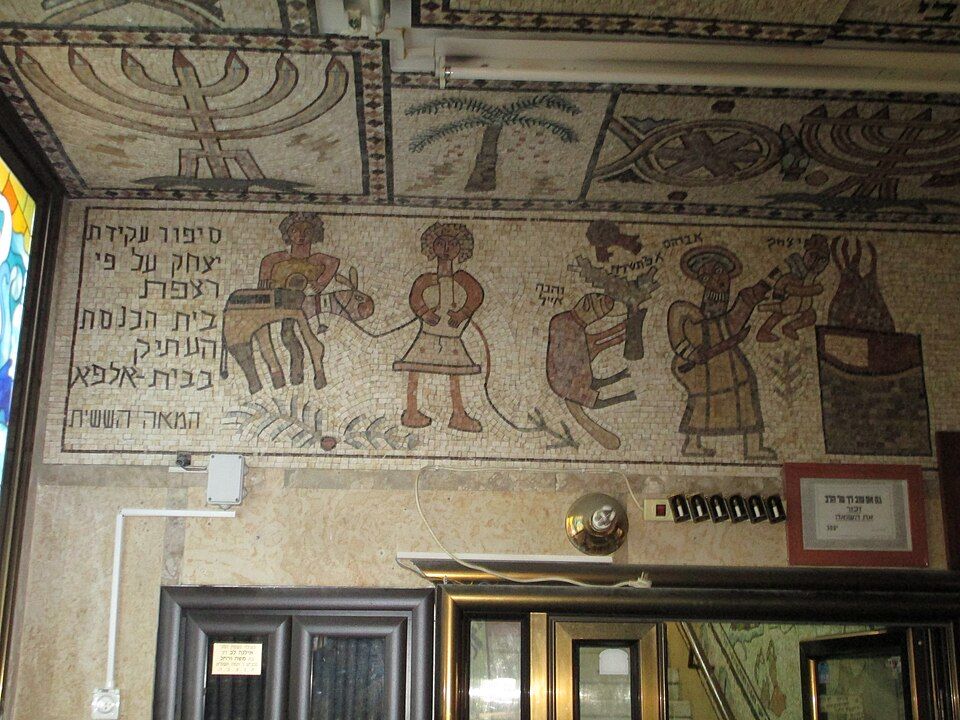 The mosaics cover the entire interior in a riot of color and detail. Biblical scenes include the Binding of Isaac, Moses receiving the Torah, the Twelve Tribes of Israel, the Western Wall, and the Temple. Jewish symbols including menorot, Stars of David, shofars, and Torah scrolls are woven into geometric and floral patterns. The ceiling is covered with mosaic depictions of the zodiac, the seasons, and celestial imagery. The elaborate tilework draws on the same Tunisian decorative vocabulary found in the great medinas of Tunis and Sousse, bold color combinations, interlocking geometric frames, and floral borders that echo the hand-painted tiles of North African workshops. The level of craftsmanship is extraordinary, and the cumulative effect of entering a small synagogue and finding every surface alive with color and story is genuinely breathtaking.
A Community with Ancient Roots
The Tunisian Jewish community is one of the oldest diaspora communities in the world. Tradition holds that Jewish settlement in North Africa dates back to the destruction of the First Temple in 586 BCE, with exiles making their way westward along the Mediterranean coast. By the time of the Roman Empire, Jewish communities were well established across what is now Tunisia, in cities including Carthage, Sousse, and on the island of Djerba, where a community has maintained an unbroken presence for over two millennia. The great synagogue of Djerba, the El Ghriba, is one of the oldest synagogues in the world. These communities were vibrant, learned, and deeply rooted; their piyyutim, legal traditions, and liturgical melodies developed over centuries and are distinct from those of European Jewry. When the mass immigration from North Africa brought tens of thousands of Tunisian Jews to Israel in the early 1950s, they carried that entire heritage with them.
The Tunisian Jews in Akko
Those who settled in Akko moved into the old city at a time when much of it had been vacated and was in disrepair. They made it their home and, within a few years, began building Or Torah. The mosaic work was not completed in the 1950s, artists and community members continued adding panels and details over the following decades, making the synagogue a living, evolving project. The result is not the work of a single hand or a single moment, but of a community expressing its identity piece by piece over two generations. That continuity of effort is part of what makes Or Torah more than a beautiful building; it is an act of communal memory carried out in tile and color.
Finding the Synagogue
Or Torah is tucked into a narrow lane in the Jewish Quarter of Akko’s Old City. The entrance is easy to miss, the exterior gives nothing away. The synagogue is not always open to casual visitors; it functions as an active place of worship rather than a formal tourist site. Those who come on a quiet afternoon and knock, or ask a local resident for help, will often find someone willing to open the door. The reward for the extra effort is one of the most astonishing interiors in Israel.
Visit with Hoshen Tours
A visit to Tunisian Synagogue in Akko pairs beautifully with nearby destinations along your route. Consider combining it with a stop at Knights Halls in Akko or Akko Prison, both just a short drive away. Many travelers also enjoy exploring Templar Tunnel in Akko and Akko on the same day, while Rosh HaNikra offers another worthwhile addition to your itinerary. Your Hoshen Tours guide will craft a seamless route that brings each destination to life with expert commentary and insider knowledge.
Explore Our Tour Collection
Ready to experience Israel in true colors?
Plan Your TourPrivate tours designed around your interests, schedule, and pace.