



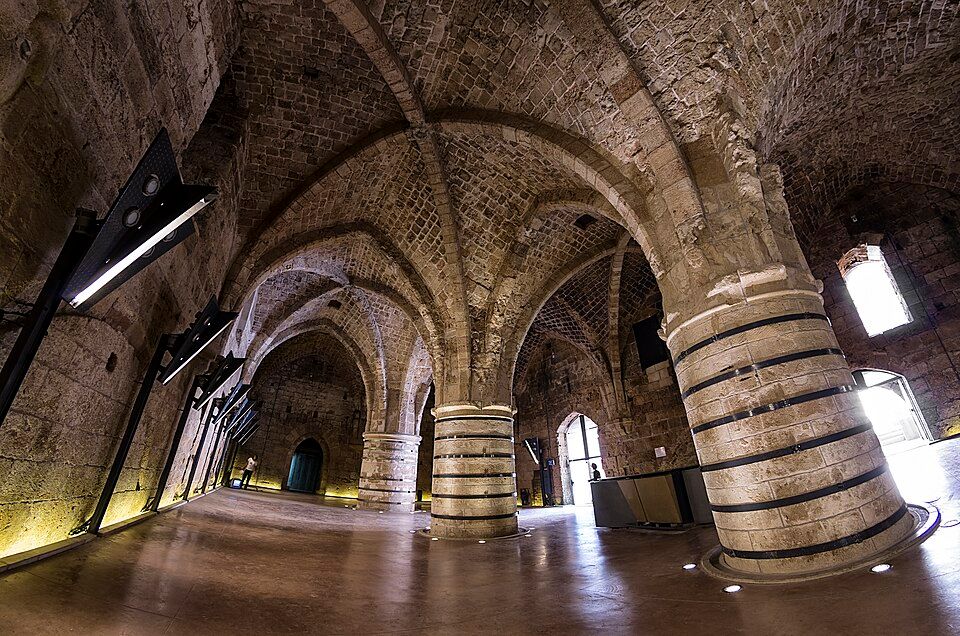
 Beneath the streets and houses of Akko’s Old City lies a medieval world frozen in time. The Knights’ Halls, a vast underground complex of vaulted chambers, corridors, and courtyards, are the remains of the Crusader citadel that served as the headquarters of the Knights Hospitaller from 1191 to 1291 CE. When the Ottomans built their city on top of the Crusader ruins in the 18th century, they inadvertently sealed and preserved one of the most complete medieval complexes in the world. Today, the excavated halls form the centerpiece of a UNESCO World Heritage Site and offer visitors an extraordinary passage into the world of the Crusader Kingdom.
The Knights Hospitaller – Knights’ Halls of Akko
The Order of the Knights of the Hospital of Saint John of Jerusalem, the Hospitallers, began around 1070 CE as a charitable brotherhood running a hospital for sick and destitute pilgrims near the Church of the Holy Sepulchre in Jerusalem. After the First Crusade captured Jerusalem in 1099, the order grew rapidly, receiving donations of land and money from across Europe. By the mid-12th century, the Hospitallers had evolved from caregivers into a military-religious order, combining their original mission of healing with the defense of the Crusader states. They maintained hospitals, but they also garrisoned fortresses, fielded armies, and became one of the most powerful organizations in the medieval world. When Saladin defeated the Crusaders at the Battle of Hattin in 1187 and recaptured Jerusalem, the Hospitallers relocated their headquarters to Akko in 1191, after the Third Crusade recaptured the city. Akko became the new capital of the diminished Crusader Kingdom. For the next century, Akko was the most important Christian city in the Holy Land, and the Hospitallers’ compound was its largest and most impressive structure.
The Underground Complex
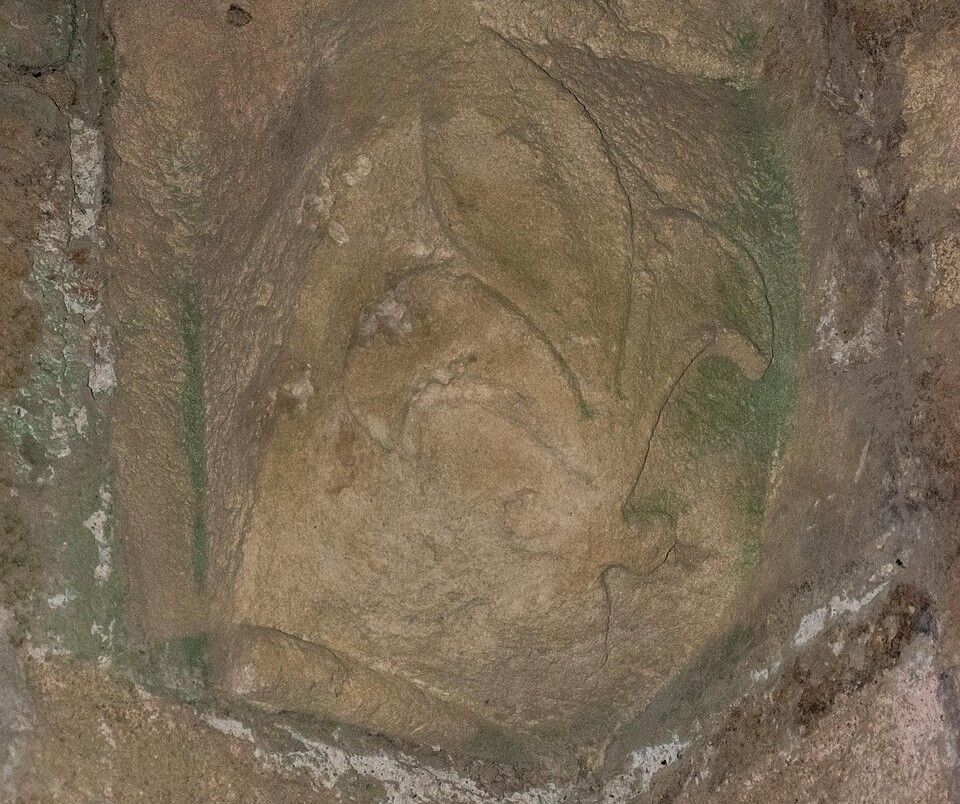 The Crusader compound covers approximately 5,000 square meters beneath modern Akko. The complex was built around a central courtyard and included halls for dining, sleeping, administration, storage, and medical care, a self-contained fortress within the city. The Grand Manoir, the ceremonial heart of the compound, features massive Gothic columns supporting ribbed vault ceilings that soar above the stone floor. The craftsmanship is extraordinary: the vaulting, the carved capitals, and the proportions of the space reflect the finest European Gothic architecture transplanted to the Levantine coast.
The refectory, the communal dining hall, was central to daily life in the order. The Hospitallers followed a strict monastic rule: knights ate together in silence while scripture was read aloud, a discipline inherited from the Benedictine tradition that shaped the order’s early identity. Meals were simple by the standards of medieval nobility, reflecting the vow of humility, though the order’s vast wealth meant the compound was never short of provisions. Adjacent to the refectory, excavations have revealed evidence of sugar processing, a reminder that the Crusaders built a highly profitable export economy in the Levant. Crusader sugar, refined from cane grown in the Jordan Valley and along the coastal plain, was shipped to European markets where it commanded high prices. The Knights Hospitaller were among the largest producers, and the revenues from sugar helped fund both their military campaigns and their hospitals.
Christian Heritage and Tradition
Those hospitals were among the most remarkable institutions of the medieval world. In Jerusalem, before the city fell to Saladin, tradition holds that the Hospitaller hospital cared for up to 2,000 patients at a time, an extraordinary figure for the 12th century. The order employed physicians, provided clean beds, and offered a standard of care that contemporary sources from Muslim and Christian writers alike praised with genuine admiration. When the headquarters moved to Akko, the Hospitallers continued this mission, and part of the compound is believed to have served a medical function alongside its military and administrative roles.
One of the most dramatic spaces is a long vaulted chamber known as the Prisoners’ Hall, where light filters through narrow openings in the ceiling. Despite its name, the hall likely served as a dormitory or storage space during the Crusader period; it acquired its current name during the Ottoman era, when the complex was used as a prison. The halls are connected by a network of corridors, some of which were only discovered during excavations in recent decades. Walking through them, visitors move from chamber to chamber underground, surrounded by 800-year-old walls, in an atmosphere that feels more like exploring a castle than visiting a museum.
A 150-meter underground passage built by the Knights Templar connects the Crusader fortress area to the ancient port. Discovered by accident in 1994, it is one of the most atmospheric experiences in Akko. Read more about the Templar Tunnel.
The Other Military Orders in Akko
The Hospitallers were not the only military order with a major presence in Akko. At the southwestern corner of the city stood the fortress of the Knights Templar, one of the most formidable fortified compounds in the Crusader Kingdom. The Teutonic Knights, the German military order founded in Akko itself during the siege of 1189, maintained their own compound in the city before eventually shifting their focus northward toward the Baltic. The Order of Saint Lazarus, which cared specifically for knights and pilgrims afflicted with leprosy, also maintained a house in Akko, continuing the tradition of charitable care that had defined the earliest military orders.
Beyond the military orders, Akko was divided into distinct quarters controlled by the rival merchant republics of Venice, Genoa, and Pisa, each with their own churches, warehouses, fondacos (trading posts), and courts operating under their own legal systems. The French, English, and German communities each had their own streets and institutions. The result was a city of extraordinary cosmopolitan complexity, perhaps the most diverse urban environment in the medieval world, where different languages, laws, loyalties, and religious cultures coexisted, competed, and sometimes violently clashed within the same walls. This fractious energy was both the city’s greatest strength as a trading port and a chronic weakness in its defense against external enemies.
The Fall of Akko
The Crusader city of Akko fell on May 18, 1291, after a brutal siege by the Mamluk Sultan al-Ashraf Khalil. The Mamluks brought an enormous army, medieval sources claimed over 100,000 soldiers and deployed massive siege engines against the city’s double walls. The Hospitallers and Templars fought side by side in the final defense, holding the walls and towers for weeks. When the outer wall was breached, the fighting moved to the streets and then to the fortified compounds of the military orders. The Hospitaller Grand Master, Jean de Villiers, was wounded in the fighting and evacuated by ship. The last defenders, Templars holding their fortress at the southwestern corner of the city, were killed when the Mamluks undermined the walls and the building collapsed on top of both attackers and defenders. The fall of Akko marked the end of nearly 200 years of Crusader presence in the Holy Land. The Hospitallers eventually relocated to Rhodes and later to Malta, where they became known as the Knights of Malta.
Discovery and Excavation
The Crusader compound lay buried and largely forgotten for centuries under the Ottoman city that was built on top of it. Systematic excavations began in the 1950s under the direction of the Israel Antiquities Authority and have continued in phases ever since. The process of uncovering the halls involved removing tons of fill and debris that the Ottomans had used to level the ground above. Each excavated hall revealed remarkably preserved stonework, since the Ottoman fill had protected the Crusader structures from weathering and decay. The site was inscribed as a UNESCO World Heritage Site in 2001 as part of the “Old City of Acre,” recognizing the exceptional preservation of the Crusader remains and the layered history of the city from Crusader through Ottoman periods.
The Enchanted Garden
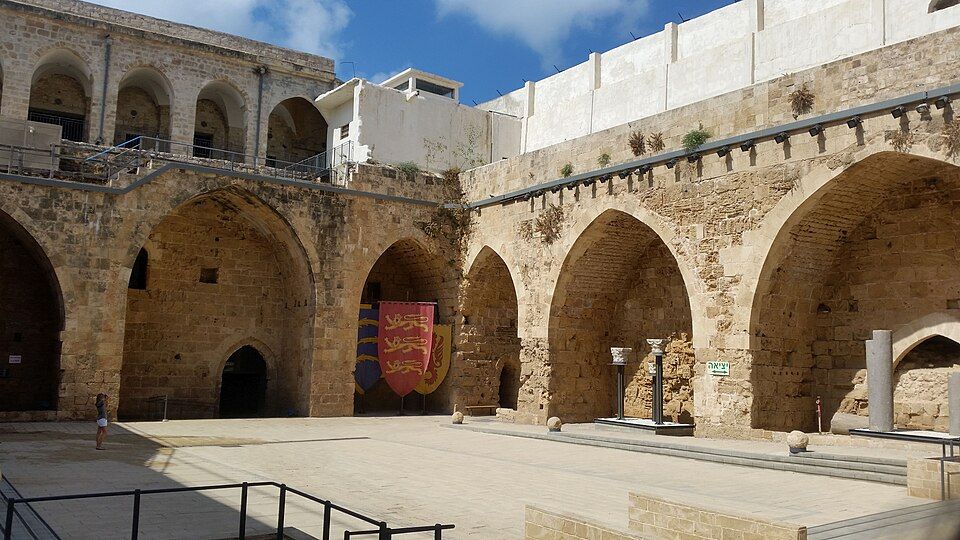
At the center of the complex, the former inner courtyard of the Hospitaller compound is now an open-air garden known as the Enchanted Garden. Sitting several meters below the level of the modern streets, surrounded by Crusader walls and arches on all sides, the garden offers a striking and memorable experience: a medieval courtyard open to the sky, hidden inside a living city. The sunken position of the garden, well below the noise and traffic of the streets above, creates a natural amphitheater of stone, and the space is regularly used for concerts, theatrical performances, and cultural events. The acoustics of the encircling stone walls carry sound with unusual clarity, and an evening performance here, with the medieval arches illuminated against the night sky, is among the most memorable experiences the Old City has to offer.
During the day, the garden is a quiet place to pause and absorb the scale of what surrounds you: the full height of the Crusader walls, the arched openings of the adjacent halls, and the strange sensation of standing in a medieval courtyard while the modern city goes about its life directly overhead. It is the best vantage point in the complex for grasping how completely Akko’s Ottoman city was built on top of, and around, the medieval one beneath it.
Visit with Hoshen Tours
A visit to Knights Halls in Akko pairs beautifully with nearby destinations along your route. Consider combining it with a stop at Tunisian Synagogue in Akko or Akko Prison, both just a short drive away. Many travelers also enjoy exploring Templar Tunnel in Akko and Akko on the same day, while Rosh HaNikra offers another worthwhile addition to your itinerary. Your Hoshen Tours guide will craft a seamless route that brings each destination to life with expert commentary and insider knowledge.
Explore Our Tour Collection
Ready to experience Israel in true colors?
Plan Your TourPrivate tours designed around your interests, schedule, and pace.