



Nain (Nein) is a small Arab village on the northern slope of Givat HaMoreh (the Hill of Moreh) in the Jezreel Valley, the site of one of Jesus’ most compassionate miracles: the raising of the widow’s son from the dead. The story, told only in the Gospel of Luke, is one of three occasions in the Gospels where, according to the Gospel of Luke, Jesus raised a person from the dead (the others being the daughter of Jairus and Lazarus).
The Raising of the Widow’s Son
Jesus was approaching the gate of the town when a funeral procession came out: “A dead person was being carried out, the only son of his mother, and she was a widow. And a large crowd from the town was with her” (Luke 7:12). The detail that she was a widow who had lost her only son is crucial: in the ancient world, a widow without a son had no one to provide for her. She had lost not only her child but her future, her security, and her place in society.
“When the Lord saw her, his heart went out to her and he said, ‘Don’t cry.’ Then he went up and touched the bier they were carrying him on, and the bearers stood still. He said, ‘Young man, I say to you, get up!’ The dead man sat up and began to talk, and Jesus gave him back to his mother” (Luke 7:13-15). The phrase “gave him back to his mother” deliberately echoes the story of Elijah raising the widow’s son at Zarephath: “Elijah took the child and gave him to his mother” (1 Kings 17:23). Luke wants his readers to understand that Jesus is doing what Elijah did, but without prayer, without ritual, with a single command.
Elijah Connection
The crowd recognized the parallel immediately: “They were all filled with awe and praised God. ‘A great prophet has appeared among us,’ they said. ‘God has come to help his people’” (Luke 7:16). The connection to Elijah is geographic as well as narrative: Nain sits at the foot of the Hill of Moreh, and Shunem, where Elisha (Elijah’s successor) raised the son of the Shunammite woman (2 Kings 4:32-37), is on the same hill. Two prophets raised dead children on this hill. Then Jesus came to the same hill and did the same thing. The landscape remembers.
The Village and the Church
Modern Nain (Nein in Arabic) is a quiet village of roughly 2,000 residents, mostly Muslim, perched on the hillside with views across the Jezreel Valley toward Mount Tabor and Nazareth. The village preserves the feel of a traditional Galilean Arab settlement: stone houses, narrow lanes, and the rhythms of agricultural life that have defined this landscape for centuries.
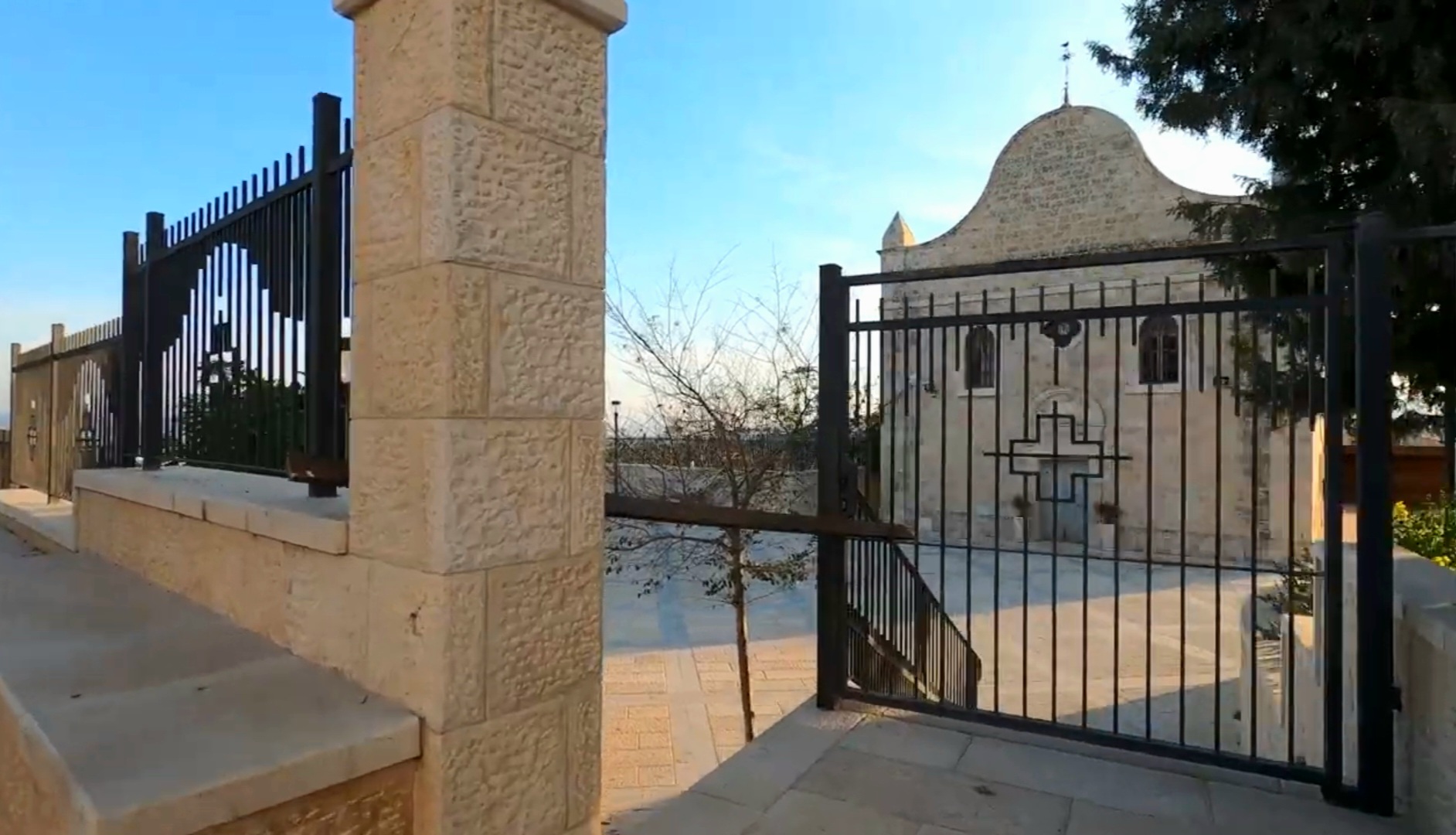
A small Franciscan church, built in 1881, marks the traditional site of the miracle near the old village gate. The church is modest and often empty, a sharp contrast to the grand basilicas of Jerusalem and Bethlehem, but its simplicity suits the story it commemorates. Near the church, rock-cut tombs from the Roman and Byzantine periods have been found, lending archaeological context to the Gospel account of a funeral procession emerging from the town. For visitors who make the effort to reach Nain, the reward is a sense of standing in a place where the biblical narrative and the physical landscape align with unusual precision.
Visit with Hoshen Tours
Nain is the village where, according to tradition, Jesus raised the widow’s son, set against the slopes of Givat HaMoreh. Hoshen Tours pairs it with Mount Gilboa, the spring of Gideon’s warriors at Ein Dor, Tel Jezreel, and Ma’ayan Harod.
Ready to experience Israel in true colors?
Plan Your TourPrivate tours designed around your interests, schedule, and pace.