


Call us today!
+1-917-9055850

Magazine
The Makhtesh: A Geological Wonder Found Nowhere Else on Earth
Standing on the rim of Makhtesh Ramon, you look down into a vast, colorful bowl stretching 40 kilometers into the distance. The layered walls drop 500 meters to the crater floor, revealing rocks painted in red, purple, yellow, and black. It looks like something from another planet.
Most visitors assume they are looking at an impact crater left by a meteorite, or perhaps the remains of an ancient volcano. They are wrong on both counts. What they are seeing is something far rarer and, in many ways, far more interesting: a makhtesh, a type of geological formation found only in one small corner of the world.
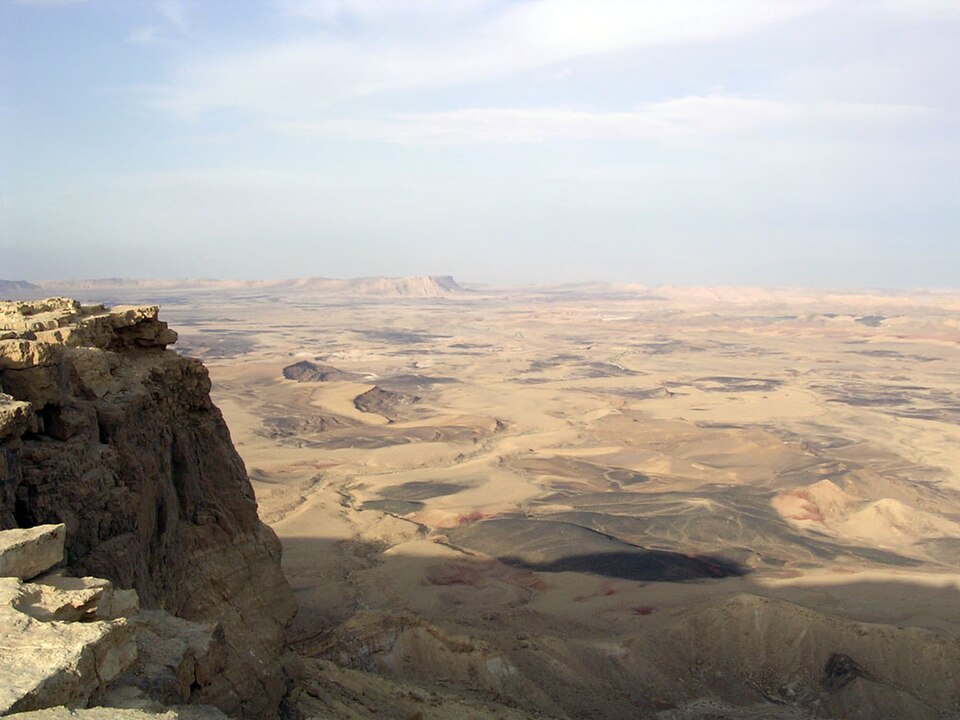
Let us clear up the most common misconception first. A makhtesh is not a meteor impact crater. Impact craters are formed in an instant when a space rock slams into the earth at tremendous speed. The force of the collision melts and shatters the surrounding rock, leaving a circular depression with a raised rim of ejected material. You can find impact craters all over the world and on other planets. The most famous is the Chicxulub crater in Mexico, left by the asteroid that wiped out the dinosaurs.
A makhtesh is also not a volcanic crater. Volcanic craters form when magma erupts through the earth’s surface, and the emptied magma chamber collapses inward, creating a depression called a caldera. Again, you can find these all over the world, from Yellowstone to Mount Fuji.
A makhtesh resembles both of these from above, which is why the confusion persists. But the process that creates a makhtesh is entirely different. It involves no sudden catastrophe, no explosion, no eruption. Instead, it takes millions of years of patient, quiet erosion working from the inside out.
The story of a makhtesh begins deep underground, with the slow but powerful movement of tectonic plates. Here is how it happens, step by step:
Step 1: The dome rises. Tectonic forces push layers of rock upward, creating an anticline, a dome-shaped fold in the earth’s crust. Imagine pushing up on a stack of blankets from below. The layers arch upward, with the oldest rocks at the center and younger rocks on top.
Step 2: The cap cracks. The top of the dome is made of hard limestone and dolomite, tough rocks that resist erosion. But as the dome stretches upward, the tension creates cracks and fractures in this hard cap. These cracks are tiny at first, barely visible. But they are the beginning of the end.
Step 3: Water finds a way in. Rain falls. Not much of it in the Negev, but enough. Water seeps into the cracks in the hard upper layer and reaches the softer rocks below: sandstone, marl, and clay. These softer rocks are far more vulnerable to erosion.
Step 4: The interior erodes. Once water reaches the soft interior layers, erosion accelerates. The sandstone and marl dissolve and wash away, carried by flash floods through seasonal streams. The process works from the inside out, hollowing the dome like water eating through the soft center of a bread roll while the crust remains intact.
Step 5: The bowl takes shape. Over millions of years, more and more of the soft interior is removed. The hard limestone rim remains standing because it resists erosion far better than the rocks it once covered. A deep, steep-walled bowl forms, surrounded on all sides by cliffs of hard rock.
Step 6: The drainage channel. All the water and eroded material has to go somewhere. A drainage channel, a nahal (dry riverbed), cuts through the rim, creating the outlet through which water exits the makhtesh. Most makhteshim have a single drainage point, unlike impact craters which have no natural outlet. Makhtesh Ramon is an exception, drained by two rivers: Nahal Ramon and Nahal Ardon.
The result is a massive, enclosed depression with steep walls, a relatively flat floor, and a drainage exit. It looks like a crater, but it was built by erosion, not by impact or eruption.
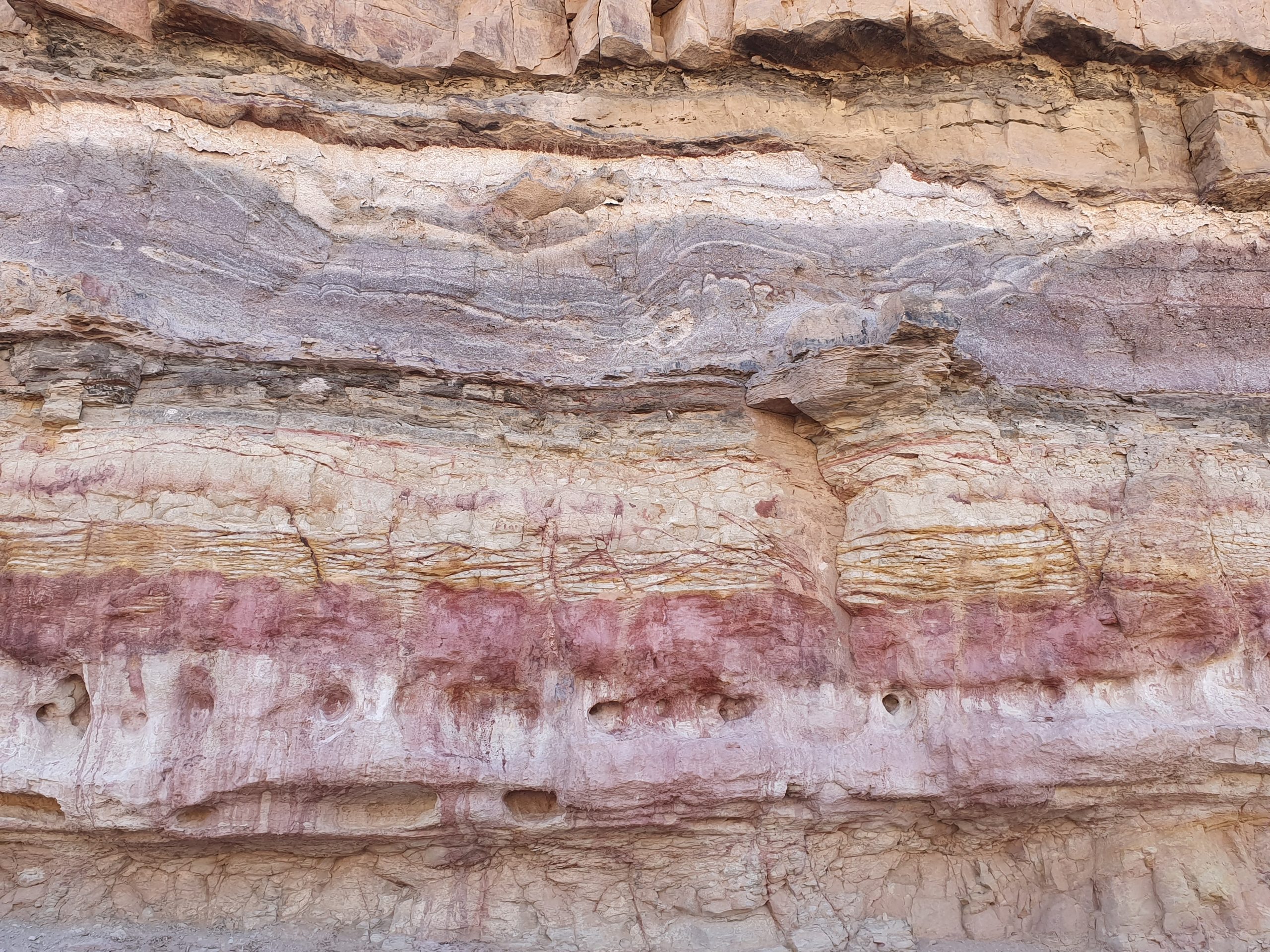
Here is the truly remarkable part: this geological phenomenon exists almost nowhere else on the planet. There are only seven known makhteshim in the world — five in Israel’s Negev Desert and two in the neighboring Sinai Peninsula of Egypt. That is the entire inventory of this landform on Earth.
Makhtesh Ramon is the largest and most dramatic. Located near the town of Mitzpe Ramon, it stretches over 40 kilometers long, 2 to 10 kilometers wide, and plunges more than 500 meters deep. Its elongated, heart-like shape makes it unlike any other crater on earth. Standing on its rim is one of the most breathtaking experiences in Israel. The town of Mitzpe Ramon sits right on the northern edge, and Route 40 descends into the crater and climbs out the other side.
Makhtesh HaGadol (the Large Makhtesh) measures approximately 10 kilometers long and 5 kilometers wide. Despite its name, it is actually the second largest, having been named before Makhtesh Ramon was fully charted. It is less visited than Ramon but arguably more pristine, with fewer roads and developments inside. Also known as Makhtesh Hatira after its drainage river, Nahal Hatira, it sits near the town of Yeruham.
Makhtesh HaKatan (the Small Makhtesh) is the most “classic” in shape, nearly perfectly oval, and offers excellent hiking with stunning geological exposures in its walls.
Two smaller makhteshim on Mount Arif sit south of Makhtesh Ramon. These are less studied and far less accessible, but they share the same geological origin as their larger neighbors. Together with the three major makhteshim, they complete the set of five found in the Negev.
The two additional makhteshim in Egypt’s Sinai Peninsula bring the worldwide total to seven. Geologists have searched for similar structures elsewhere in the world and have not found any. The makhtesh remains, as far as we know, a phenomenon unique to this small region where Israel meets the Sinai.
For a makhtesh to form, you need a very specific set of conditions to align. It is like a geological recipe where every ingredient must be present in exactly the right proportion. The Negev and northern Sinai happen to have all of them.
The right rock layers. You need a hard, erosion-resistant cap (limestone or dolomite) sitting on top of much softer layers (sandstone, marl, clay). This specific layering exists in the Negev because of the region’s particular geological history, with ancient seas depositing limestone over older continental sandstone.
The right tectonic activity. The Dead Sea Rift, part of the Great Rift Valley that runs from the Red Sea through the Dead Sea and northward into Lebanon, created the tectonic uplift that pushed these rock layers into dome-shaped anticlines. Without this uplift, the layers would remain flat and no makhtesh could form.
The right climate. This is perhaps the most delicate balance. You need enough rainfall to drive erosion of the soft interior rocks, but not so much that it also destroys the hard rim. The Negev’s arid climate, with its rare but intense flash floods, provides exactly this balance. In a wetter climate, the limestone rim would eventually erode too, and you would just get a valley. In a completely dry climate, there would be no erosion at all.
Enough time. The makhteshim formed over tens of millions of years. The region needed to remain geologically stable enough for this slow process to complete without being disrupted by volcanic activity, major earthquakes, or other catastrophic events.
Other places on earth may have one or two of these ingredients, but nowhere else has all four in the right combination. That is why the makhtesh remains a geological feature unique to this desert.
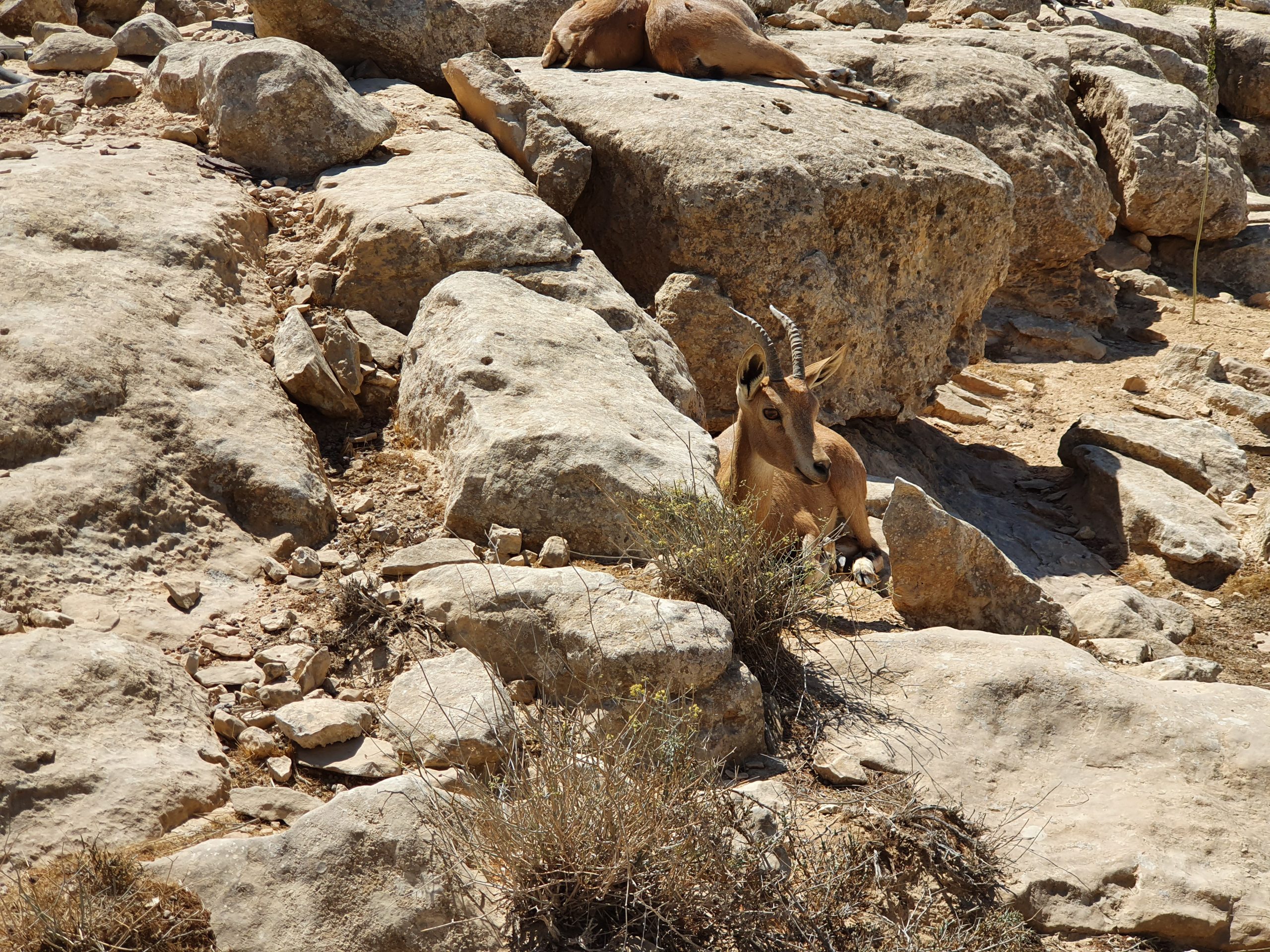
One of the most visually striking aspects of any makhtesh is the color. The walls and floor are painted in bands of red, yellow, purple, white, black, and every shade in between. This is not just beautiful; it is a visible record of hundreds of millions of years of geological history.
Each color represents a different mineral composition and a different chapter in the earth’s story:
In Makhtesh Ramon, the colored sands are one of the most popular stops. Visitors can see brilliant bands of color in the exposed cliff faces, each one representing conditions that existed millions of years before the first humans walked the earth. It is like reading a book written in stone, with each chapter a different color.
The geological layers visible inside the makhteshim span from the Triassic period (about 250 million years ago) through the Cretaceous (about 66 million years ago). That means you can see rocks from before the age of dinosaurs all the way through to their extinction, all exposed in one sweeping panorama.
Perhaps the most surprising thing about finding yourself in the bone-dry Negev Desert is realizing that you are standing where fish once swam. The rocks inside the makhteshim are full of marine fossils, proof that this region spent millions of years under a shallow tropical sea.
This was the Tethys Sea, an ancient body of water that once separated the supercontinents of Laurasia (to the north) and Gondwana (to the south). During the Mesozoic Era, the Tethys covered much of what is now the Middle East, depositing the limestone and chalk layers that would eventually become the hard cap of the makhteshim.
The most iconic fossils found inside the makhteshim are ammonites, spiral-shelled marine creatures related to the modern nautilus. Some ammonite fossils in Makhtesh Ramon are remarkably large and well-preserved, sitting right on the surface where hikers can spot them along the trail. It is a surreal experience: finding a perfect spiral shell fossil in the middle of one of the driest landscapes on earth.
You can also find fossils of ancient sea urchins, corals, and various shellfish. Together, these fossils tell the story of the Tethys Sea’s gradual retreat as tectonic forces pushed the region above sea level. The transition from marine to terrestrial environments is literally written in the rock layers of the makhtesh walls.
The word “makhtesh” (in Hebrew, mortar) refers to the bowl-shaped vessel used with a pestle for grinding spices. It is a perfect description of the shape: a deep, steep-walled bowl.
What makes this linguistically interesting is that there is no equivalent word in English, or in any other language. The reason is simple: the phenomenon does not exist anywhere else, so no other language ever needed a word for it.
English-speaking geologists have occasionally used the term “erosion cirque,” but this is inaccurate. A cirque is a feature carved by glaciers, and the makhtesh formation process has nothing to do with ice. Most international geologists have simply adopted the Hebrew word “makhtesh” as the official scientific term, one of those rare cases where a language contributes a word to global science because the phenomenon it describes exists only where that language is spoken.
The makhteshim of the Negev are among the most unique geological sites on the planet, and experiencing them with a knowledgeable guide transforms a scenic overlook into a journey through deep time. At Hoshen Tours, we build Negev itineraries that bring the geology, history, and desert landscapes to life.
Whether you want to stand on the rim of Makhtesh Ramon at sunrise, hike into the colored sands, search for ammonite fossils on the crater floor, or explore the quieter trails of Makhtesh HaGadol and HaKatan, we will design a day that matches your interests and fitness level.
The Negev is not just empty desert. It is one of the most geologically fascinating places on Earth, and the makhtesh is the proof. Contact us to start planning your Negev adventure.
Contact Us
Related articles
Tours and Activities
The Spirit of Israel: Where They Tried to Destroy, We Build Again
The Spirit of Israel: Where They Tried to Destroy, We Build AgainA Story That Goes Far Beyond October 7thThere is…
Is Israel Safe to Visit? What You Need to Know
Is Israel Safe to Visit? What You Need to KnowIs Israel Safe to Visit? Yes, Millions Visit Safely Every Year…

Best Israeli Souvenirs to Bring Home
One of the joys of traveling in Israel is discovering unique products that capture the essence of the land. From…