



Qasr el-Yahud, on the western bank of the Jordan River near Jericho, is the traditional site where John the Baptist baptized Jesus: “As soon as Jesus was baptized, he went up out of the water. At that moment heaven was opened, and he saw the Spirit of God descending like a dove and alighting on him. And a voice from heaven said, ‘This is my Son, whom I love; with him I am well pleased’” (Matthew 3:16-17).
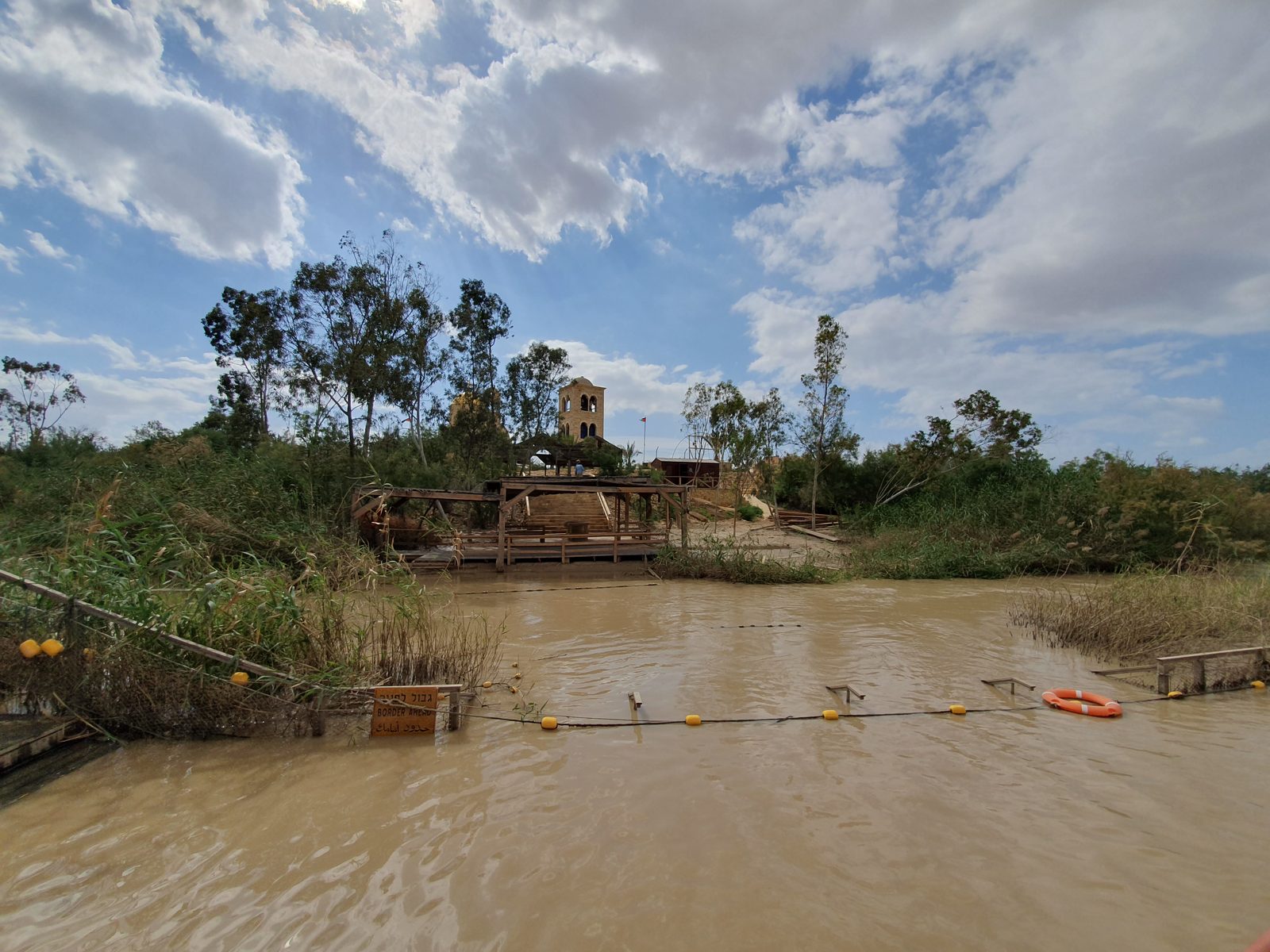
Joshua and the Crossing of the Jordan
Long before the baptism traditions, this stretch of the Jordan carried an even older memory. According to the Book of Joshua (chapters 3 and 4), it was here that the Israelites crossed the Jordan River into the Promised Land after forty years of wandering in the desert. The priests carrying the Ark of the Covenant stepped into the water, and the river stopped flowing, allowing the entire nation to cross on dry ground. Joshua ordered twelve men, one from each tribe, to take stones from the riverbed and set them up as a memorial, so that future generations would ask, “What do these stones mean?” and hear the story of the crossing. For Jewish visitors, this is the place where the journey from Egypt ended and life in the Land of Israel began.
The Site
The site is also identified with the place where the Israelites crossed the Jordan River into the Promised Land under Joshua’s leadership: “The priests who carried the ark of the covenant of the Lord stopped in the middle of the Jordan and stood on dry ground, while all Israel passed by until the whole nation had completed the crossing on dry ground” (Joshua 3:17). And tradition holds that this is also where the prophet Elijah crossed the Jordan before being taken up to heaven in a chariot of fire, with his disciple Elisha watching from the bank (2 Kings 2:1-14).
The Jordan River at this point is narrow, brown, and unassuming. Just a few meters across the water, on the Jordanian side, lies Al-Maghtas, known as Bethany Beyond the Jordan. Pilgrims in white robes wade into the river for baptism, and the atmosphere is one of quiet devotion mixed with deep personal emotion.
John the Baptist
John was a priestly figure who lived in the Judean Desert, wore clothing of camel hair, and ate locusts and wild honey (Matthew 3:4). He preached in the wilderness of the Jordan, calling the people to repent and be immersed in the river as a sign of purification. Immersion in water as a ritual act of purification was a well-established Jewish practice; the mikvaot (ritual baths) found at sites across the country testify to this. What was radical about John was that he took the practice out of the Temple system and into the wilderness, declaring that repentance and immersion in the Jordan were sufficient for forgiveness, without the mediation of priests or sacrifices.
Crowds came from Jerusalem and all Judea to be baptized by him (Matthew 3:5). When Jesus arrived from the Galilee, John recognized him: “I need to be baptized by you, and do you come to me?” But Jesus answered, “Let it be so now; it is proper for us to do this to fulfill all righteousness” (Matthew 3:14-15). The baptism of Jesus by John marks the beginning of Jesus’ public ministry.
The Experience of Standing at the Water
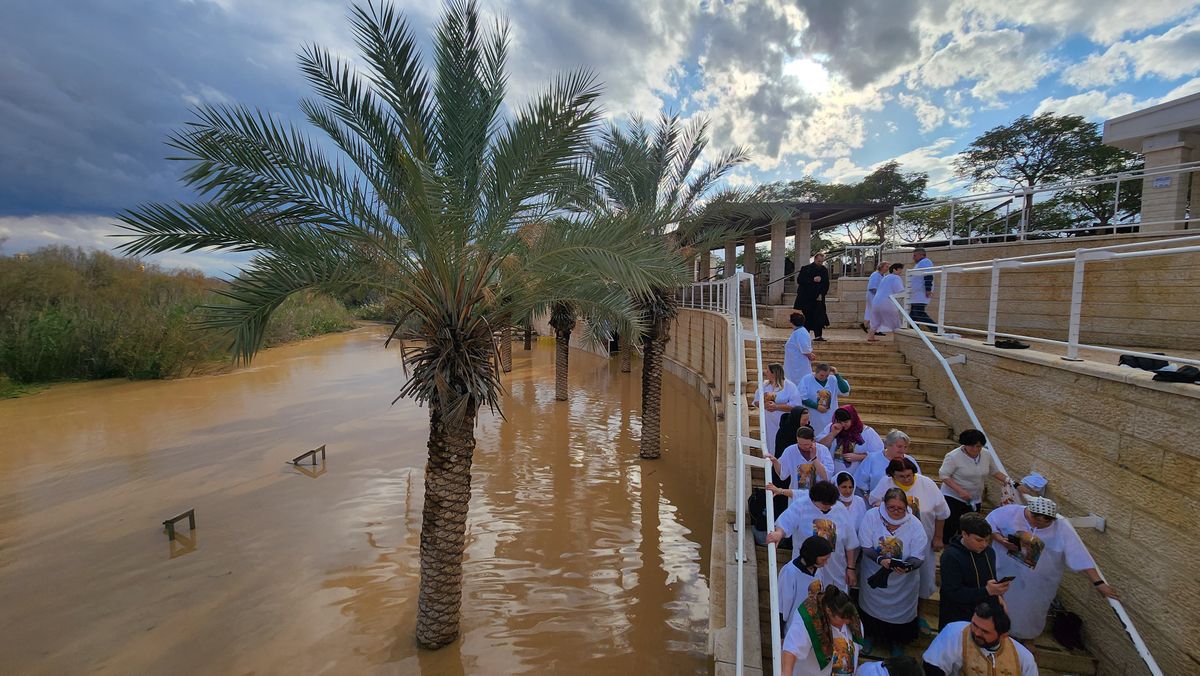 For many Christian pilgrims, this is the most personal and moving moment of their entire journey to the Holy Land. There is nothing quite like stepping down the stone steps and feeling the current of the Jordan around your ankles. Pilgrims come dressed in white baptismal robes. Groups gather on the bank and sing hymns together. Some weep. Some laugh with joy. Some stand in silence. The river itself is modest, and that modesty somehow makes the moment feel more real, not less. This is not a grand cathedral or a polished tourist attraction. It is a muddy river at the edge of the desert, and that is exactly what makes it holy.
Whether pilgrims are being baptized for the first time, renewing their vows, or simply wading in as an act of devotion, the experience here tends to stay with people long after they leave Israel.
The Feast of Epiphany: Mass Baptisms in January
Every January, the baptism site fills with thousands of pilgrims for one of the most extraordinary gatherings in the Christian calendar. Orthodox churches celebrate the Feast of Theophany, which marks the baptism of Jesus, on January 18-19, while Catholic and Protestant traditions observe Epiphany on or near January 6. In practice, the riverbank hosts celebrations across several days, and the crowd is truly international: pilgrims from Ethiopia, Russia, Romania, Nigeria, the Philippines, and dozens of other countries come together at the water’s edge.
The scene is unlike anything else in the Holy Land: white robes everywhere, chanting in multiple languages, church delegations carrying banners and icons, entire groups descending into the Jordan together. If you are planning a pilgrimage in January, this is worth building your itinerary around. Contact Hoshen Tours well in advance, as the site gets very crowded and logistics require careful planning.
For the Israelites, the Jordan crossing was the mirror image of the Red Sea crossing. Just as God had parted the waters to bring them out of Egypt, he parted the Jordan to bring them into the Promised Land. Joshua ordered the priests to carry the Ark of the Covenant into the river, and the waters stopped flowing: “The water from upstream stopped flowing. It piled up in a heap a great distance away, at a town called Adam” (Joshua 3:16). The entire nation crossed on dry ground, and Joshua set up twelve stones at the crossing point as a memorial.
The town of Adam is identified with the modern Damiya crossing, about 25 kilometers north of Qasr el-Yahud. Geologists have noted that the clay cliffs there have occasionally collapsed and temporarily dammed the Jordan, most recently in a 1927 earthquake, offering a possible natural explanation for the biblical account.
Elijah and Elisha
This stretch of the Jordan is also where the prophet Elijah’s earthly life ended. Elijah and his disciple Elisha walked together to the Jordan. Elijah struck the water with his cloak and the river parted, and they crossed on dry ground. Then “a chariot of fire and horses of fire appeared and separated the two of them, and Elijah went up to heaven in a whirlwind” (2 Kings 2:11). Elisha picked up Elijah’s cloak, struck the Jordan again, and the waters parted for him too, confirming that Elijah’s spirit now rested on him. The site thus carries the memory of three miraculous crossings: Joshua’s, Elijah’s, and Elisha’s, giving it a layered significance that goes beyond any single faith.
The Jordanian Side: Al-Maghtas
Directly across the narrow river, on the eastern bank, lies Al-Maghtas, also known as Bethany Beyond the Jordan. This site was inscribed as a UNESCO World Heritage Site in 2015. Some scholars point to John 1:28, which specifies that John was baptizing “at Bethany beyond the Jordan,” as evidence that the east bank may have the stronger historical claim to the original baptism site. Both sides are visited by pilgrims, and some tour groups combine Qasr el-Yahud with a crossing to Al-Maghtas on the same day. Together they preserve a remarkable concentration of sacred history along one short stretch of river.
Churches in a Minefield
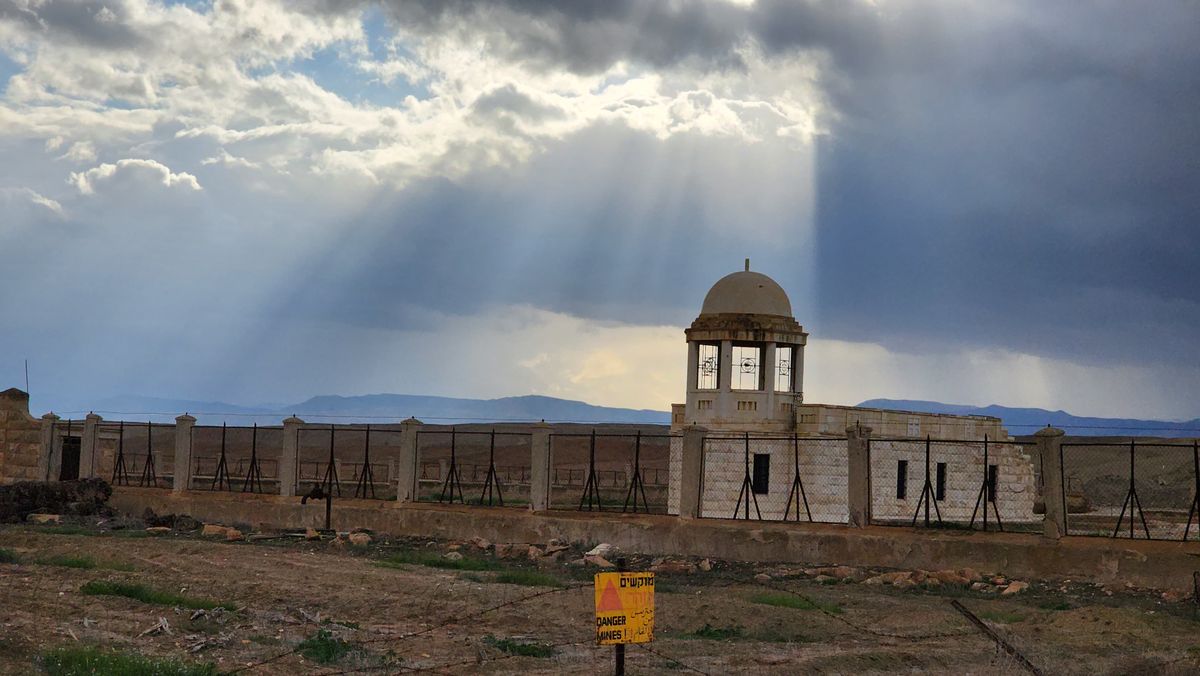 The area around Qasr el-Yahud contains the remains of numerous churches and monasteries from the Byzantine period onward, built by different Christian denominations to mark the baptism site. Greek Orthodox, Ethiopian, Coptic, Romanian, Franciscan, and other communities each established a presence here, and the road leading down to the water is lined with their chapels and compound walls. Many of these were damaged or abandoned after the area became a military zone following the 1967 war.
The entire area was mined during the Jordanian period between 1948 and 1967, and it remained dangerous and off-limits for decades afterward. The HALO Trust, the international landmine clearance organization, worked to demine the site, and Qasr el-Yahud was reopened to pilgrims in 2011. The IDF has been gradually clearing the remaining minefields in the area, and as each section is declared safe, abandoned churches and monasteries that have stood empty for decades are slowly being restored and reopened. Churches that had sat empty for 40 years are now being carefully restored, and their presence along the banks of the Jordan creates an ecumenical landscape found nowhere else in the Holy Land. The contrast between the sacred purpose of the site and the landmines that surrounded it for decades is one of the more striking details of the Jordan Valley’s modern history.
Visit with Hoshen Tours
Qasr el-Yahud is a highlight for Christian pilgrims visiting the Dead Sea area. Hoshen Tours coordinates baptism arrangements, handles the necessary permits, and helps groups plan around special events like the Epiphany celebrations in January. We typically combine the site with Jericho and the Dead Sea for a full day in the Jordan Valley. If you want to arrange a baptism ceremony with a pastor or priest, we can help coordinate that as well. Reach out early, especially for January visits.
Ready to experience Israel in true colors?
Plan Your TourPrivate tours designed around your interests, schedule, and pace.