



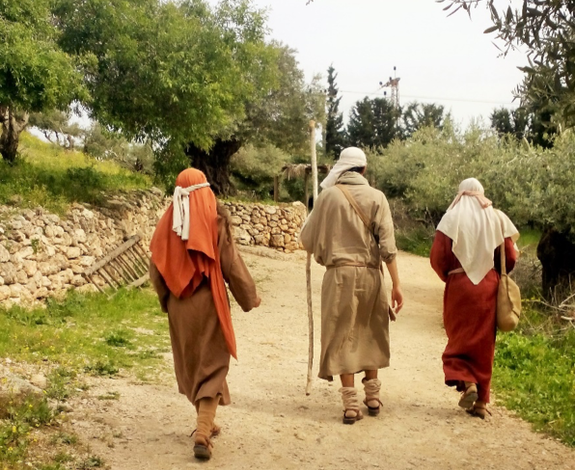
Nazareth Village is a living history museum in the heart of Nazareth that recreates a first-century Galilean village, complete with terraced farms, olive presses, wine presses, stone houses, a synagogue, a carpentry workshop, and costumed actors who demonstrate the daily life of a Jewish family in the time of Jesus. The museum is built on an ancient agricultural site where first-century wine press installations, olive trees, and terraces have been preserved.
Walking Into the First Century – Nazareth Village
Nazareth Village was created to answer a simple question: what was daily life like in the town where Jesus grew up? The Gospels describe Jesus as the son of a tekton (a builder or carpenter), who grew up in a small Jewish village, attended synagogue on Shabbat, and used the imagery of farming, shepherding, and village life in his parables. Nazareth Village recreates that world using archaeological evidence and historical research.
The reconstructions are based on decades of archaeological work in Nazareth and across the Galilee. Excavations have revealed that first-century Nazareth was a Jewish village of perhaps 200–400 residents, with modest stone houses built into the hillside, agricultural terraces, and rock-cut tombs. The village was not mentioned in the Hebrew Bible, the Talmud, or by the historian Josephus, it was genuinely obscure. Yet it sat just 6 kilometers from Sepphoris (Tzippori), the wealthy Greco-Roman capital of the Galilee that Herod Antipas was actively rebuilding during Jesus’ youth. The contrast between the cosmopolitan city over the hill and the tiny village in its shadow is part of the story that Nazareth Village brings to life.
Life in a Reconstructed First-Century Village
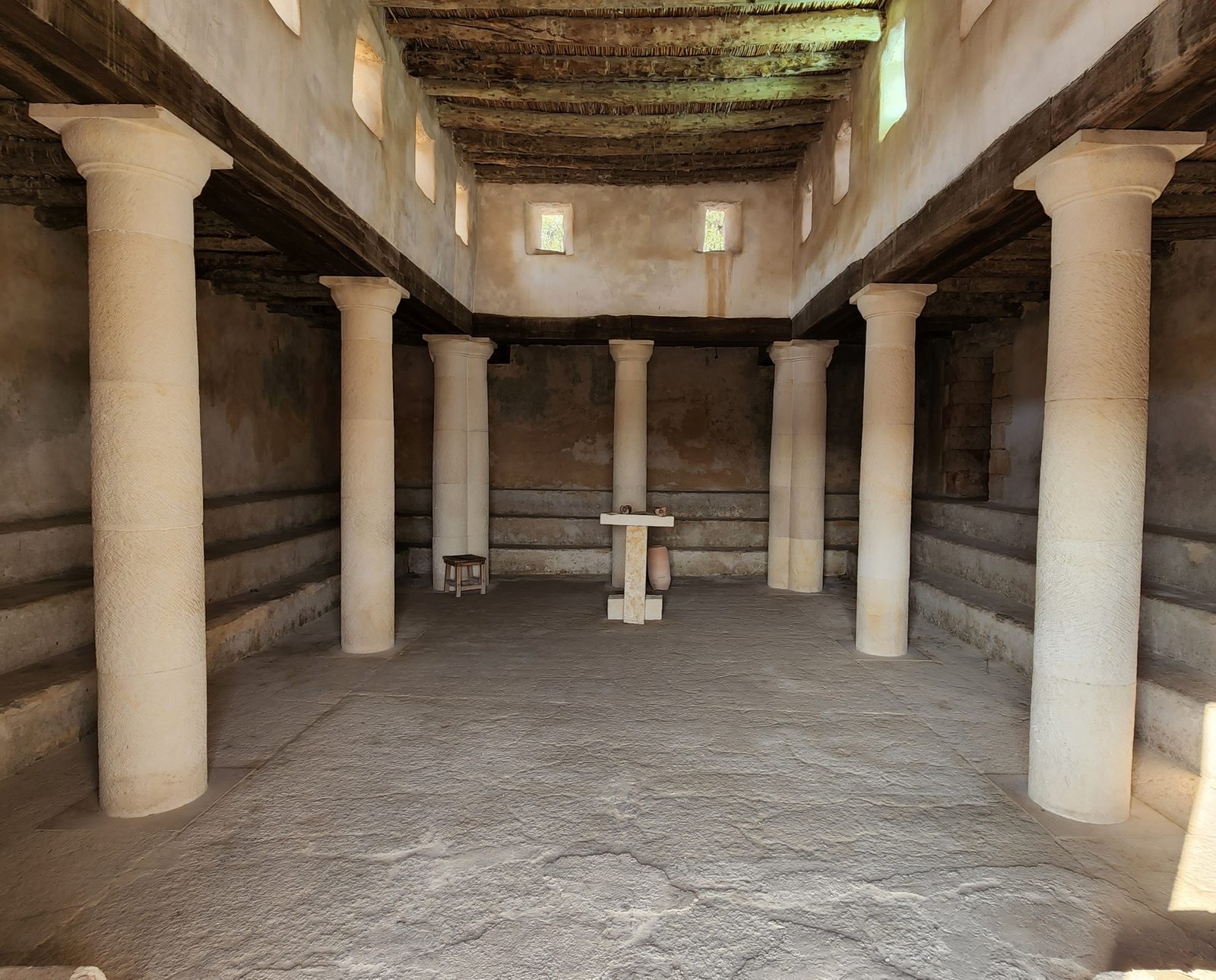
Guided tours walk visitors through the reconstructed village, where actors in period clothing demonstrate pressing olives, treading grapes, weaving cloth, grinding grain, and tending sheep. A first-century style synagogue has been built based on archaeological models from the period, a simple room with stone benches along the walls, where the Torah scroll was kept in a niche and read aloud on Shabbat. This is the kind of synagogue where Jesus would have stood up to read from the scroll of Isaiah, the moment described in Luke 4 that led to his rejection at Mount Precipice.
A carpenter’s workshop shows the tools and techniques of a first-century builder. The Greek word tekton, used to describe both Joseph and Jesus, likely referred not just to woodworking but to general construction, stone cutting, building walls, fashioning doors and roof beams. In a village like Nazareth, a tekton was essential to the community. A typical Jewish house of the period, with its stone walls, packed-earth floor, and flat roof used for drying food and sleeping in summer, gives visitors a physical sense of the domestic environment in which Jesus was raised.
Parables Come to Life
One of the most powerful aspects of Nazareth Village is how it illuminates the parables. Jesus drew his imagery from the world around him: the sower who went out to sow (Matthew 13:3), the mustard seed (Matthew 13:31), the lost sheep (Luke 15:4), the woman who lost a coin and swept her house to find it (Luke 15:8), the wineskins that burst when filled with new wine (Mark 2:22). At Nazareth Village, visitors see the terraced fields where a sower would scatter seed on rocky, thorny, and good soil; the sheepfold where a shepherd would count his flock at nightfall; the small, dark house where a woman would need a lamp to search the floor for a single coin. The parables stop being metaphors and become descriptions of real life.
Ancient Site
The land on which Nazareth Village is built contains genuine first-century agricultural installations: a wine press carved into the rock, olive terraces, irrigation channels, and a watchtower. These installations were in use during Jesus’ lifetime and provide the archaeological foundation for the reconstructions built around them. The ancient wine press is particularly significant, grapes were trodden by foot in the upper basin, and the juice flowed through a channel into a lower collecting vat, exactly as it had been done for centuries. The olive trees on the property, while not 2,000 years old themselves, grow on terraces that are.
Visit with Hoshen Tours
Nazareth Village is the best place in Israel to understand daily life in the time of Jesus. Hoshen Tours includes it in Nazareth itineraries, especially for groups who want to see, touch, and taste the world of the Gospels. The village also offers a first-century style meal, lentil stew, fresh bread, olive oil, and herbs, that can be arranged for groups looking for a deeper immersion into the ancient world.
Visitors exploring the Galilee often combine Nazareth Village with nearby destinations such as Nazareth, Mount Precipice, and Zippori, each offering its own distinctive perspective on the region’s layered history and landscape. A broader itinerary might also include Mount Tabor and Jesus Trail, both within easy reach and rich in their own right.
Every Hoshen Tours itinerary is private and fully customizable. Contact us to begin planning your journey through the Galilee.
Explore Our Tour Collection
Ready to experience Israel in true colors?
Plan Your TourPrivate tours designed around your interests, schedule, and pace.