



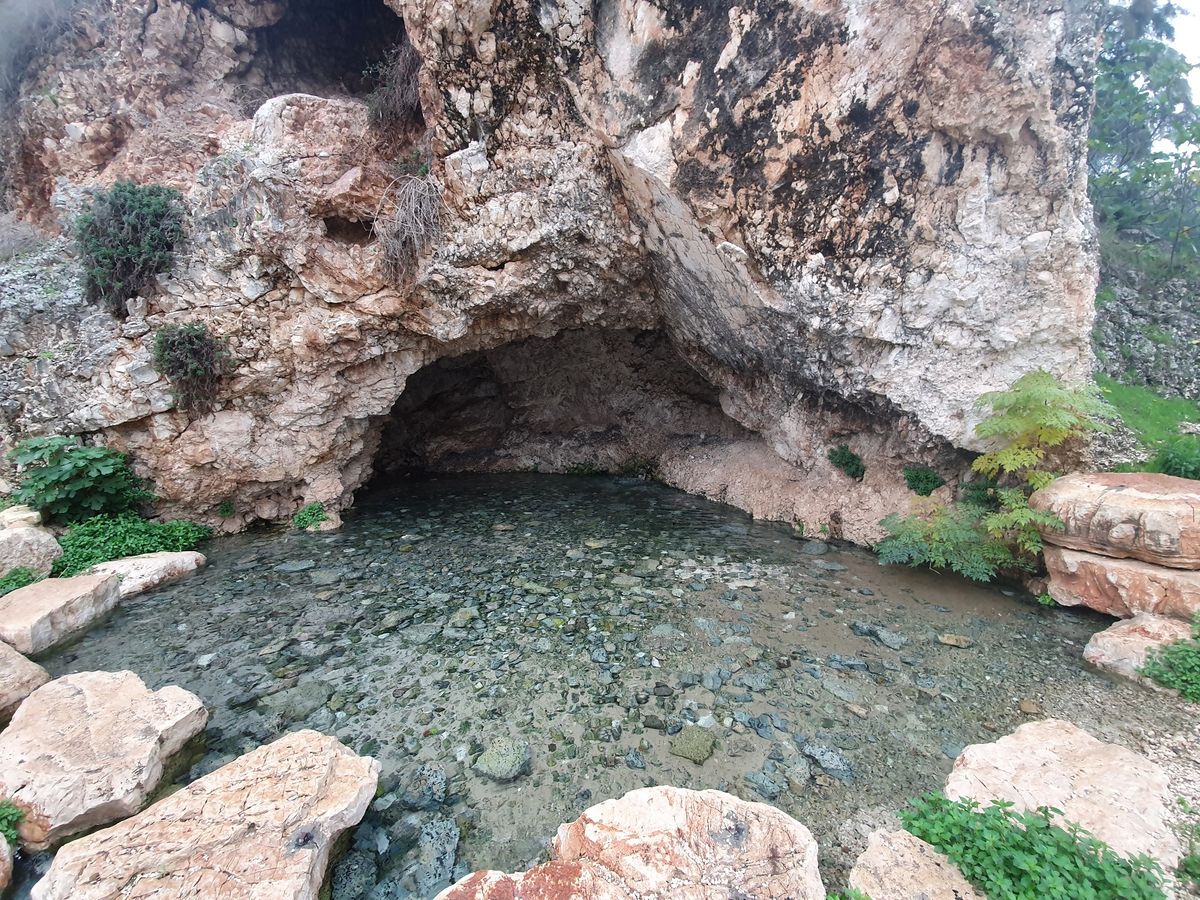
Ma’ayan Harod (the Spring of Harod) is a large natural spring at the foot of Mount Gilboa where one of the most unusual military selections in history took place. The story, told in Judges chapters 6–8, is one of the most dramatic episodes of the period of the Judges, a time when the Israelite tribes had no king, no central government, and no standing army, and were repeatedly overrun by neighboring peoples.
The Midianite Oppression – Ma’ayan Harod
For seven years, the Midianites and their allies, the Amalekites and the “people of the East,” had been raiding the land of Israel every harvest season. They came on camels, one of the earliest recorded uses of camels in warfare, in numbers so vast that “they could not be counted” (Judges 6:5). They destroyed the crops, seized the livestock, and left the Israelites hiding in caves and mountain strongholds. The once-fertile Jezreel Valley was being stripped bare, and the people were starving.
God chose an unlikely hero to deliver Israel: Gideon, a young man from the weakest clan in the tribe of Manasseh, who was secretly threshing wheat in a winepress to hide it from the Midianites when the angel of the Lord appeared to him. After a series of signs, including the famous fleece test, in which Gideon asked God to make a wool fleece wet with dew while the ground remained dry, and then reversed the test the following night, Gideon gathered an army of 32,000 men at Ma’ayan Harod.
But God told Gideon that his army was too large. The victory had to be unmistakably divine, not human. “You have too many men. I cannot deliver Midian into their hands, or Israel would boast against me: My own strength has saved me” (Judges 7:2). Through two tests at the spring, the army was reduced from 32,000 to just 300 warriors.
How Gideon Chose His 300
First, God told Gideon to send home anyone who was afraid. 22,000 men left, leaving 10,000. Still too many. God then told Gideon to bring the men to the water: “Separate those who lap the water with their tongues as a dog laps from those who kneel down to drink.” Three hundred men lapped the water from their hands, staying alert and watching for the enemy. The rest knelt down to drink, putting their faces in the water and losing sight of their surroundings. God chose the 300 who remained vigilant: “With the three hundred men that lapped I will save you” (Judges 7:4-7).
The Spring of Harod: Gideon’s Testing Ground
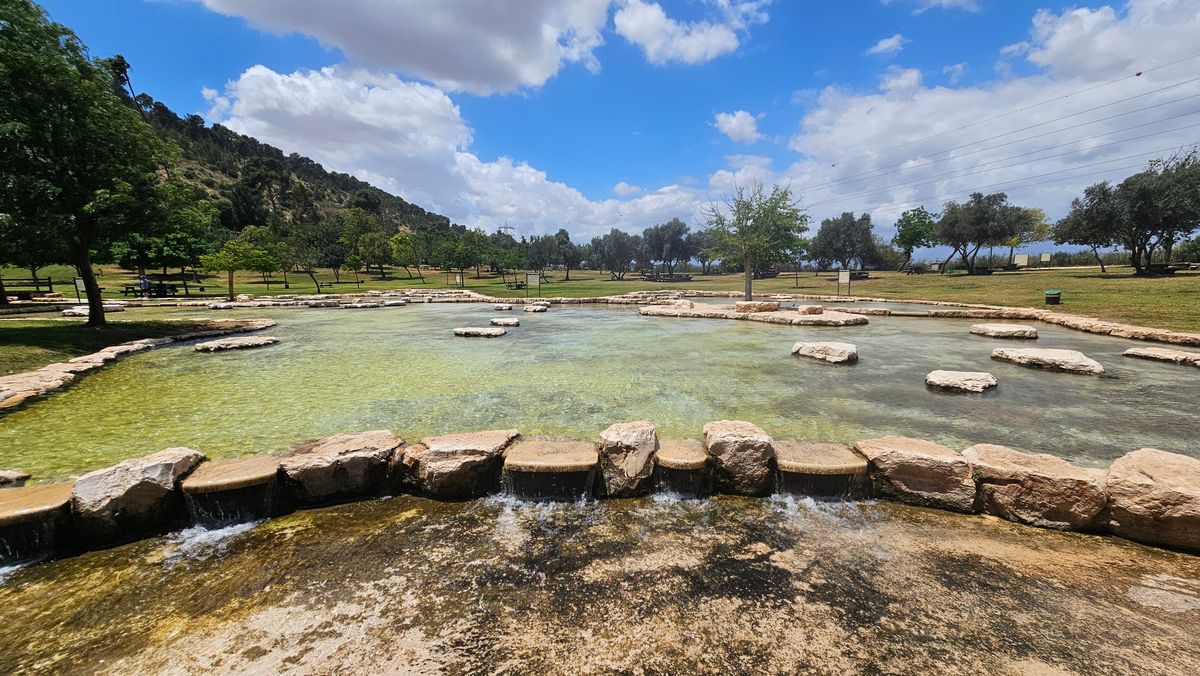
The spring at Ma’ayan Harod still flows strongly, feeding a large pool surrounded by eucalyptus trees and lawns. The national park that surrounds it is one of the most popular recreation areas in the Jezreel Valley, with swimming, picnicking, and hiking trails on the lower slopes of Gilboa. The pool is where Gideon watched his men drink, and the terrain matches the biblical description: a spring at the base of a mountain, with open ground where an army could camp.
Night Attack
With his 300 warriors, Gideon attacked the Midianite camp at night. Each man carried a trumpet, a clay jar, and a torch hidden inside the jar. At Gideon’s signal, they blew the trumpets, smashed the jars to reveal the torches, and shouted: “A sword for the Lord and for Gideon!” (Judges 7:20). The Midianites, surrounded by what seemed like an enormous army, panicked completely. In the darkness and confusion, they turned their swords on each other and then fled eastward toward the Jordan River. Gideon sent messengers to the tribe of Ephraim, who cut off the Midianite retreat at the Jordan fords, capturing and killing their commanders. The rout was total.
The victory of 300 men over an army described as “thick as locusts” became one of the defining stories of faith in the Hebrew Bible, a demonstration that God’s power does not depend on numbers. The story has resonated through the centuries as a parable of courage against impossible odds, and the image of Gideon’s 300 warriors with their torches and trumpets remains one of the most vivid battle scenes in all of scripture.
Yehoshua Hankin: The Redeemer of the Valley
Near Ma’ayan Harod stands the house and grave of Yehoshua Hankin, known as “Goel HaEmek”, the Redeemer of the Valley. Hankin spent decades negotiating the purchase of land in the Jezreel Valley from Ottoman and later Arab landowners, deal by deal, parcel by parcel, assembling the territory that would become the agricultural heartland of the Jewish state. His largest and most important acquisition was the Sursock Purchase of 1921, in which he bought approximately 60,000-70,000 dunams in the initial 1921 purchase, with additional sales over subsequent years totaling a much larger area of the Jezreel Valley from a Lebanese landowning family, land that became the sites of dozens of kibbutzim and moshavim.
Hankin chose to live at Ma’ayan Harod, in the heart of the valley he had spent his life securing, and he is buried here beside his wife Olga. His modest grave, overlooking the spring and the fields beyond, is a place of quiet tribute to a man who changed the map of the country not with a sword but with a contract and a handshake.
Visit with Hoshen Tours
Ma’ayan Harod is where the story of Gideon’s 300 warriors comes alive at the very spring where, according to the Book of Judges, God tested the soldiers. Hoshen Tours reads the biblical text on site while visitors look at the spring and the surrounding terrain, making the ancient story vivid and immediate. The spring is also a beautiful natural park for wading and relaxing. Combine it with Mount Gilboa, the village of Nain, Tel Jezreel, and the Witch of Endor at Ein Dor.
Explore Our Tour Collection
Ready to experience Israel in true colors?
Plan Your TourPrivate tours designed around your interests, schedule, and pace.