



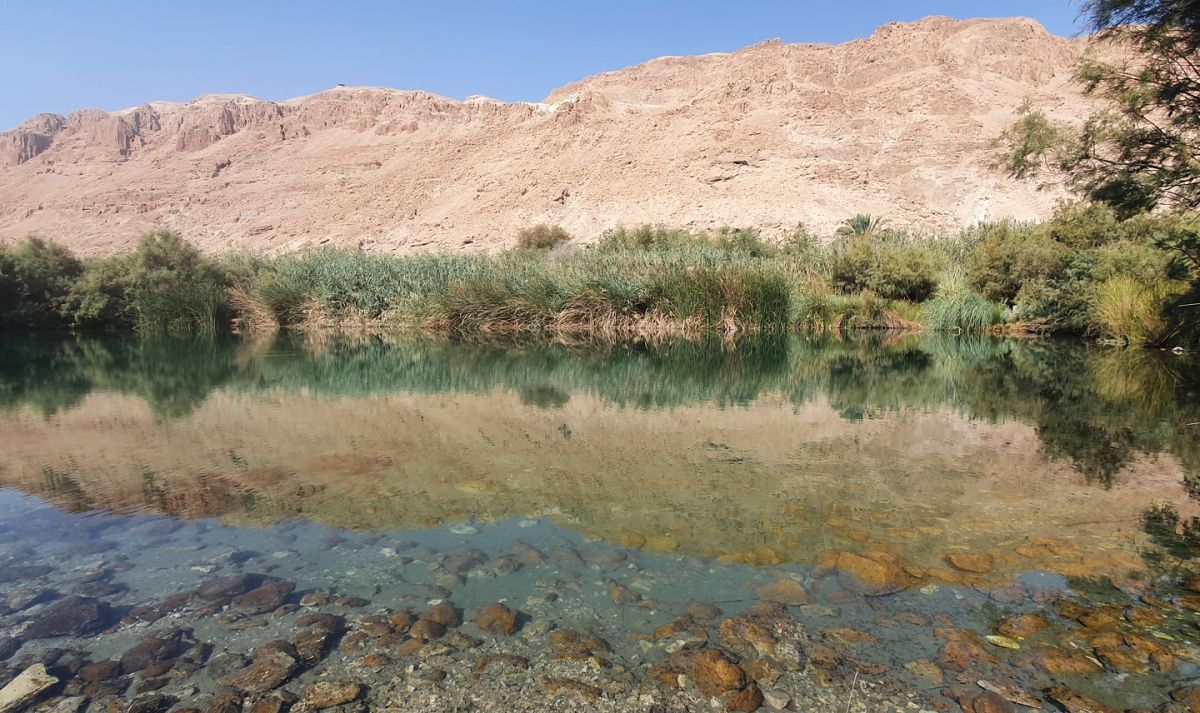
Einot Tsukim (Ein Feshkha) is a nature reserve on the northwestern shore of the Dead Sea, where freshwater springs emerge from the desert rock and flow into pools surrounded by reeds, tamarisk trees, and salt-tolerant vegetation. The reserve is a hidden oasis in one of the most barren landscapes on earth, and its pools, fed by water that fell as rain on the Judean mountains years or decades earlier, offer swimming in fresh, mineral-rich water just meters from the hypersaline Dead Sea.
The Springs
The springs at Einot Tsukim produce millions of cubic meters of water annually, creating a wetland ecosystem that supports fish, birds, and vegetation in an environment that otherwise cannot sustain life. The water temperature is a constant 25-28 degrees Celsius year-round, and the pools range from shallow wading areas to deep swimming holes. The contrast between the fresh, clear spring water and the dense, salty Dead Sea a few hundred meters away is striking.
Connection to Qumran
The springs are located just south of Qumran, and some scholars believe that the Essene community used the springs for agriculture and possibly for the ritual immersions that were central to their practice. Remains of agricultural installations from the Second Temple period have been found near the springs, and the freshwater source would have been essential for any community living in this desert environment.
Hidden Reserve
In addition to the main public pools, Einot Tsukim contains a “hidden reserve” (shmurah nisteret), a restricted section of the nature reserve that is home to a pristine freshwater ecosystem. This area, not open to the general public without special arrangement, preserves pools and marshes in their natural state, without the infrastructure and crowds of the main swimming area. The hidden reserve is home to several species of fish, including the navit kkhula (blue killifish), the navit hamlekhot (Dead Sea killifish, found only in springs around the Dead Sea), and several other species. Ein Feshkha is the only place in the world where the two killifish species live side by side. Guided visits can be arranged through the Israel Nature and Parks Authority, and the experience of walking through untouched wetlands in the middle of the desert is extraordinary.
Geology and the Dead Sea
The springs at Einot Tsukim are fed by rainwater that infiltrates the limestone of the Judean Mountains and travels underground through aquifers for years or even decades before emerging at the base of the cliffs along the Dead Sea rift. This geological process means that the water flowing from the springs today may have fallen as rain on the hills of Jerusalem or Bethlehem a generation ago. The Dead Sea itself has been receding dramatically, dropping roughly one meter per year as upstream water diversions and mineral extraction reduce its inflow. As the shoreline retreats, new sinkholes open along the coast, and the landscape around Einot Tsukim is constantly changing. The springs themselves remain a permanent water source, and the contrast between the lush, green wetland and the stark desert surroundings makes the reserve one of the most visually striking spots on the Dead Sea shore.
Visit with Hoshen Tours
Hoshen Tours includes Einot Tsukim in Dead Sea itineraries for visitors who want a quieter, more natural experience alongside the classic sites. Combine it with a float at the Dead Sea, the scrolls story at Qumran, the oasis hike at Ein Gedi, or a broader exploration of the Judean Desert.
Explore Our Tour Collection
Ready to experience Israel in true colors?
Plan Your TourPrivate tours designed around your interests, schedule, and pace.