



St.The Monastery of St. George of Choziba hangs from the northern cliff face of Wadi Qelt, a deep canyon cutting through the Judean Desert between Jerusalem and Jericho. The sight of the monastery, its walls and balconies built into and onto the vertical rock, is one of the most dramatic in the Holy Land. The ancient road from Jerusalem down to Jericho ran along this wadi, a descent of roughly 1,000 meters over 25 kilometers through wild and desolate terrain. This is traditionally identified as the road in Jesus’s Parable of the Good Samaritan (Luke 10:30-37), and standing in the canyon, the story of a man who “fell among robbers” on this lonely road feels entirely believable.
Elijah, Joachim, and the First Monks
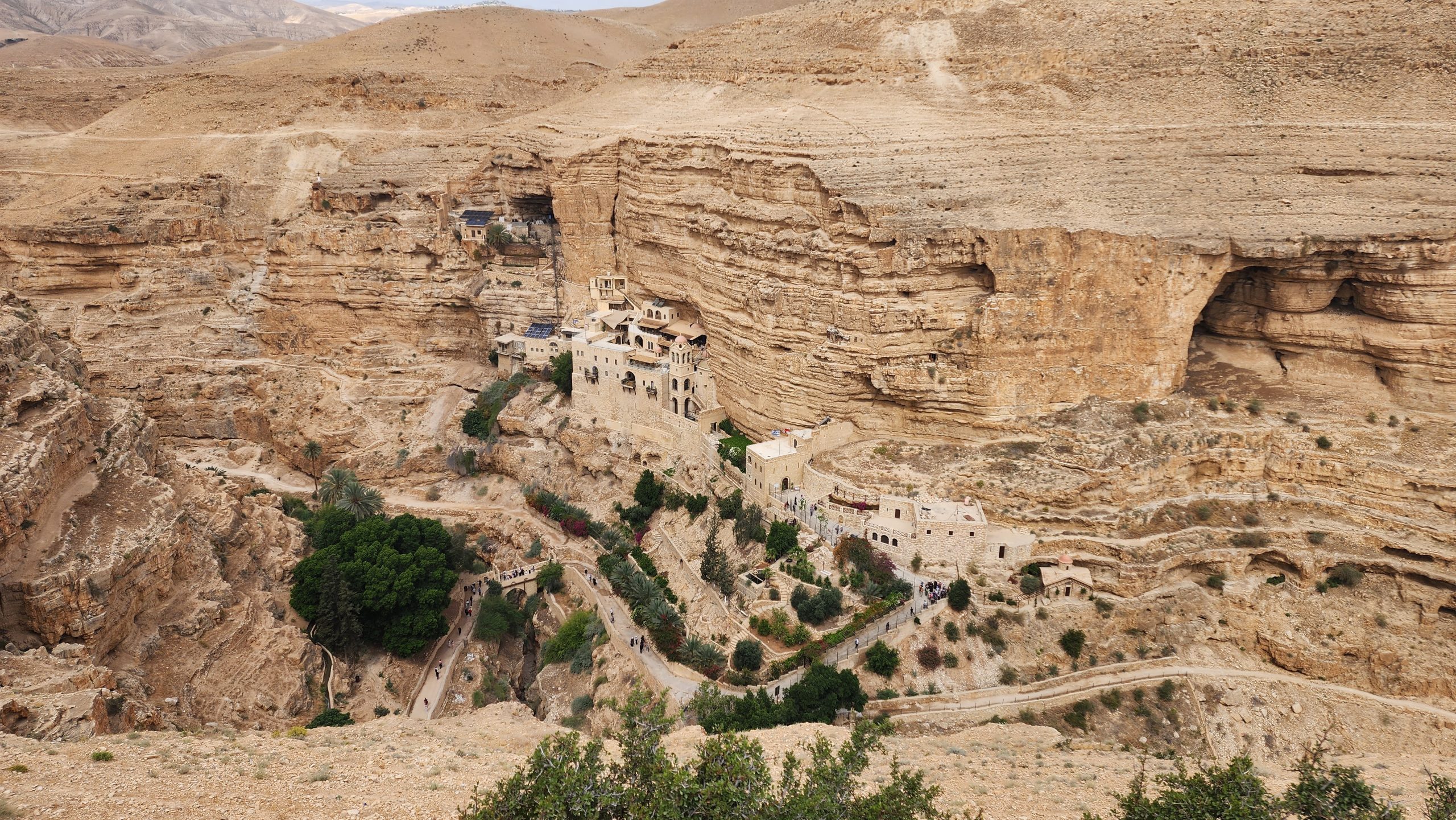
Tradition associates Wadi Qelt with the prophet Elijah. A cave within the monastery complex is identified as the place where tradition holds that Elijah hid and was fed by ravens during the drought he proclaimed against King Ahab: “You will drink from the brook, and I have directed the ravens to supply you with food there” (1 Kings 17:3-6). The biblical text places the Brook Cherith “east of the Jordan,” which does not match Wadi Qelt’s location west of the Jordan, but local Christian tradition has long made the connection. A second cave is associated with Joachim, who according to the apocryphal Protoevangelium of James retreated to the desert to fast and pray after his offering was rejected at the Temple. Tradition holds that Joachim is the father of the Virgin Mary.
The monastic presence began in the late 5th century, when hermits settled in the natural caves along the cliff. John of Thebes, an Egyptian monk, is traditionally credited as one of the earliest to arrive, around 480 CE. Over the following decades, a community grew around these cave-dwelling monks. In the late 6th century, George of Choziba, a Cypriot monk renowned for his piety, became the monastery’s most famous figure and gave it his name.
Destruction and Resurrection
In 614 CE, the Persian army swept through the Holy Land, destroying churches and monasteries. The monks of St. George were massacred. Their skulls and bones are preserved to this day in a chapel within the monastery, arranged in a solemn ossuary that visitors can see. The monastery fell into ruin, was partially restored during the Crusader period in the 12th century, and fell into disrepair again. The current structure was largely rebuilt between 1878 and 1901 by the Greek Orthodox Patriarchate of Jerusalem, though it incorporates ancient caves and chapels that have been in use for over 1,500 years.
The Monastery Today
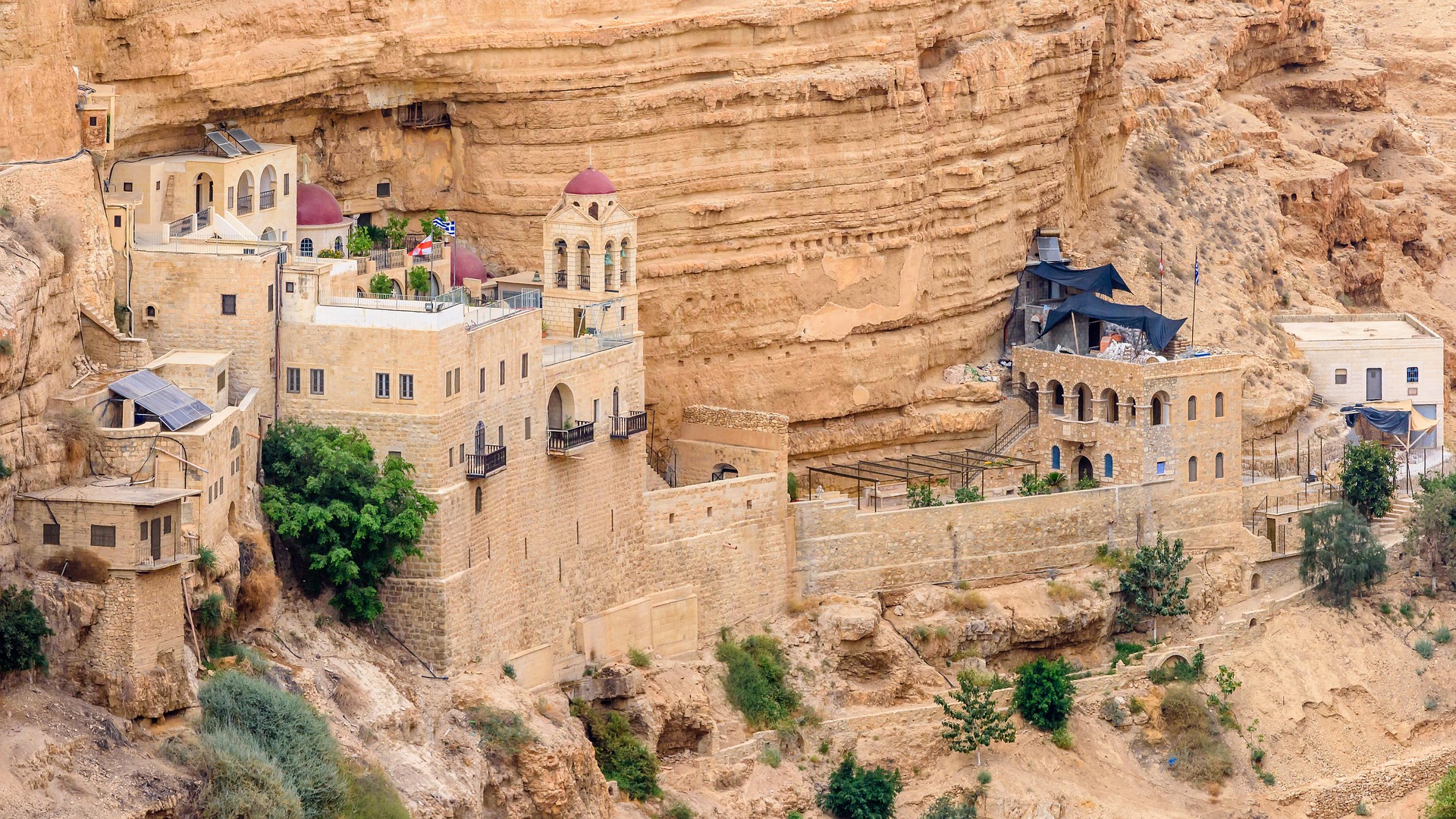
A small community of Greek Orthodox monks, typically two or three, maintains the monastery. Visitors park above and walk down a steep path (roughly 15-20 minutes) with dramatic views of the canyon and the monastery clinging to the cliff below. Inside, the Church of the Virgin Mary, the Church of St. John and St. George with the bone chapel of the 614 CE martyrs, and the cave chapels can be visited during morning hours. Modest dress is required. The walk back up is strenuous, particularly in the desert heat, and water is essential.
Visit with Hoshen Tours
St. George Monastery is one of the most photogenic sites in Israel. Hoshen Tours includes it on hikes through Wadi Qelt and pairs it with the story of the desert monasteries, the ancient monastery of Mar Saba Monastery, and the broader landscapes of the Judean Desert.
Explore Our Tour Collection
Ready to experience Israel in true colors?
Plan Your TourPrivate tours designed around your interests, schedule, and pace.