



The View That Tells the Story
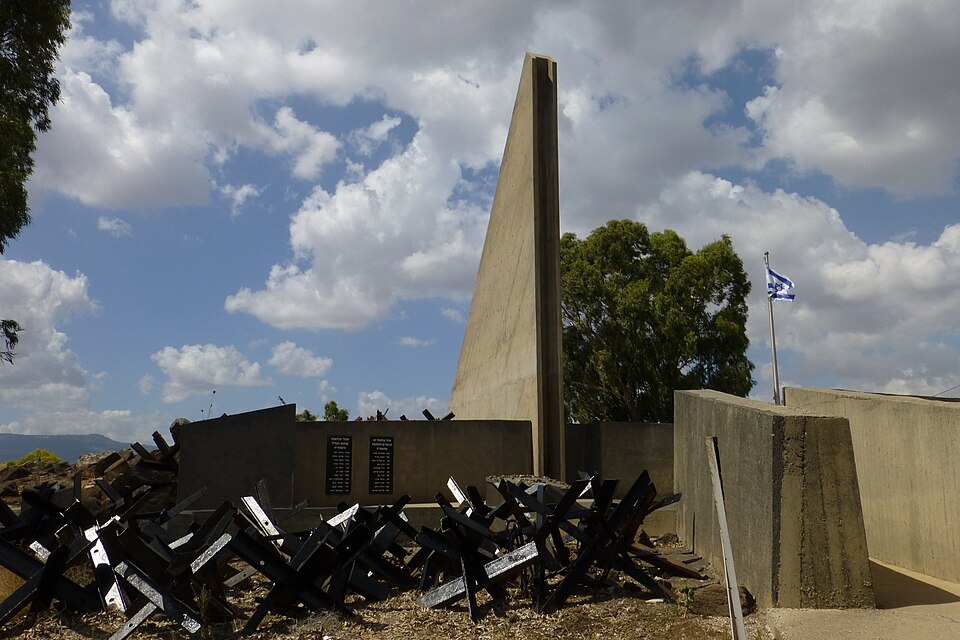 Standing at Mitzpe Gadot on the western edge of the Golan Heights, the strategic reality of the pre-1967 border becomes immediately and viscerally clear. The Golan escarpment rises steeply from the Hula Valley, and from this position, hundreds of meters above the valley floor, every movement below is visible. The farmland, the fishponds, the roads, and the rooftops of the kibbutzim and moshavim spread out like a map. For nineteen years, between 1948 and 1967, Syrian military forces occupied positions along this escarpment and used them to observe and fire upon the Israeli communities in the valley. Mitzpe Gadot, named after Kibbutz Gadot directly below, was one of these fortified positions, and today it stands as a memorial that preserves the story of what life was like on both sides of that border.
Life Under Fire
The communities of the Hula Valley and around the Sea of Galilee lived under the constant shadow of the Syrian positions above them. Shelling could come without warning, targeting farmers working their fields, fishermen on the water, and families in their homes. Kibbutz Gadot, situated directly below the Syrian guns, was among the hardest hit. Over the years, residents were killed and wounded, homes and farm buildings were damaged, and the rhythms of daily life were shaped by the threat from above. Children grew up knowing the fastest route to the bomb shelter. Tractors were fitted with improvised armor. Underground shelters were built into every home and public building. The situation was not constant warfare, but rather an unpredictable pattern of calm interrupted by sudden barrages that could last minutes or hours, creating a state of chronic insecurity that defined an entire generation in these communities.
The psychological toll was enormous. Residents recall the sound of outgoing Syrian shells, the seconds of silence as they arced through the air, and the explosions that followed. Agricultural work in the open fields was particularly dangerous, and certain areas closest to the escarpment could only be farmed during periods of relative quiet. Despite the danger, the communities held on, viewing their presence in the valley as both a personal commitment and a national duty.
The Battle for the Golan
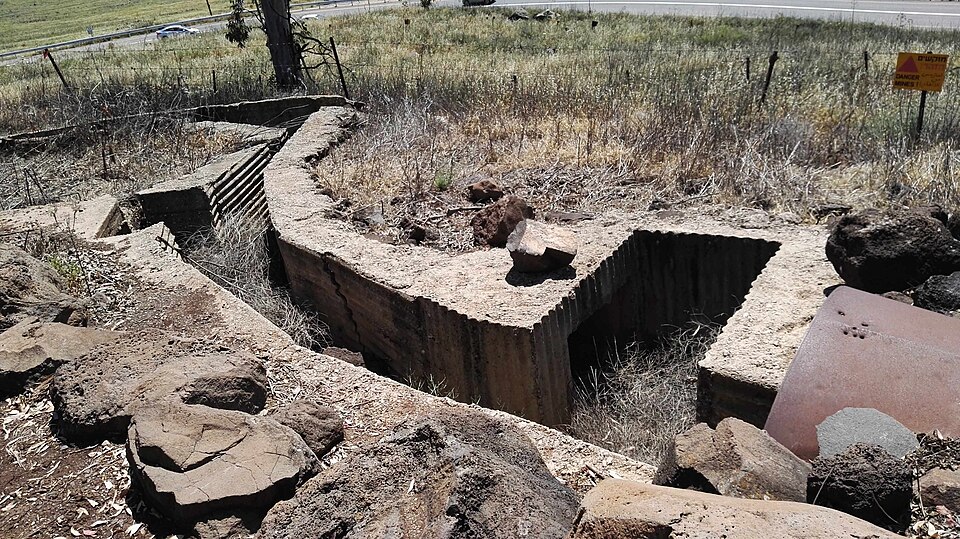 On June 9, 1967, the fifth day of the Six-Day War, Israeli forces launched their assault on the Golan Heights. The Syrian defensive line along the escarpment was heavily fortified over the course of two decades, with concrete bunkers, deep trenches, minefields, barbed wire, and interconnected firing positions designed to repel any attack from below. The fighting was fierce, as Israeli soldiers advanced uphill against well-entrenched defenders who knew every contour of the terrain. The fortifications at Mitzpe Gadot and the surrounding positions were among the objectives that had to be taken in order to secure the heights and end the shelling of the valley below. The capture of the Golan Heights over the course of roughly 24 hours of intense combat brought an end to the fire that had plagued the communities of northern Israel for nearly two decades.
The Memorial Site
Today Mitzpe Gadot has been preserved as a memorial and educational site. Visitors can walk through the original Syrian bunkers and trenches, which have been left largely as they were found after the battle. The concrete observation posts with their narrow firing slits, the connecting trenches, and the underground passages give a tangible sense of the military infrastructure that once lined the entire western edge of the Golan. Memorial plaques at the site honor the soldiers who fought in the battle to capture these positions. Standing in the bunkers and looking out through the same slits that Syrian gunners once used, visitors gain an understanding of both the vulnerability of the valley communities below and the difficulty of the terrain that attacking soldiers had to cross. The contrast between the peaceful valley below and the grim military architecture of the bunkers above makes Mitzpe Gadot one of the most thought-provoking memorial sites on the Golan.
Visiting Mitzpe Gadot
Mitzpe Gadot is located on the western escarpment of the Golan Heights, accessible from Route 91 north of the Sea of Galilee. The site offers one of the most striking panoramic views in northern Israel, stretching across the entire Hula Valley to the mountains of the Upper Galilee, with Mount Hermon visible to the north. The preserved bunkers are open to visitors and can be explored freely. The site is open year-round and is suitable for families, though some of the bunker passages are narrow and dark. A visit to Mitzpe Gadot pairs well with other Golan memorial sites such as Tel Faher and the Valley of Tears, or with the nature reserves and archaeological sites of the surrounding plateau.
Explore Our Tour Collection
Ready to experience Israel in true colors?
Plan Your TourPrivate tours designed around your interests, schedule, and pace.