



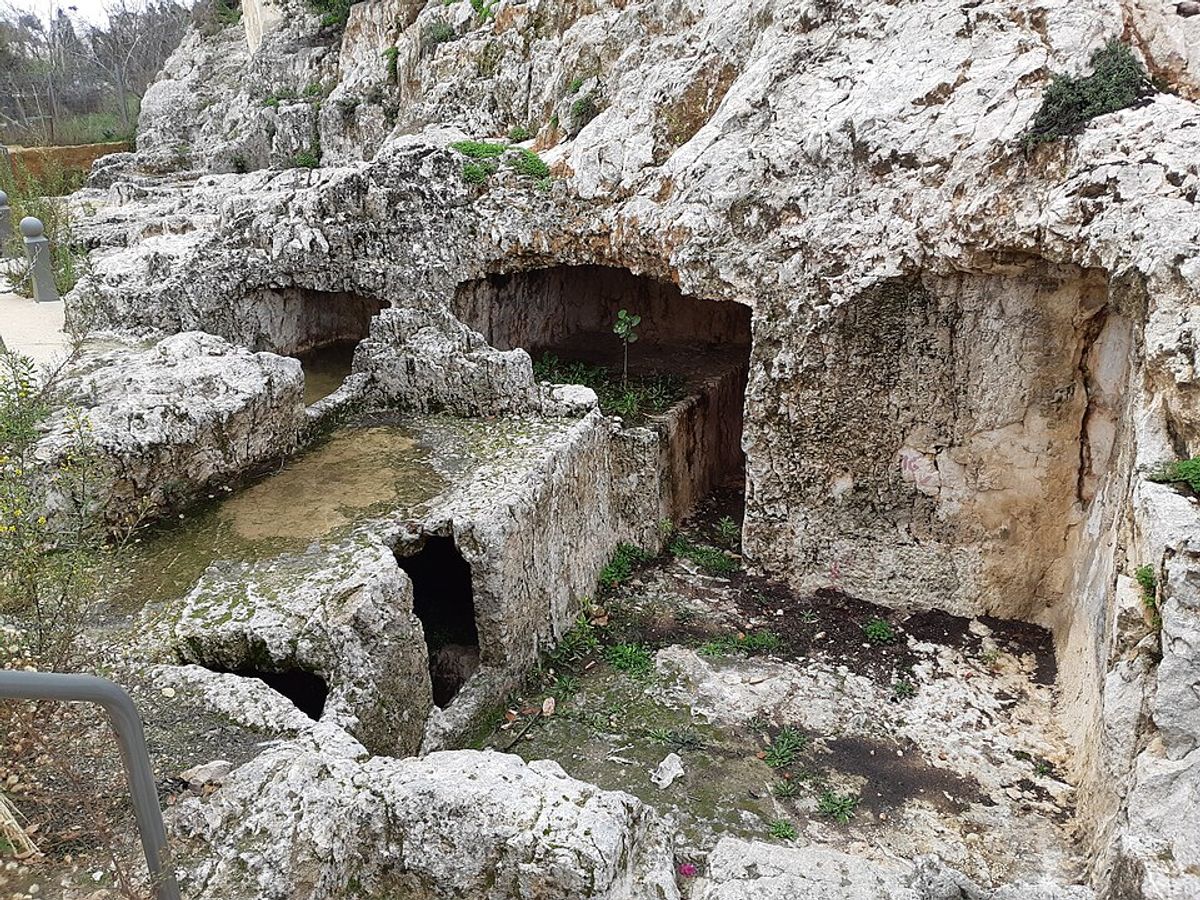
In 1979, on the western slope of the Hinnom Valley, archaeologist Gabriel Barkay discovered what became known as the Ketef Hinnom scrolls. Barkay of Tel Aviv University discovered two tiny silver scrolls in a First Temple, period burial cave. When the scrolls were painstakingly unrolled in the Israel Museum laboratories, they revealed the Priestly Blessing, “The LORD bless you and keep you; the LORD make His face to shine upon you and be gracious to you; the LORD lift up His countenance upon you and give you peace” (Numbers 6:24–26). The scrolls date to the late 7th or early 6th century BCE, making them the oldest biblical text ever discovered, approximately 400 years older than the Dead Sea Scrolls.
The Discovery of the Silver Scrolls
Ketef Hinnom (“the Shoulder of Hinnom”) is an archaeological site on the slope overlooking the valley, below the Scottish Church of St. Andrew’s. Barkay excavated a series of rock-cut burial caves from the late First Temple period. In Cave 24, beneath rubble that had concealed a repository chamber from looters ancient and modern, a 13-year-old volunteer named Nathan Sass broke through to a treasure cache. Among the items were two tightly rolled silver amulets, designated KH1 and KH2, tiny enough to be worn around the neck.
The Silver Amulets
The larger scroll (KH1) measures just 27 by 97 millimeters; the smaller (KH2) is only 11 by 39 millimeters. Unrolling the corroded, brittle silver was a painstaking process that took three years. Initial readings were published in the 1980s, and in 2004 a team using advanced imaging technology from NASA’s Jet Propulsion Laboratory produced enhanced readings that confirmed and expanded the text.
Both scrolls contain versions of the Priestly Blessing from Numbers 6:24–26, the same blessing that Jewish parents recite over their children every Friday evening, that priests chanted in the Temple, and that is spoken in synagogues around the world to this day. The larger scroll also contains phrases echoing Deuteronomy 7:9. Both include the Tetragrammaton, the four-letter divine name YHWH, multiple times, making them the oldest known texts bearing the name of God.
Oldest Biblical Text Ever Found
The Ketef Hinnom scrolls demonstrate that the Priestly Blessing was already in use and recognized as authoritative scripture during the First Temple period, before the Babylonian destruction of Jerusalem in 586 BCE. They push the documented history of the biblical text back centuries before any other surviving copy. The Dead Sea Scrolls, revolutionary as they were, date to the 3rd, 1st centuries BCE. The Ketef Hinnom amulets are older by approximately 400 years.
The scrolls are on permanent display at the Israel Museum in Jerusalem.
The Burial Caves
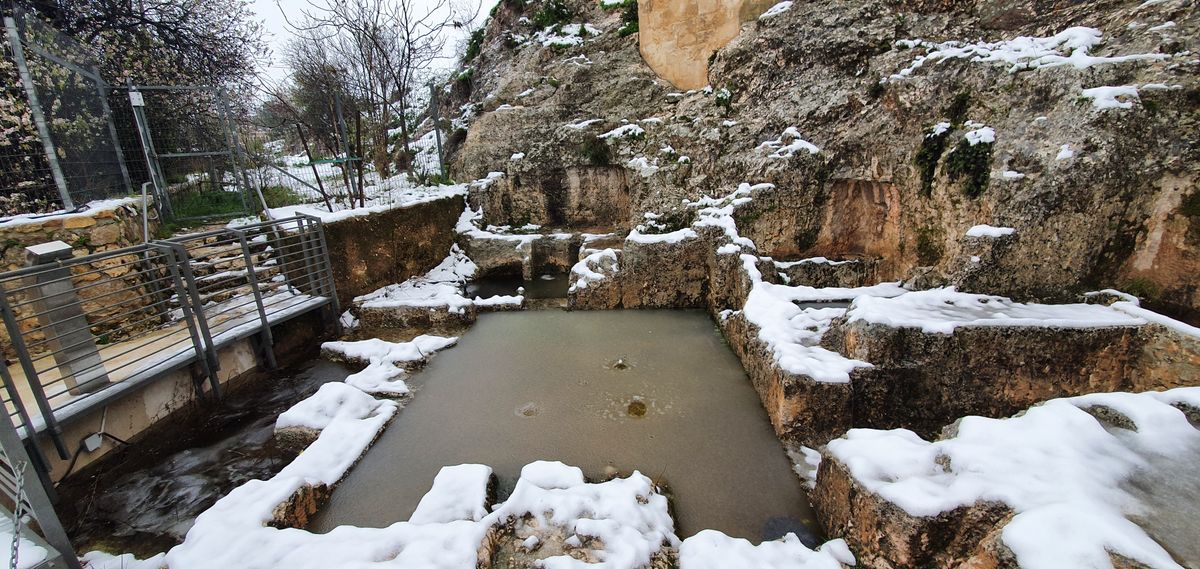
The caves at Ketef Hinnom contained pottery, jewelry, arrowheads, and other artifacts from the 7th, 6th centuries BCE, painting a picture of a prosperous Jerusalem community in the final decades before the Babylonian exile. The tombs were family burial caves of the type common among Jerusalem’s elite in the late First Temple period, with carved benches for laying out the dead and repository chambers beneath for collecting bones after the flesh had decayed.
Visit with Hoshen Tours
Ketef Hinnom is where archaeologists discovered the oldest known biblical text, the Priestly Blessing inscribed on tiny silver scrolls dating to the 7th century BCE. Hoshen Tours visits the burial caves on the shoulder of the Valley of Hinnom, connecting this extraordinary find to the broader story of biblical Jerusalem. The site overlooks Mishkenot Sha’ananim across the valley and sits near the First Station complex, with the Mount Zion sites just above.
Explore Our Tour Collection
Ready to experience Israel in true colors?
Plan Your TourPrivate tours designed around your interests, schedule, and pace.