



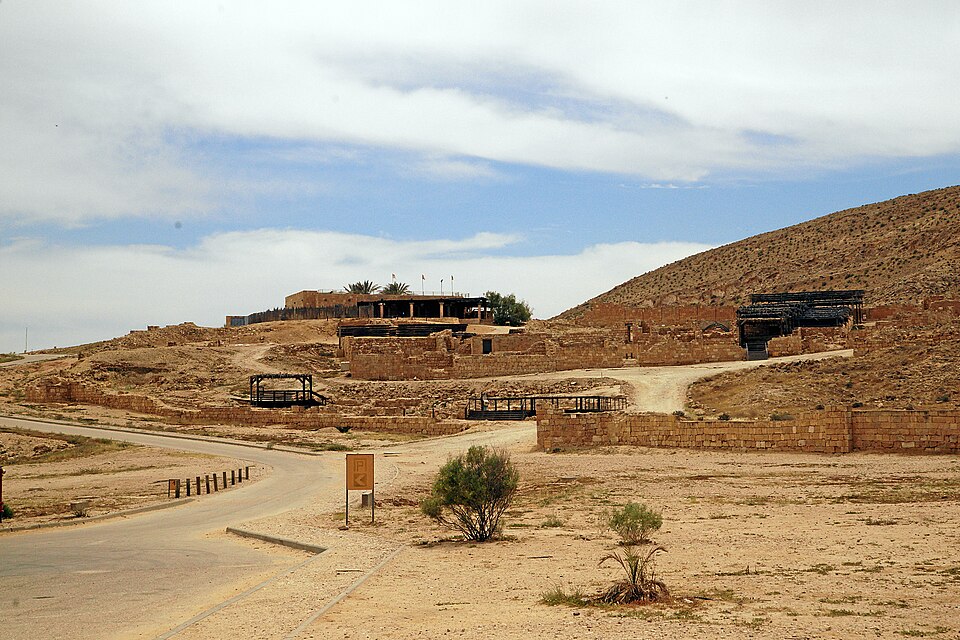
Mamshit (Mampsis) is the best-preserved Nabatean city in the Negev, a compact, walled town on the Incense Route that has been excavated to reveal an almost complete urban plan. Unlike Avdat, which is dramatic in its hilltop setting, Mamshit is intimate and detailed, the kind of place where you can walk the streets, enter the houses, and understand how a Nabatean family lived. In 2005, Mamshit was inscribed as a UNESCO World Heritage Site as part of the Incense Route series, recognizing the Negev cities that once facilitated the trade in frankincense and myrrh from Arabia to the Mediterranean.
The Nabatean City of Mamshit
Mamshit was the easternmost of the Negev Nabatean cities, closer to the Dead Sea than to the Mediterranean, and it served as a major station on the route from Petra to Gaza. The city is relatively small but densely built, with stone houses, stables, public buildings, and two churches from the later Byzantine period. The walls that surround the city are well preserved, and the main gate, with its towers and guardrooms, gives a clear sense of the city’s defenses. Mamshit was also an important horse-breeding center. The large stables found in the excavations could accommodate dozens of horses, and the Nabateans here were known for supplying riding and pack animals to caravans passing through the desert.
Wealthy Houses With Frescoes
The Nabatean houses at Mamshit are the best preserved in the Negev. Two large residential buildings dominate the site, with multiple rooms arranged around central courtyards, painted frescoes on the walls, and stone staircases leading to upper floors that are no longer standing but whose layout can be inferred from the staircase placement. The wall paintings include geometric designs, floral patterns, and Nabatean-style motifs that reveal the artistic sophistication and cultural connections of the merchants who lived here. The frescoes, applied to plastered interior walls, used mineral-based pigments in reds, yellows, and blacks, and their survival in the dry desert air makes Mamshit one of the few places where Nabatean domestic art can still be seen in situ. One house contained a hoard of 10,421 silver coins dating to the late 3rd century CE, the largest coin hoard ever found in Israel, suggesting both the wealth that passed through this desert town and the sudden crisis that prevented its owner from retrieving it.
Byzantine Churches and Mosaics
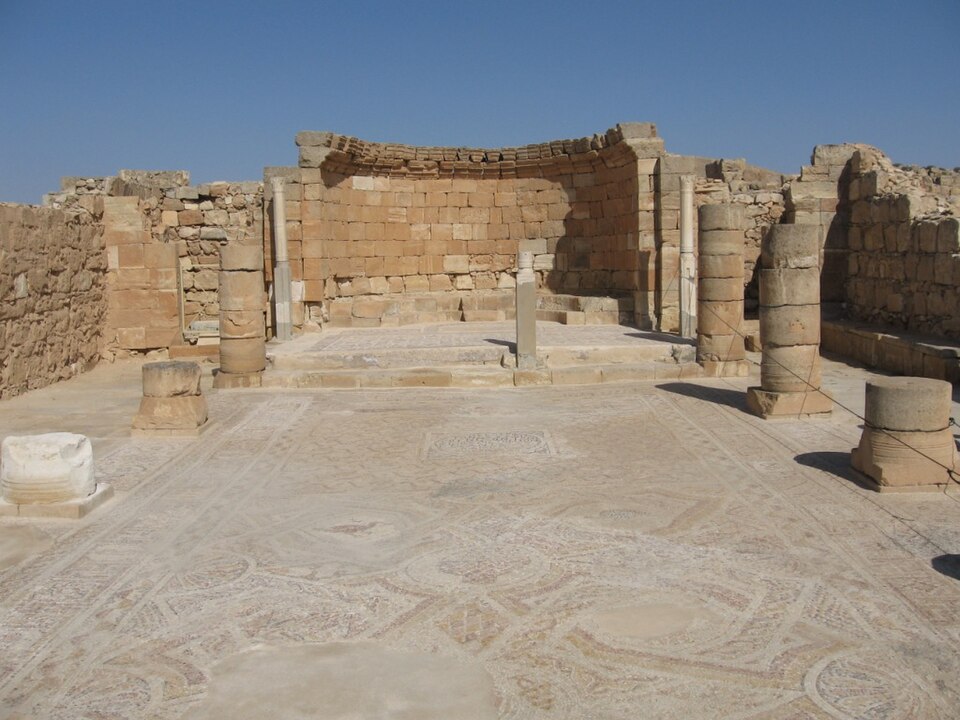
In the Byzantine period, after the Nabatean kingdom was absorbed by Rome, Mamshit continued to thrive. Two large churches were built, both with colorful mosaic floors and well-preserved baptismal fonts. The East Church’s mosaic floor features geometric patterns and crosses, making it one of the finest in the Negev. The West Church is smaller but equally well preserved, with intact mosaic panels that depict birds and vegetation. Together, the two churches indicate that Mamshit remained a prosperous Christian community well into the 6th century.
The Nabatean Dam and Water System
Like all Negev cities, Mamshit depended on ingenious water management. A large dam built across Nahal Mamshit collected floodwater during the rare desert rains, channeling it through a network of plastered channels into reservoirs within the city walls. The dam, still visible outside the city, is one of the best-preserved Nabatean hydraulic structures in the Negev. Additional cisterns carved beneath the houses stored water for household use, and overflow channels directed surplus runoff to agricultural terraces in the surrounding wadis. The sophistication of the system is remarkable: the Nabateans calculated water flow, channel gradients, and storage volumes to sustain a permanent population on less than 100 millimeters of annual rainfall. This ability to harvest every drop of rain was the foundation of Nabatean settlement in the desert, and Mamshit’s water infrastructure remains one of the clearest examples of how they turned one of the driest landscapes on earth into a habitable urban center.
At the entrance to the site, a restored British Mandate-era police station from the 1930s now serves as a visitor center. The building, a fortified post designed to control Bedouin movement in the Negev, adds another historical layer to a site that has been a crossroads for over 2,000 years.
Visit with Hoshen Tours
Mamshit is where the Nabatean story becomes personal. Hoshen Tours walks the streets and houses to show how people lived in the desert, from the Nabatean merchants who grew rich on incense to the Byzantine Christians who built churches on their ruins. Hoshen Tours often combines this site with Red Canyon, Mitzpe Ramon, and Ein Avdat for a memorable day exploring the region.
Explore Our Tour Collection
Ready to experience Israel in true colors?
Plan Your TourPrivate tours designed around your interests, schedule, and pace.