



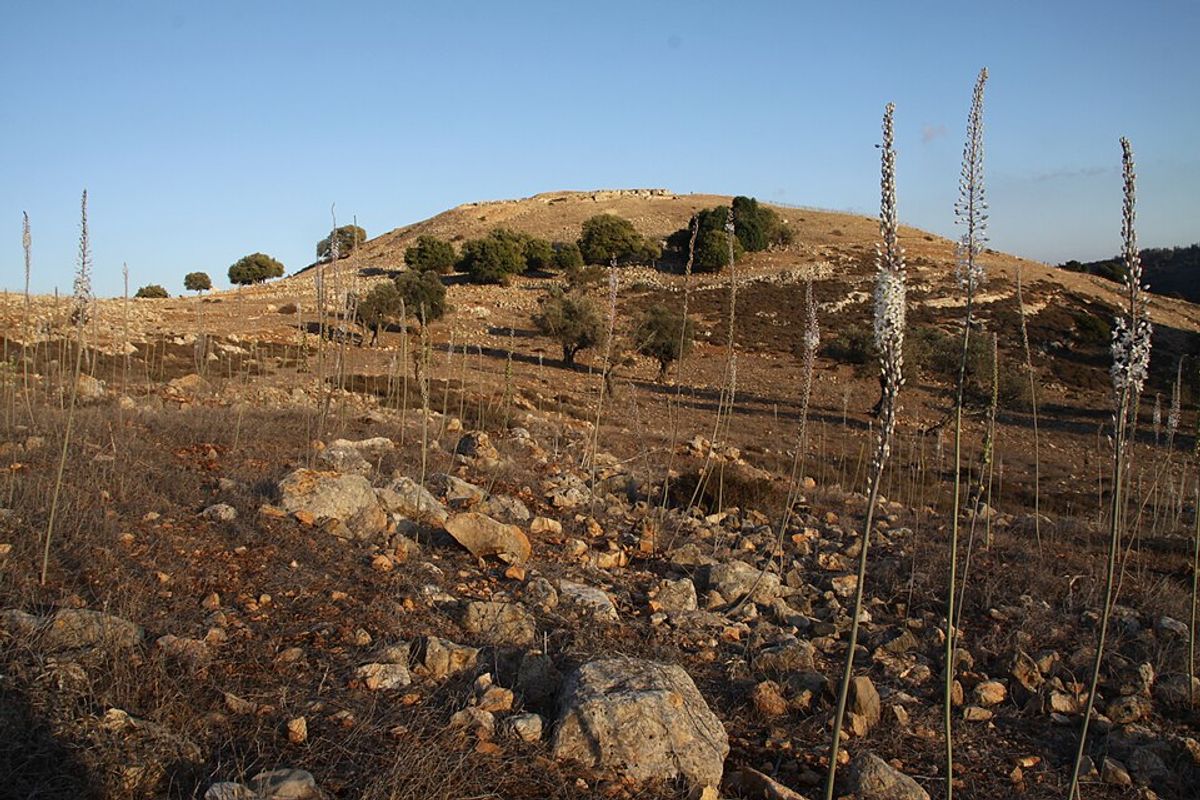
Yodfat (Jotapata) is the Galilean hilltop where the Great Revolt against Rome began in earnest, and where the man who would become the most important historian of the ancient Jewish world made the choice that saved his life and haunts his reputation to this day. The 47-day siege of Yodfat in 67 CE was the first major battle of the revolt, and its fall opened the road to Jerusalem. To stand on this hilltop is to stand at the exact place where Jewish history fractured, where a man chose survival over solidarity, and where that choice, centuries later, gave the world its most detailed account of its own catastrophe.
Joseph ben Matityahu
The commander of Yodfat was Yosef ben Matityahu, a young Jewish priest from a distinguished Jerusalem family, appointed by the revolutionary government as military commander of the Galilee. He was intelligent, educated, and politically connected, but he was not a professional soldier. When the Roman general Vespasian marched into the Galilee with approximately 60,000 troops, three legions plus auxiliary forces, Josephus had to choose where to make his stand. He chose Yodfat, a fortified town on a steep hilltop in the Lower Galilee, surrounded by ravines on three sides. Josephus understood the terrain. The site was almost impregnable from the north, east, and west, with cliffs falling away on multiple sides. Only a sustained assault from the south, where the slope was gentler, offered the Romans any real hope of a breach. He reinforced the walls, stockpiled food and water, and prepared to hold as long as possible, knowing that every day the Galilean stronghold held out was a day the rest of the revolt could organize.
The Great Revolt: 66 CE
In 66 CE, tensions between the Jewish population of Judea and Roman rule erupted into open revolt. The procurator Florus seized silver from the Temple treasury, triggering riots. Jewish rebels seized the Temple Mount and expelled the Roman garrison. The revolutionary government that formed in the aftermath appointed military commanders for each region. Yosef ben Matityahu was given command of the Galilee. He had seen Rome. He understood that three legions and a professional army of 60,000 soldiers were not something Galilean militia fighters could defeat in open battle. What they could do was hold fortified positions and force the Romans to pay in time and blood for every inch of ground.
The 47-Day Siege of Yodfat
Vespasian expected a quick victory. He got 47 days of fierce resistance. Josephus and his defenders used every advantage the terrain offered: they poured boiling oil on Roman soldiers scaling the walls, greased the wooden siege ramps with fat so the attackers slipped and fell, raised the walls higher at night using screens of ox hides to protect the builders from arrows, and launched daring sorties against the Roman siege works. The Romans responded with a massive earthen ramp, artillery batteries of ballista and catapults, and a relentless tightening of the siege ring.
Vespasian himself was present on the front lines and was reportedly struck in the foot by a javelin. His son Titus, who would later destroy Jerusalem, was also at Yodfat. The Romans brought 160 artillery pieces to bear on the walls. Josephus records that one stone took the head off a man standing beside him. The defenders ran short of water and began slaughtering their animals to conserve resources.
The Fall
The end came through betrayal. A deserter revealed to Vespasian that the garrison was exhausted and that the guards fell asleep in the final watch before dawn. In the pre-dawn darkness of the 47th day, Roman soldiers crept up the ramp, silenced the sleeping sentries, and poured into the city. The massacre that followed was total. Josephus reports that 40,000 people were killed, a number that is almost certainly exaggerated, as the population of the entire town was unlikely to have reached that figure, but the scale of the slaughter was catastrophic by any measure. An additional 1,200 women and children were taken alive and enslaved, marched out of the smoking ruins of a town that had held Rome at bay for nearly seven weeks.
The archaeological evidence confirms a catastrophic destruction: arrowheads, sling stones, and ballista balls litter the site, and a thick layer of ash marks the end of the town.
Josephus and the Cave of the Suicide Pact
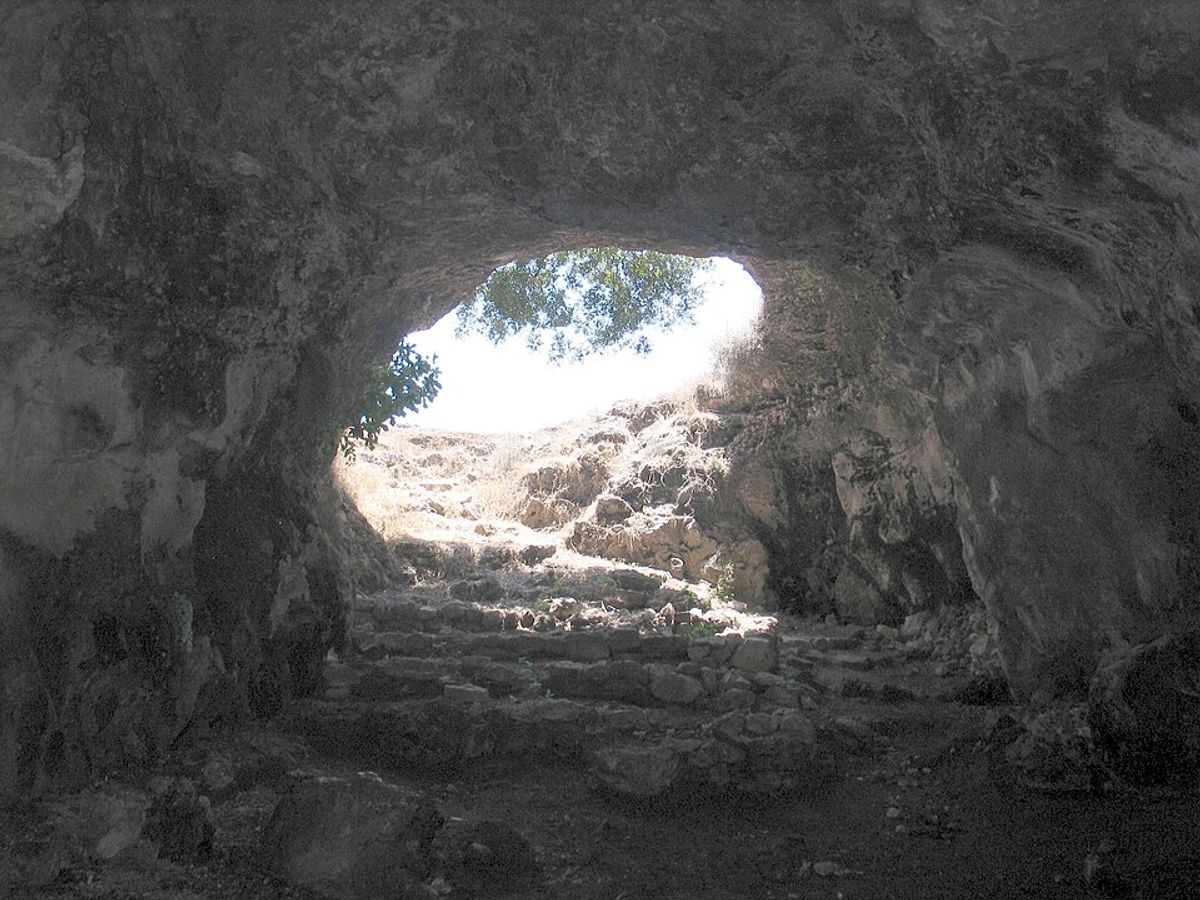
Josephus and 40 fighters escaped the slaughter and hid in a cave beneath the city. When the Romans discovered them three days later and offered terms, Josephus wanted to surrender. His companions refused. They would rather die than become Roman slaves. Josephus argued that suicide was a sin against God, that life was a gift that only God could take, and that fighting to the last breath was one thing but taking one’s own life was another. His men would not hear it. They agreed on a system: they would draw lots, and each man would kill the man beside him, not suicide, but execution by a comrade’s hand, one after another, until none remained.
The lots were drawn. One by one, the men killed the man beside them. By what Josephus later described as “divine providence”, and what every historian since has suspected was deliberate manipulation of the count. Josephus and one other man were the last two left alive. Josephus convinced his companion to abandon the pact. They surrendered to the Romans together. A later Slavonic version of his own text contains a damning line: “He counted the numbers with cunning and thereby misled them all.” The cave where this took place has been identified by Aviam’s team at the site. It is a real place, cut into the limestone of the Galilean hillside, where the most consequential survival decision in Jewish history was made.
Josephus’s Prophecy to Vespasian
Brought before Vespasian in chains, Josephus played his final card. He told the Roman general that God had sent him with a message: Vespasian would become emperor of Rome. It was an audacious gamble, since Vespasian was a general and Nero still reigned. Vespasian chose not to execute him. Two years later, in 69 CE, after Nero’s death and the chaos of the Year of the Four Emperors, Vespasian was indeed proclaimed emperor by his legions. The prophecy had come true. Josephus was freed, adopted the Flavian family name, and spent the rest of his life in Rome. He witnessed the destruction of Jerusalem in 70 CE from the Roman side of the lines, watched Titus burn the Temple, and then sat down and wrote.
Historian’s Legacy
Without Josephus, we would know almost nothing about the Jewish revolt, the fall of Jerusalem, the siege of Masada, or the daily life of 1st-century Judea. His two great works, The Jewish War and Antiquities of the Jews, are among the most important historical texts of the ancient world. The Jewish War, written first in Aramaic for a Jewish audience and then translated into Greek for the Roman world, is an eyewitness account of the most catastrophic event in Jewish history. Antiquities of the Jews runs to twenty volumes and covers the entire sweep of Jewish history from creation to the eve of the revolt. It is our primary source for the period of the Second Temple, for the world in which Jesus lived, for the politics of the Hasmonean dynasty, and for the reigns of Herod the Great and his sons.
But the man who wrote these works was a traitor to his own people, and the cave at Yodfat is where that betrayal began. Hero, traitor, pragmatic survivor, or instrument of divine providence? His books are indispensable. His conduct at Yodfat is unforgivable. He is, somehow, both.
The Archaeological Site
The hilltop preserves the ruins of the Jewish town, sections of the Roman circumvallation wall (the siege ring built to prevent escape), and the cliff where defenders reportedly threw themselves rather than be captured. Excavations led by Mordechai Aviam uncovered residential buildings, ritual baths, pottery, coins, and abundant evidence of the Roman assault, including hundreds of iron arrowheads, bronze ballista balls, and the remains of the Roman earthen ramp. The cave associated with Josephus’s last stand was identified in a rocky area beneath the main settlement. The site is undeveloped, with no visitor center or paved path, which is part of what makes it extraordinary.
The Landscape of the Western Lower Galilee
Yodfat sits in the western Lower Galilee, in the hill country north of the Beit Netofa Valley. The hills are covered in olive groves, wild oak, and limestone terracing that marks two thousand years of cultivation. From the summit, the view extends south across the valley to the Nazareth ridge, west toward the Carmel, and north into the upper Galilee. This is the landscape that Josephus knew as a commander, the same hills and sightlines that governed his decisions about where to make his stand.
Visit with Hoshen Tours
Yodfat is where the story of Josephus begins. Hoshen Tours hikes to the hilltop to tell the story of the revolt, the siege, the cave, and the historian who switched sides and gave us our past. The site combines with Nazareth and the Zippori mosaics for a day in the Galilean landscape that Josephus once commanded.
Visitors exploring the Galilee often combine Yodfat with nearby destinations such as Zippori, Ilaniya-Sejera, and Beit Rimon, each offering its own distinctive perspective on the region’s layered history and landscape. A broader itinerary might also include Mount Tabor and Nazareth, both within easy reach and rich in their own right.
Every Hoshen Tours itinerary is private and fully customizable. Contact us to begin planning your journey through the Galilee.
Explore Our Tour Collection
Ready to experience Israel in true colors?
Plan Your TourPrivate tours designed around your interests, schedule, and pace.