



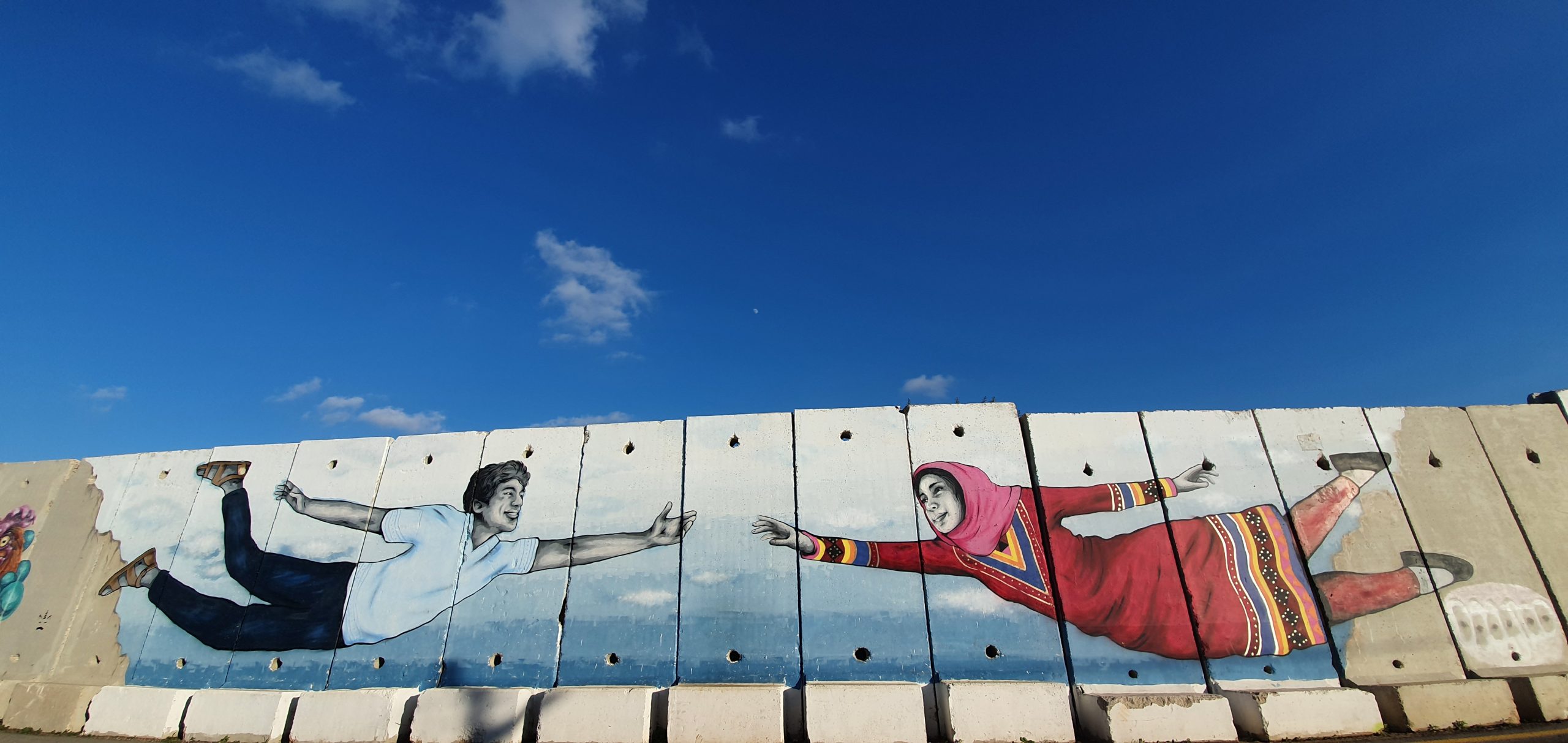
Shtula is a small moshav on Israel’s northern border with Lebanon, and its most remarkable feature is the Talking Walls (Kirot Medabrim), an open-air art and narrative installation that turns the walls, fences, and structures of the border community into a storytelling experience. Created by local residents, the installation uses text, images, audio, and sculptural elements mounted on the walls of the moshav to tell the story of life on Israel’s most sensitive border.
Walking Through the Talking Walls
Visitors walk through the moshav following a marked route, stopping at stations where walls literally “talk”: recorded voices tell personal stories, photographs show moments from the community’s history, and text panels describe life in a place where Lebanon is visible from every window. The stories cover the founding of the moshav, the security situation, the evacuations during wartime, the relationship with the border, and the daily life of people who have chosen to live in one of the most exposed locations in Israel. Some stations feature the voices of children who grew up in Shtula, describing what it was like to play in a yard that overlooked a hostile border, while others feature older residents recalling the early years of the community and the sense of purpose that kept them there.
Art on the Lebanese Border
Shtula sits directly on the border fence, and the Lebanese village of Adeisseh is visible across the valley. The border here has been tense for decades, through the South Lebanon War, Hezbollah rocket attacks, and the ongoing security situation. The Talking Walls installation does not avoid the tension; it incorporates it, using the physical border as both backdrop and subject. One station overlooks the border fence itself, and the view into Lebanon is part of the narrative. The art pieces range from painted murals to sculptural works made from reclaimed materials, and each piece reflects some aspect of border life. The combination of personal testimony and visual art gives the installation an emotional depth that conventional museums rarely achieve.
The Moshav of Shtula on the Border
Shtula was founded in 1969 as a Nahal military outpost that later became a civilian moshav. The community has never been large, typically numbering a few dozen families, but its residents have remained through decades of conflict. The moshav was evacuated during the 2006 Second Lebanon War and again during the 2023-2024 conflict, when residents of northern border communities were relocated south. Each time, the community returned. The Talking Walls project grew from this experience of repeated displacement and return, and it serves as both a historical record and a statement of determination to stay.
Visit with Hoshen Tours
The Talking Walls of Shtula is one of the most original experiences in the north, and one of the few places in Israel where art and security converge so directly. Hoshen Tours visits the installation to hear the stories of a community living on the edge, where art has become a way of processing decades of tension and resilience. The site connects well with nearby destinations including Metula and the landscapes of the upper Galilee.
Visitors exploring the upper Galilee often combine Talking Walls of Shtula with nearby destinations such as Montfort Castle, Har Adir, and Ikrit and Biram, each offering its own distinctive perspective on the region’s layered history and landscape. A broader itinerary might also include Gush Halav and Rosh Pina, both within easy reach and rich in their own right.
Every Hoshen Tours itinerary is private and fully customizable. Contact us to begin planning your journey through the upper Galilee.
Explore Our Tour Collection
Ready to experience Israel in true colors?
Plan Your TourPrivate tours designed around your interests, schedule, and pace.