



Gei Ben Hinnom, the Valley of the Son of Hinnom, curves along the south and west of Jerusalem’s Old City, a deep ravine that gave the world its word for hell. This is where Canaanite and Israelite kings burned children alive as offerings to the god Molech. This is where the prophet Jeremiah stood and pronounced judgment so terrible that the valley’s name entered three religions as the name of eternal damnation: Gehenna in Judaism and Christianity, Jahannam in Islam. And this is where, on the valley’s slopes, archaeologists found the oldest biblical text ever discovered.
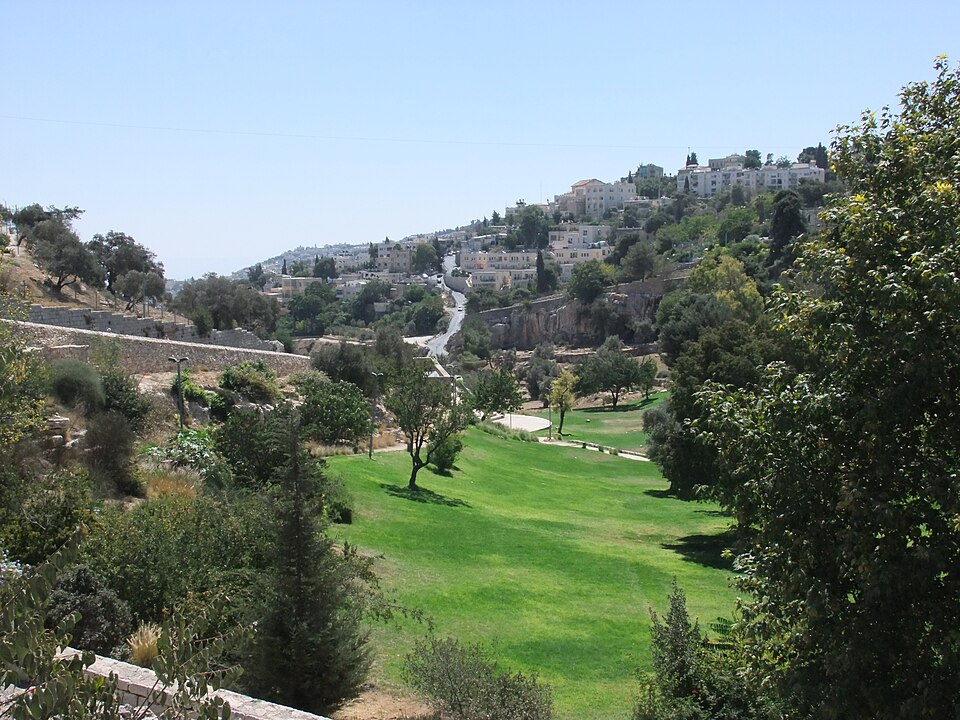
The Geography of the Hinnom Valley Jerusalem
The valley begins west of the Old City near the Jaffa Gate, curves southward below Mount Zion, and bends east along the southern edge of the City of David until it meets the Kidron Valley at Jerusalem’s southeastern corner. A third valley, the Tyropoeon (the Central Valley), converges at the same junction. Together, these three ravines defined the topography of ancient Jerusalem and determined where the city could and could not expand. The Arabic name for the Hinnom Valley is Wadi er-Rababi.
Molech and the Topheth
At the eastern end of the valley, near the junction with the Kidron, stood the Topheth, the site where children were “passed through the fire” as offerings to Molech. The word Topheth may derive from the Hebrew tof (drum), the tradition being that drums were beaten to drown out the screams. The cult had Canaanite and Phoenician origins, and at least two kings of Judah participated in it.
King Ahaz “burned his sons in the fire, according to the abominations of the nations” (2 Chronicles 28:3). King Manasseh, whose reign is described as the most idolatrous in Judah’s history, did the same: “He burned his sons as an offering in the Valley of the Son of Hinnom” (2 Chronicles 33:6). The prophet Jeremiah was sent to stand in the valley and deliver one of the most devastating oracles in scripture: “They have built the high places of Topheth, which is in the Valley of the Son of Hinnom, to burn their sons and their daughters in the fire, which I did not command, nor did it come into my mind. Therefore the days are coming when it will no more be called Topheth, or the Valley of the Son of Hinnom, but the Valley of Slaughter” (Jeremiah 7:31–32).
King Josiah, in the great religious reform of 622 BCE, “defiled Topheth, which is in the Valley of the Son of Hinnom, that no one might burn his son or his daughter as an offering to Molech” (2 Kings 23:10). He rendered the site ritually impure so that it could never again be used for worship. The valley that had been a place of sacrifice became a place of defilement, cursed by the prophets, polluted by the king, and abandoned to the dead.
From Valley to Hell
The transformation of a physical valley into a theological concept happened gradually. By the Second Temple period, Gei Hinnom had become a metaphor for divine punishment after death. The associations were inescapable: a place of burning children, cursed by God through His prophets, desecrated and abandoned. In rabbinic literature, Gehenna is discussed as a place of post-mortem purification, the Talmud debates whether the punishment is temporary (typically twelve months) or eternal for the truly wicked.
Jesus used the word Gehenna repeatedly in the Gospels when speaking of ultimate judgment: “It is better for you to enter life maimed than with two hands to go into Gehenna, where the fire never goes out” (Mark 9:43). The word is translated as “hell” in most English Bibles, but every time it appears, it is the name of this valley. In Islam, the Arabic Jahannam derived directly from the Hebrew Gei Hinnom, is the primary Quranic term for hell, mentioned dozens of times. Three world religions took the name of a valley in Jerusalem and made it the word for eternal damnation.
Burial, Blood, and Silver
The slopes of the Hinnom Valley are riddled with rock-cut burial caves from the First Temple period (8th, 7th centuries BCE) through the Second Temple period and into the Byzantine era. The most significant of these are the tombs at Ketef Hinnom (“the Shoulder of Hinnom”) on the western slope, where in 1979 archaeologist Gabriel Barkay discovered two tiny silver amulets bearing the Priestly Blessing, the oldest biblical text ever found, predating the Dead Sea Scrolls by some 400 years.
On the southern slope of the valley, near its junction with the Kidron, tradition locates Akeldama, the Field of Blood. According to Matthew 27, the chief priests used the thirty pieces of silver returned by Judas to buy a potter’s field as a burial place for foreigners, calling it the Field of Blood because it was purchased with blood money. Acts 1:18–19 gives a different account: Judas himself bought the field and died there in a gruesome manner. The area’s distinctive reddish clay soil, historically used by potters, supports the “potter’s field” identification. A Crusader-era charnel house still stands at the site, and the Greek Orthodox Monastery of St. Onuphrius is built into the cliff face among ancient burial caves.
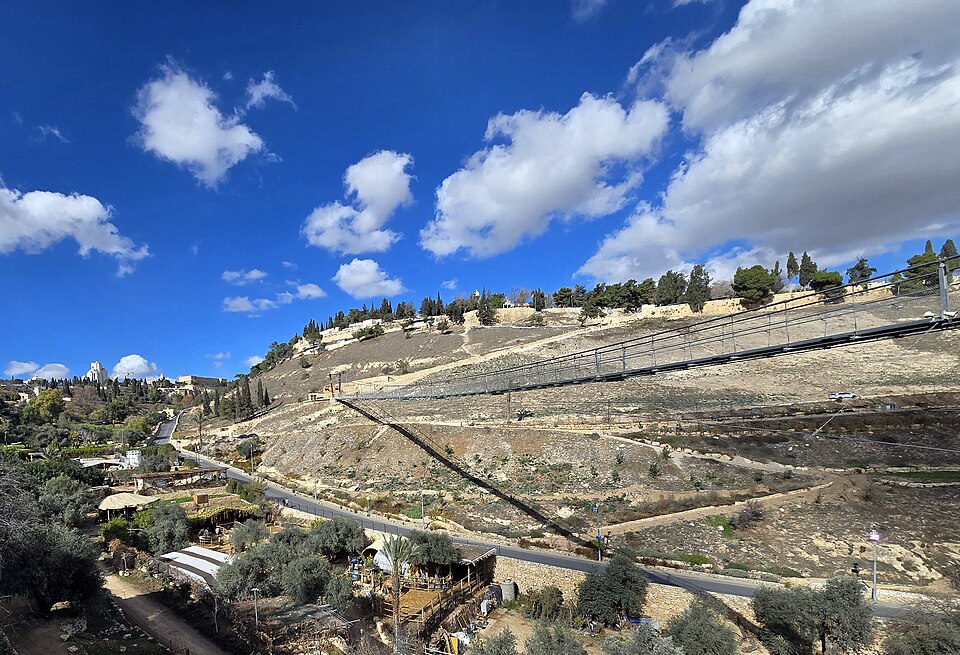
In recent years, a controversial plan has been advanced to build a cable car across the Hinnom Valley, connecting western Jerusalem to the Old City near the Western Wall. Proponents argue it will ease access for visitors; opponents, including archaeologists, architects, and UNESCO advisors, argue that it will visually scar one of the most historically sensitive landscapes on earth. The debate continues.
The Valley Today
Today the Hinnom Valley is a landscape of parks, walking trails, and cultural institutions. Sultan’s Pool, a dry Ottoman-era reservoir in the upper valley, serves as an outdoor concert venue beneath the Old City walls. The Jerusalem Cinematheque occupies the northern slope with its views of Mount Zion. The Menachem Begin Heritage Center is built into the hillside nearby. A walking trail runs the full length of the valley from Sultan’s Pool to the Kidron junction, passing through layers of history that stretch from child sacrifice to cable cars.
On the southern slope of the valley, at a site known as Ketef Hinnom, archaeologists discovered the oldest known biblical text — two tiny silver scrolls inscribed with the Priestly Blessing from the Book of Numbers, dating to the late seventh or early sixth century BCE.
Visit with Hoshen Tours
Gei Ben Hinnom, the valley that gave its name to Gehenna, wraps around Mount Zion and the southern edge of the Old City. Hoshen Tours traces the valley’s layers from child sacrifice to the concept of hell, often combining the walk with a visit to the Ketef Hinnom archaeological site on the valley’s shoulder. The route connects naturally to Mount Zion above and the Haas Promenade viewpoint to the south, with the Mishkenot Sha’ananim neighborhood overlooking the valley from the west.
Explore Our Tour Collection
Ready to experience Israel in true colors?
Plan Your TourPrivate tours designed around your interests, schedule, and pace.