



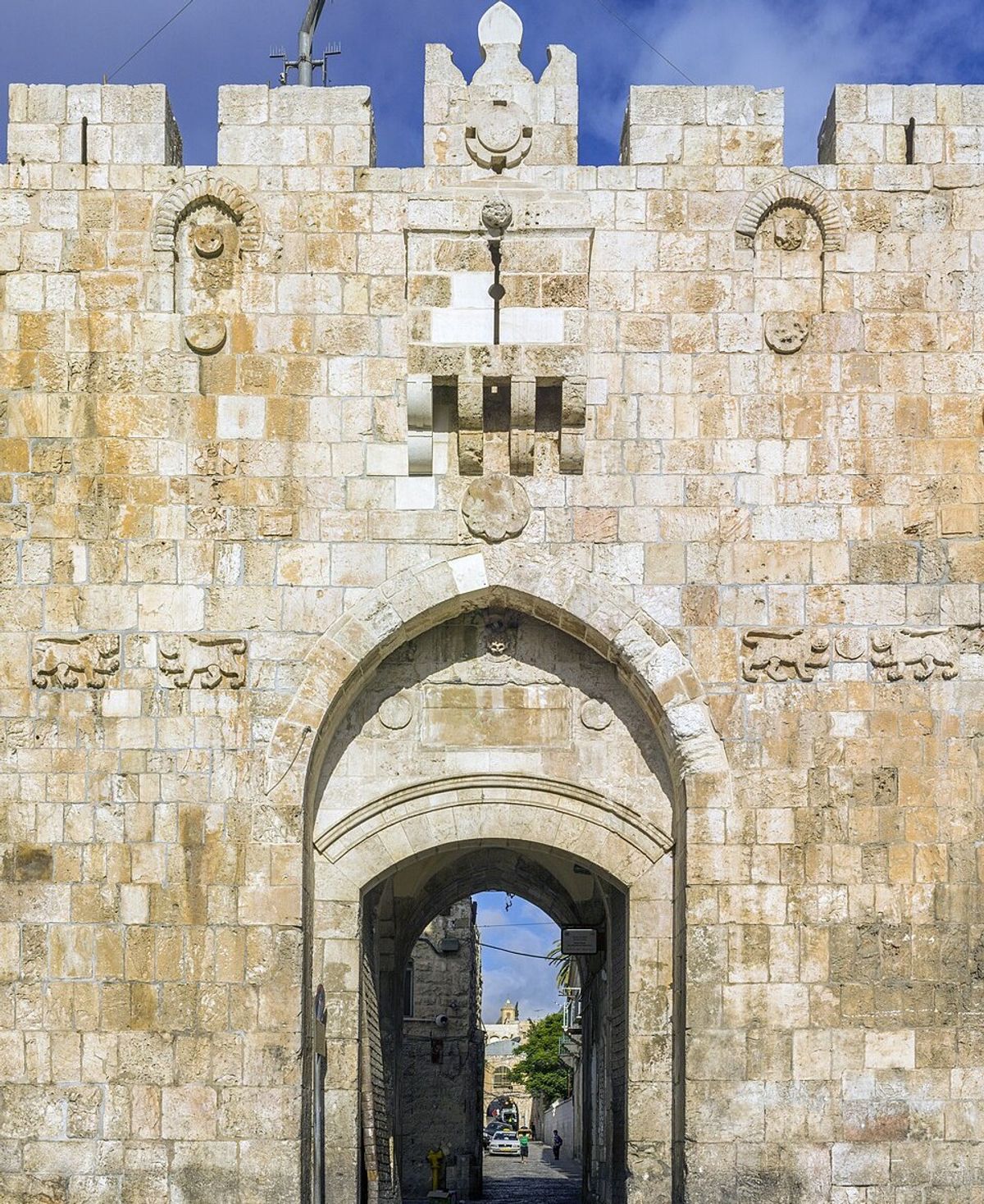
The Lions’ Gate (also called St. Stephen’s Gate or the Sheep Gate) is the eastern entrance to the Old City, facing the Mount of Olives across the Kidron Valley. The gate takes its name from the four carved lions (actually leopards, the heraldic symbol of the Mamluk Sultan Baybars) that adorn its facade. But its modern fame comes from a single day: June 7, 1967, when Israeli paratroopers charged through this gate to capture the Old City during the Six-Day War.
The Six-Day War at Lions’ Gate
On the morning of June 7, 1967, the 55th Paratroopers Brigade, commanded by Colonel Motta Gur, fought their way through the streets outside the Old City walls and reached the Lions’ Gate. Gur’s radio message, “The Temple Mount is in our hands” (Har HaBayit BeYadeinu), became one of the most famous phrases in Israeli history. A Jordanian bus had been placed across the gate as a barricade, and the paratroopers had to push past it under fire. An Israeli Sherman tank managed to squeeze through the narrow gate, becoming the first armored vehicle to enter the Old City. The paratroopers streamed through the gate and reached the Western Wall, which Jews had been unable to visit for 19 years since Jordan captured the Old City in 1948. The photograph of three paratroopers standing at the Wall, looking up with expressions of awe and exhaustion, became the iconic image of the war. Today, the plaza outside the Lions’ Gate bears the name of the 55th Brigade, and the route from the gate to the Western Wall is retraced every year on Jerusalem Day.
Christian Connection
The Lions’ Gate is also significant for Christians. The gate stands near the traditional beginning of the Via Dolorosa, and it is identified by some traditions as the gate through which St. Stephen was led to his martyrdom, the first Christian killed for his faith (Acts 7:58). The Church of St. Anne, just inside the gate, is considered the finest Crusader church in Jerusalem, and its acoustics draw visitors who come simply to hear a hymn sung under its vaulted ceiling. The gate also leads directly to the Pools of Bethesda and the Church of St. Anne.
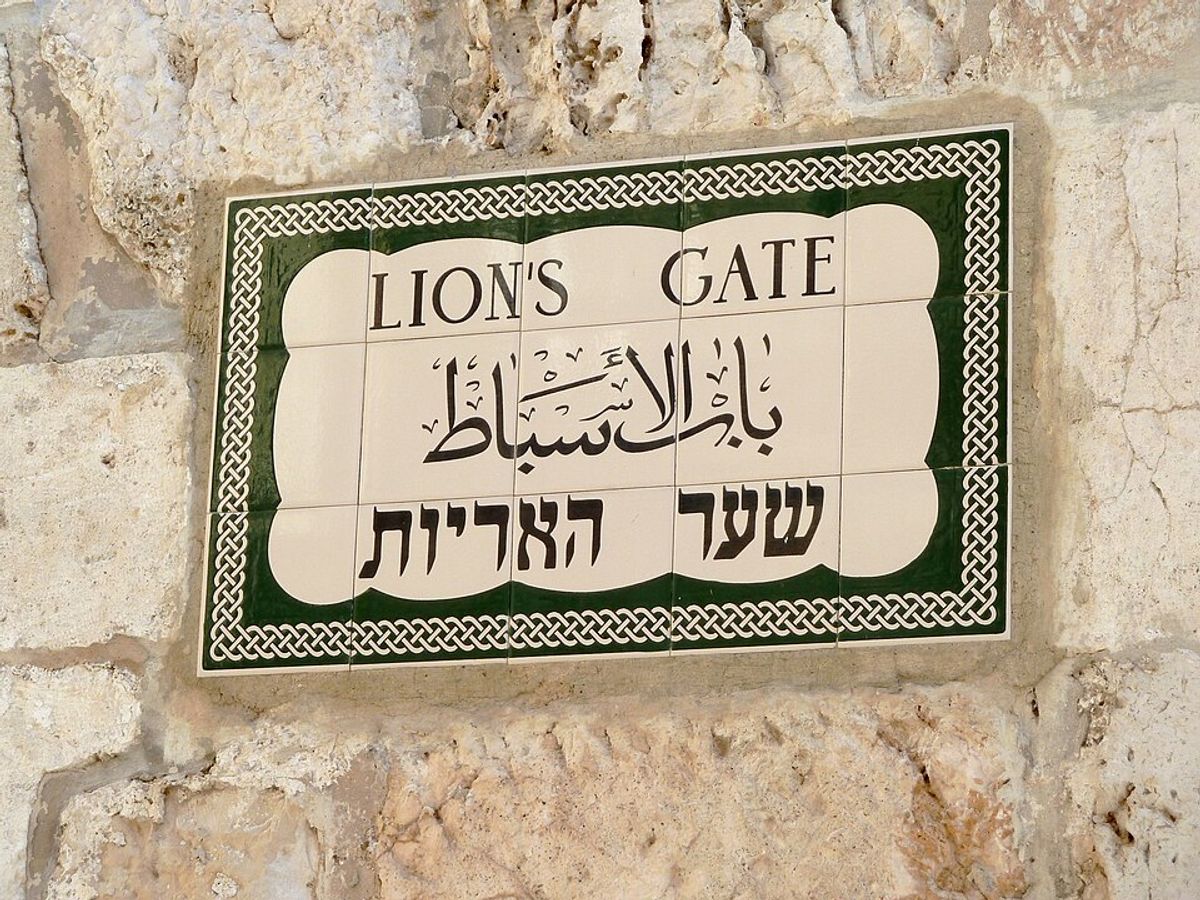
Sheep Gate
In biblical times, the gate in this area was known as the Sheep Gate, where sheep were brought into the city for sacrifice at the Temple. The Book of Nehemiah describes its rebuilding after the Babylonian exile: “Eliashib the high priest and his fellow priests went to work and rebuilt the Sheep Gate” (Nehemiah 3:1). The proximity to the Pools of Bethesda, where animals may have been washed before sacrifice, supports the connection. In the Gospel of John, the Pools of Bethesda just inside the Sheep Gate are the setting for Jesus’s healing of the paralyzed man who had waited 38 years for the stirring of the waters (John 5:1-9). For Christian visitors, passing through the gate and turning right to the pools is to walk directly into that Gospel story.
Visit with Hoshen Tours
Lions’ Gate on the eastern wall of the Old City is the traditional starting point of the Via Dolorosa. Just inside the gate, your Hoshen Tours guide will take you to the Pools of Bethesda and the Church of St. Anne, then onward to the Sisters of Zion convent. The gate provides direct access to the Muslim Quarter and is close to the entrance of the Temple Mount compound. Walking through Lions’ Gate with a guide who knows the history brings the story of both ancient and modern Jerusalem to life. Hoshen Tours often combines this site with Sephardic Synagogues, Deir es-Sultan, and Sisters of Zion for a memorable day exploring the region.
Explore Our Tour Collection
Explore this site and 65 more in Sacred Steps in the Holy Land
225 pages · The Life, World, and Footsteps of Jesus · Maps, photos, and Scripture references
Ready to experience Israel in true colors?
Plan Your TourPrivate tours designed around your interests, schedule, and pace.