



Tel Beit Shemesh (Beth Shemesh, “House of the Sun”) is a biblical city in the Sorek Valley, famous as the place where the Ark of the Covenant was returned by the Philistines after it caused them plagues and disasters. The story of the Ark’s journey from the Philistine city of Ekron back to Israelite territory is one of the most colorful narratives in the Bible. The tel itself sits on a rise above the valley floor, with views stretching across the low hills and agricultural terraces that still define this landscape, making it easy to picture the scene described in 1 Samuel.
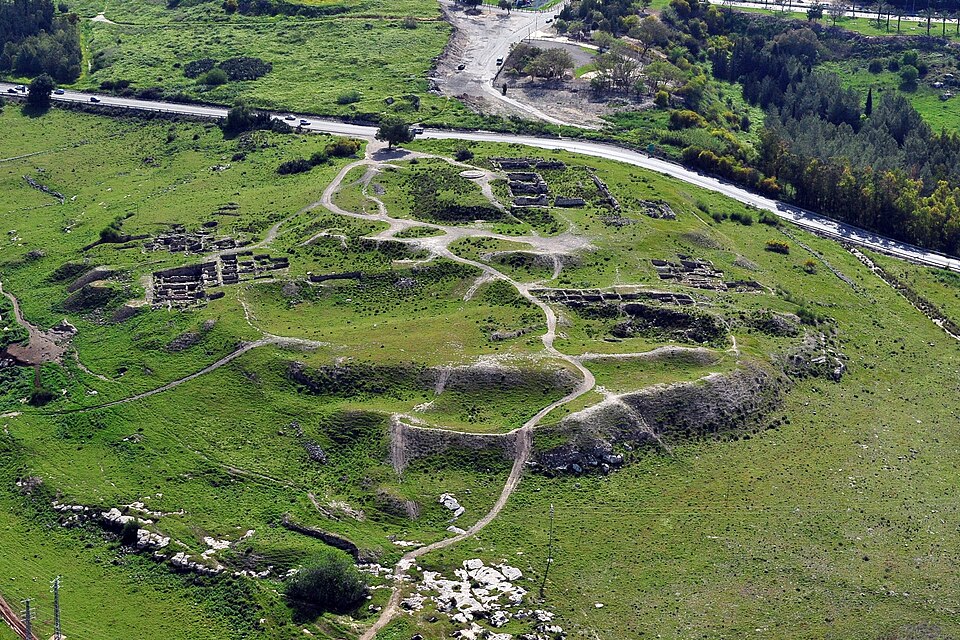
Return of the Ark
The Philistines had captured the Ark of the Covenant in battle at Ebenezer (1 Samuel 4), and they brought it as a trophy to the temple of Dagon in Ashdod. But wherever they placed it, disaster followed: the idol of Dagon fell before it and broke, and the people of Ashdod, Gath, and Ekron were struck with tumors and overrun by mice (1 Samuel 5). After seven months, the Philistines were desperate to rid themselves of the Ark. Their priests devised a test: they placed the Ark on a new cart pulled by two milk cows that had never been yoked, with their calves shut away at home.
If the cows walked straight to Beth Shemesh, abandoning their calves against every natural instinct, it would prove that the God of Israel was behind the plagues and that these were not mere coincidence. “The cows went straight up toward Beth Shemesh, keeping on the road and lowing all the way; they did not turn to the right or to the left” (1 Samuel 6:12). The Philistine lords followed behind the cart as far as the border, watching the test unfold. The people of Beth Shemesh were harvesting wheat in the valley when the Ark arrived, and they rejoiced at the sight.
Tragedy at Beth Shemesh
The joy of the Ark’s return was short-lived. The men of Beth Shemesh looked inside the Ark, and God struck down seventy of them: “He struck down some of the inhabitants of Beth Shemesh, putting seventy of them to death because they looked into the ark of the Lord” (1 Samuel 6:19). The people of Beth Shemesh, terrified, sent a message to the people of Kiriath Jearim asking them to take the Ark away. The Ark would not return to Jerusalem until David brought it there, dancing before it, decades later. The story teaches that the God of Israel is not a tribal mascot to be used and examined at will. He is holy, and holiness is dangerous.
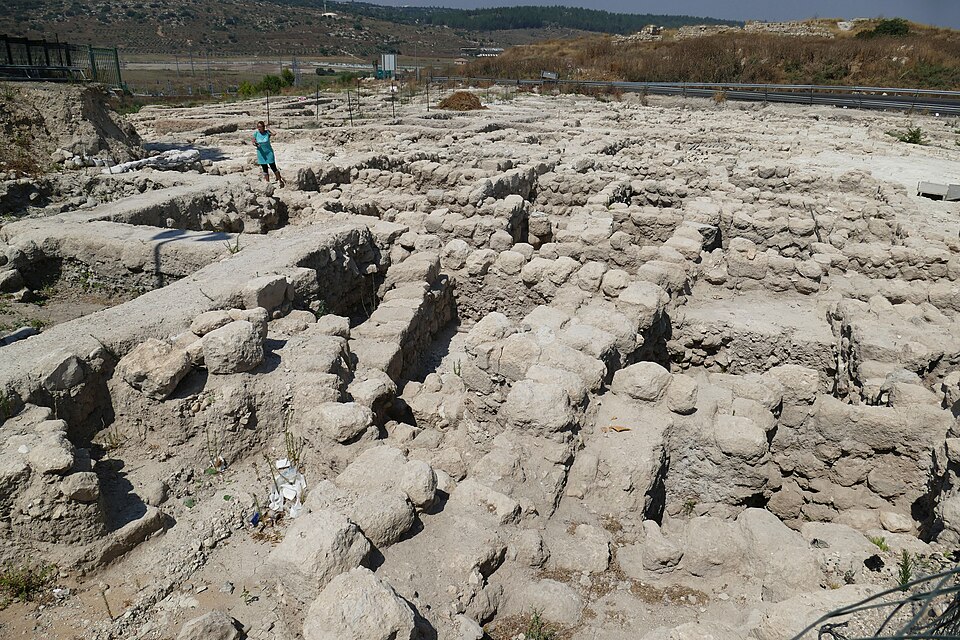
A Century of Excavations at Beit Shemesh
Excavations at Tel Beit Shemesh have revealed a city with a complex history spanning the Bronze and Iron Ages. The site was first excavated by Duncan Mackenzie in 1911-1912 and later by Elihu Grant in the 1930s. More recent excavations by Tel Aviv University have added significant detail. The finds include evidence of Canaanite, Philistine, and Israelite occupation, making it one of the few sites where the cultural boundary between the Philistines and the Israelites can be studied in detail. Iron Age houses, industrial installations, and fortifications show a city that sat on the frontier between two worlds. Pottery, seals, and storage jars from the Iron Age I period illustrate the gradual shift from Canaanite to Israelite material culture. A large stone platform discovered at the site may have served a cultic or public function, and some scholars have connected it to the “great stone” mentioned in the Ark narrative (1 Samuel 6:14-15). Byzantine-period remains have also been found, including parts of a monastery, showing that the site continued to attract settlement long after its biblical heyday.
Sorek Valley and the Samson Stories
Beth Shemesh overlooks the Sorek Valley, the setting of the Samson stories. Samson was born in Zorah, visible on the ridge to the north across the valley, and his exploits took place in the towns and vineyards of this landscape. The Sorek Valley was a natural corridor connecting the coastal plain to the hill country, which made it a contested zone between the Israelites and the Philistines throughout much of the biblical period. Standing at Tel Beit Shemesh and looking west down the valley toward the coast, visitors can trace the route the two cows would have taken as they carried the Ark from Philistine territory into the Israelite heartland. The combination of the valley’s beauty and its layered biblical significance makes this one of the most rewarding overlooks in the Judean foothills.
Visit with Hoshen Tours
Tel Beit Shemesh is where the Ark of the Covenant came home after its capture by the Philistines. Hoshen Tours pairs it with the Sorek Valley, the David and Goliath landscape of the Ella Valley, the Philistine city at Tel Miqne (Ekron), and Goliath’s hometown at Tel Zafit (Gath).
Ready to experience Israel in true colors?
Plan Your TourPrivate tours designed around your interests, schedule, and pace.