



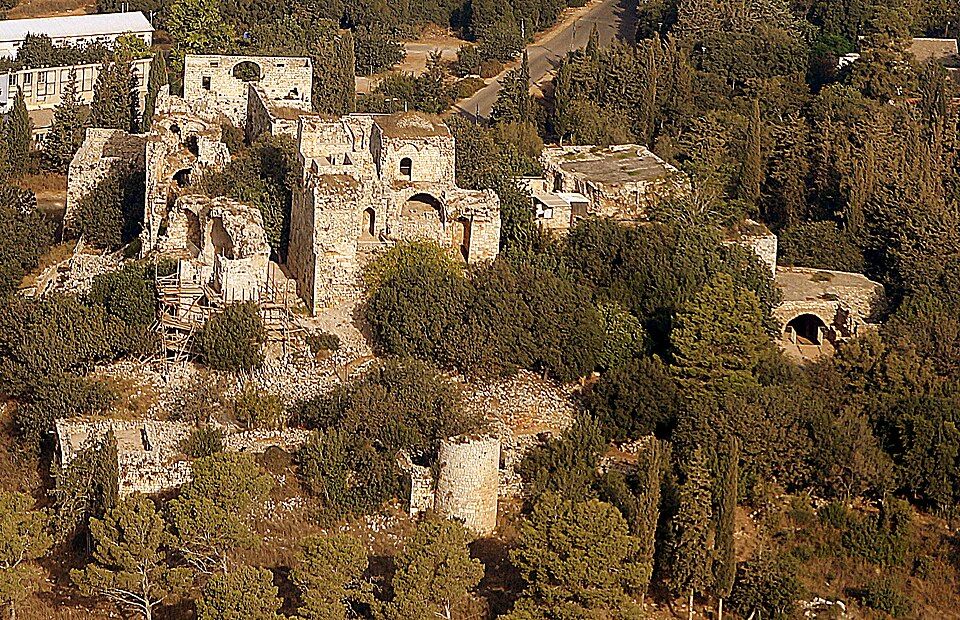
 Tucked into the green hills of the western Galilee, about halfway between Akko and the Lebanese border, sits a Crusader fortress that most tourists never see. Yehi’am Fortress is not on the standard itinerary. It does not have the name recognition of Masada or the crowds of Caesarea. But for visitors who want to see a beautifully preserved castle set on a commanding hilltop with panoramic views of the Western Galilee, surrounded by some of the prettiest countryside in Israel, and carrying a story that spans Crusaders, Ottoman warlords, a besieged kibbutz, and a tragic 1948 convoy, Yehi’am is hard to beat.
A Teutonic Knights Castle – Yehi’am Fortress
The fortress was built in the 13th century by the Teutonic Knights, a German Crusader military order that operated alongside the more famous Hospitallers and Templars. The Teutonic Knights called the castle Judin, and they constructed it to control the road between Akko and the inland regions of the Galilee, one of several outposts they maintained across the region to protect their supply lines and assert territorial control.
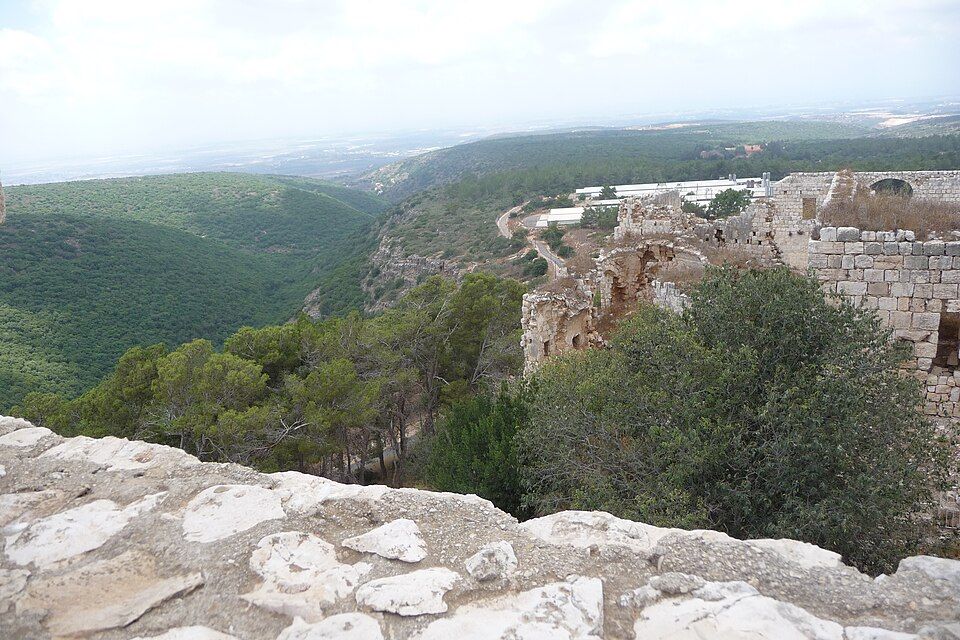
The hilltop location was chosen deliberately. From the walls, the surrounding valleys and ridges are visible in every direction, giving defenders early warning of approaching forces and making a surprise assault nearly impossible. The castle is compact but well-designed, with thick walls, a defensive tower, and a cistern system that allowed it to withstand siege. Like most Crusader fortifications, it was built to be practical rather than decorative, but the combination of weathered stone, Gothic arches, and the lush landscape surrounding it gives the ruins a romantic quality that the original builders probably did not intend.
Daher al-Omar and the Ottoman Expansion
After the Crusader period, the fortress fell into disrepair for several centuries. It was revived in the 18th century by Daher al-Omar, the remarkable Arab ruler who carved out an autonomous domain across the Galilee during a period of Ottoman weakness and administrative neglect. Daher al-Omar rebuilt and fortified Yehi’am as part of a broader strategy of constructing and reinforcing a network of fortresses across the region, Akko, Tiberias, Safed, and others all bear his mark.
Daher al-Omar is one of the most fascinating figures in the history of the land. Born into a local Bedouin family, he rose through a combination of military skill, political cunning, and commercial acumen to become the effective ruler of the Galilee for decades. He maintained alliances with European trading powers and local communities of different faiths, challenged Ottoman authority repeatedly, and was not finally removed until he was assassinated at the age of nearly ninety. His expansion of Yehi’am added Ottoman-era walls and structures to the Crusader core, creating the layered blend of architectural styles that visitors walk through today. To stand inside Yehi’am is to stand in both centuries at once.
The Yehiam Convoy, 1948
 The fortress gives its name to the modern kibbutz that sits beside it, and both carry the memory of one of the most painful episodes of Israel’s 1948 War of Independence. In the months before and during the war, isolated Jewish communities throughout the western Galilee were cut off from supply routes as fighting intensified. On March 27, 1948, a convoy set out from Kiryat Haim, near Haifa, carrying food, ammunition, and supplies for the besieged kibbutz. The convoy was ambushed in a carefully prepared attack near the village of Kabri. Forty-seven fighters and drivers were killed, making it one of the bloodiest single ambushes of the entire 1948 war.
The kibbutz itself had been established in 1946, founded by members of the Palmach and named Yechiam in memory of Yechiam Weitz, a young fighter who had been killed the previous year. Today a convoy memorial stands at the fortress, and the burned-out hulks of armored vehicles from the ambush are displayed along the road below as a silent reminder of the cost paid by those who tried to keep the communities of the western Galilee alive. The memorial is modest and quietly powerful.
Yehiam Fortress Today
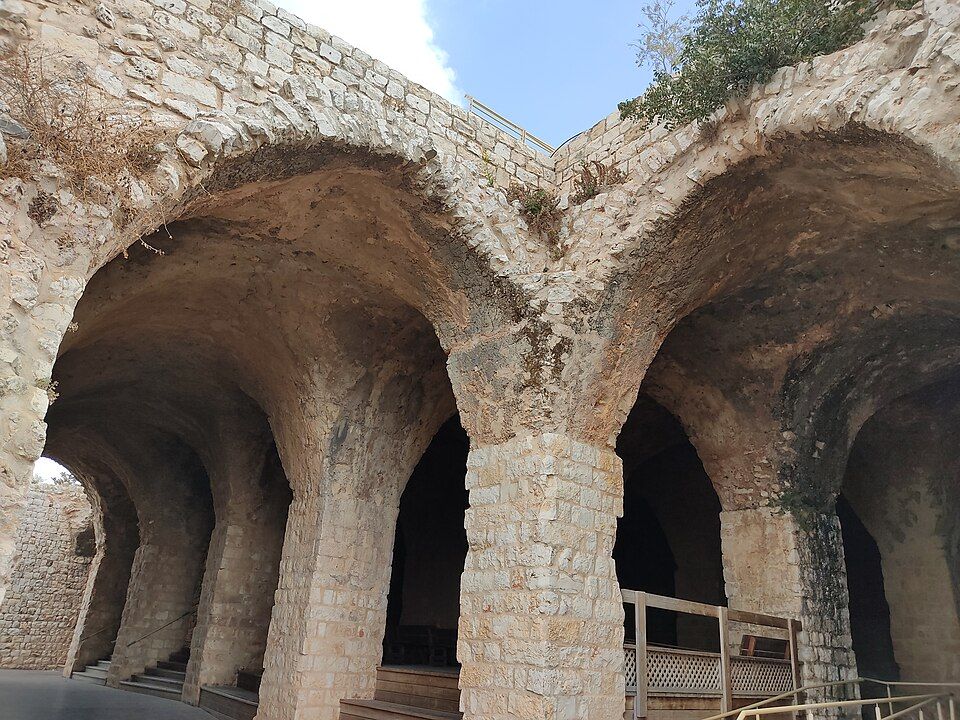 Yehi’am is now a national park administered by the Israel Nature and Parks Authority, and it is among the most rewarding in the country for visitors who take the time to explore it properly. The ruins layer Crusader stonework, Ottoman additions, and remnants of the 1948 period into a single compact site that tells a surprisingly complete story of the Galilee across seven centuries. Stairways lead up to the tower top, where the panoramic views over the rolling hills, olive groves, and Mediterranean woodland of the western Galilee are excellent in every direction.
Nature trails wind around and below the fortress through the surrounding landscape, which is gorgeous in any season but especially striking in spring when wildflowers carpet the hillsides. The site has none of the congestion of Israel’s more famous parks, no vendors, no noise, no queues. Visitors can move through the rooms and courtyards at their own pace, reading the architecture and the landscape together. The fortress rewards a slow visit far more than a rushed one.
Visit with Hoshen Tours
A visit to Yehiam Fortress pairs beautifully with nearby destinations along your route. Consider combining it with a stop at Akko or Akko Prison, both just a short drive away. Many travelers also enjoy exploring Rosh HaNikra and Keshet Cave on the same day, while Kibbutz Hanita offers another worthwhile addition to your itinerary. Your Hoshen Tours guide will craft a seamless route that brings each destination to life with expert commentary and insider knowledge.
Ready to experience Israel in true colors?
Plan Your TourPrivate tours designed around your interests, schedule, and pace.