



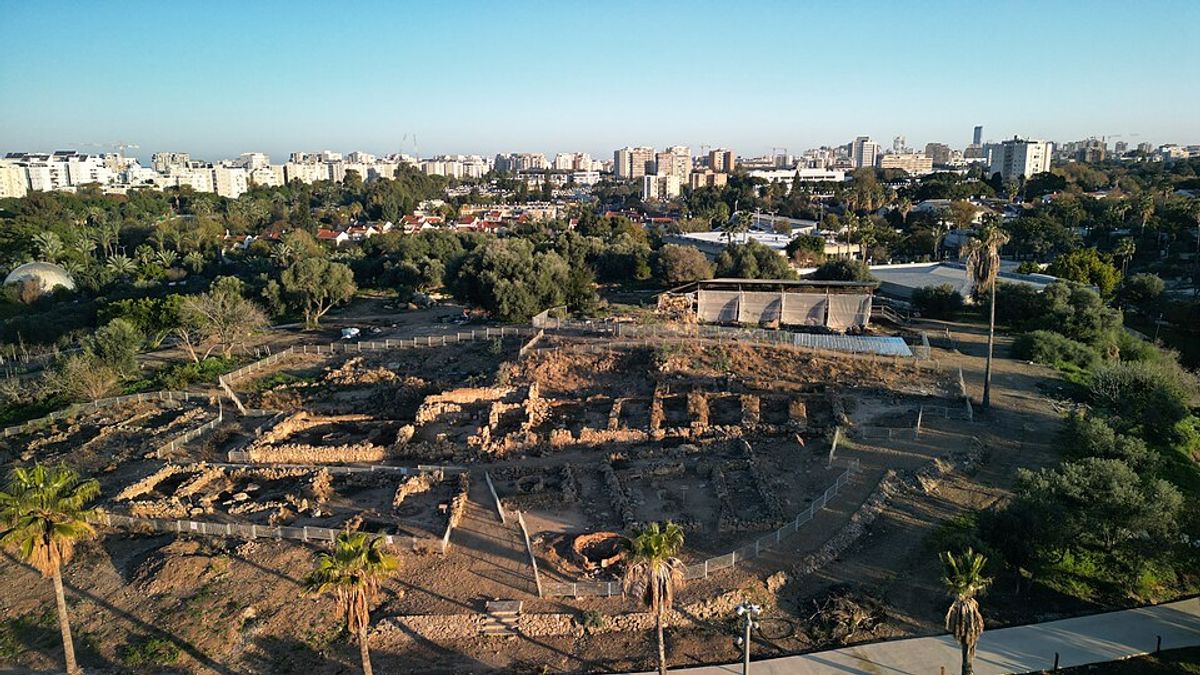
Located in the Ramat Aviv neighborhood of Tel Aviv, the Eretz Israel Museum, Muze’on Eretz Yisrael in Hebrew, is one of Israel’s most important and most layered cultural institutions. Unlike a conventional museum housed in a single grand building, this campus spreads across landscaped grounds, assembling a collection of specialized pavilions, each dedicated to a distinct chapter of the material culture of the Land of Israel. At its heart lies something no architect could have planned: a real archaeological site, Tel Qasile, a Philistine city that was already three thousand years old when the museum was built around it. The result is a place where you do not simply view history through glass, you walk across it, descend into it, and stand on ground that has seen Philistine priests, Israelite merchants, Roman traders, and Ottoman farmers. Multiple pavilions cover glass, ceramics, coins, copper, textiles, and postal history, making a single visit feel like a journey through the entire human story of this land.
Tel Qasile: A Philistine City on the Yarkon
The archaeological mound of Tel Qasile sits on the northern bank of the Yarkon River, and what lies beneath the surface represents one of the most significant Philistine discoveries ever made. Founded around 1150 BCE by the Sea Peoples, migrants from the Aegean world whose origins remain a subject of scholarly debate, Tel Qasile is among the rare Philistine sites that archaeologists have been able to excavate within the boundaries of a modern city, rather than in open countryside. That circumstance alone makes it remarkable. Three successive Philistine temples were uncovered here, stacked one above the other across different centuries, offering a rare window into Philistine religious practice and urban planning. The initial excavations were led by Benjamin Mazar between 1948 and 1950, in the very years that Israel was being established around them. Amihai Mazar later resumed and expanded the work in two campaigns (1971–1974 and 1982–1989). Today the tel is accessible on foot within the museum grounds, and a small on-site exhibition interprets what was found. Walking the tel with a guide who can explain what the stratigraphy means transforms the mound from a pleasant green hill into something that genuinely takes your breath away.
The Pavilions: A Museum of Everything
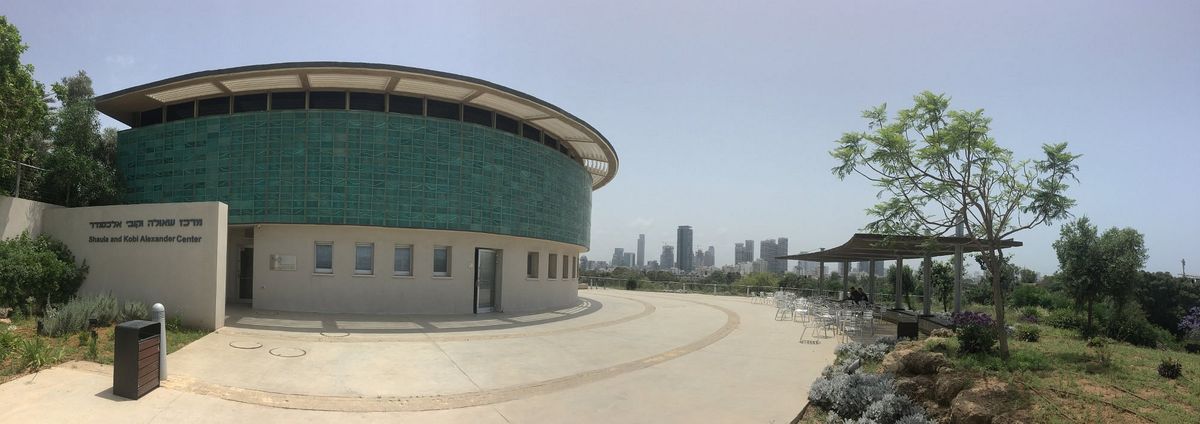
No other museum in Israel assembles this range of specialized collections under one campus. The Glass Pavilion houses one of the finest collections of ancient glass in the world, tracing the evolution of a craft from its origins in the Bronze Age through the Roman mastery of glassblowing that transformed the Mediterranean world. The Kadman Numismatic Pavilion displays coins spanning millennia, including rare examples from the Bar Kokhba revolt, the Hasmonean kingdom, and Roman imperial mints, each one a small document of who controlled this land and what they wanted to say about it. The Ceramics Pavilion traces the entire arc of pottery production in the region, from Chalcolithic hand-formed bowls to the refined wares of later periods.
The Ethnography and Folklore Pavilion documents the lifeways of Jewish communities from across the diaspora, preserving objects and traditions that might otherwise have been lost entirely. The Nechushtan Pavilion tells the story of copper production at Timna in the Negev desert, one of the earliest industrial mining operations in human history. A Postal History pavilion rounds out the collection with stamps and correspondence documenting the modern era. The Man and His Work Center brings ancient crafts to life through reconstructed workshops where traditional skills can be observed directly.
The Planetarium: Sky as Ancient Map
The museum campus also contains a planetarium, which connects the ancient world to the cosmos above it in ways that visitors rarely expect. For the sailors, farmers, priests, and navigators of the ancient Near East, the night sky was not decoration but essential infrastructure, a calendar, a compass, and a theological statement all at once. The planetarium presents shows that explore astronomy and ancient navigation, helping audiences understand how the peoples whose artifacts fill the pavilions would have oriented themselves in time and space. It is particularly popular with families and school groups, and rightly so: standing inside and watching the stars wheel overhead while thinking about a Philistine sailor navigating toward the Yarkon River estuary is one of those moments that makes history feel immediate. Shows run on a regular schedule, and it is worth checking current programming before your visit to plan accordingly.
Temporary Exhibitions: The Museum in Conversation with the Present
Alongside its permanent collections, the Eretz Israel Museum maintains an active program of rotating temporary exhibitions that place the permanent collection in conversation with contemporary questions of Israeli culture, archaeology, design, and identity. These exhibitions have addressed topics ranging from the archaeology of everyday life to the material culture of specific communities, from the history of Israeli design to the rediscovery of forgotten chapters of the region’s past. The temporary galleries mean that no two visits to the museum are exactly alike, and regular visitors to Tel Aviv often find themselves returning to the campus specifically to see what is currently showing. For first-time visitors, the temporary exhibitions offer a way to connect the deep historical narrative of the permanent pavilions to stories and questions that are alive in Israeli cultural life today. It is worth consulting the museum’s current schedule in advance, since these exhibitions rotate throughout the year and some are time-limited.
Visit with Hoshen Tours
The Eretz Israel Museum fits naturally into a full cultural day in the Ramat Aviv neighborhood of northern Tel Aviv. The ANU Museum of the Jewish People, one of Israel’s most celebrated and recently renovated institutions, is located nearby on the campus of Tel Aviv University, making it straightforward to combine both museums into a single immersive day. A Hoshen Tours guide brings the campus alive in ways that a self-guided visit cannot replicate, explaining the significance of the tel stratigraphy, reading the coins in the numismatic collection as political documents, and connecting the Glass Pavilion’s treasures to the trade routes that once passed through this coast. Whether you are a first-time visitor to Israel building a broad understanding of the country’s history, or a returning traveler looking to go deeper into specific aspects of the region’s material culture, the Eretz Israel Museum rewards time and attention. Contact Hoshen Tours to arrange a private guided visit as part of your Tel Aviv itinerary. Hoshen Tours often combines this site with Migdal Tzedek, Simon the Tanner, and Mikve Israel for a memorable day exploring the region.
Explore Our Tour Collection
Ready to experience Israel in true colors?
Plan Your TourPrivate tours designed around your interests, schedule, and pace.